.png)
.png)


Green iguana
Iguana iguana


The green iguana, large lizard of tropical forests
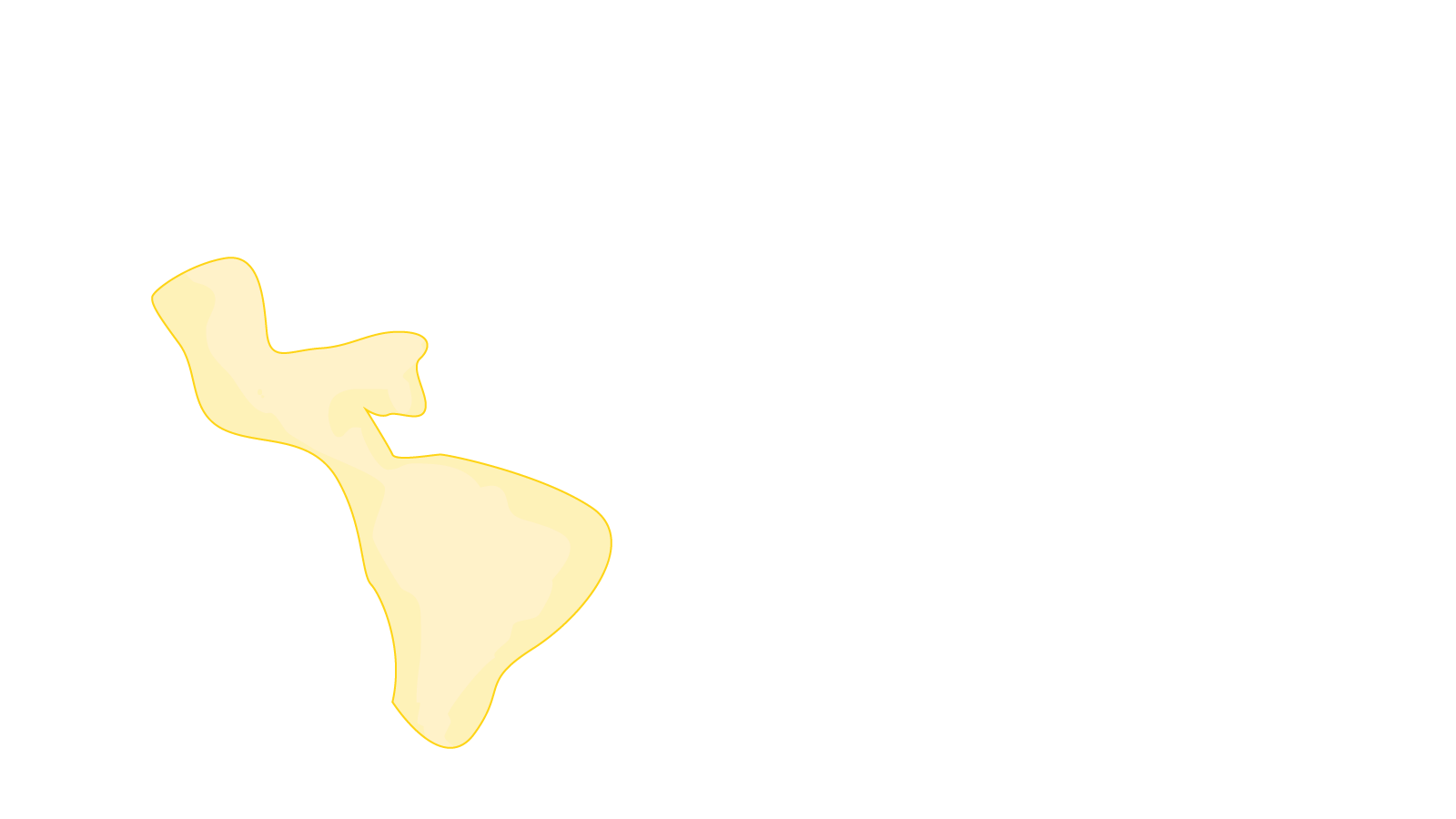
The green iguana (Iguana iguana) is one of the largest lizards in tropical regions of America. It is native to Latin America. It is mainly found in tropical rainforests, near rivers, mangroves and wooded areas. The species is now classified as Least Concern (LC) on the IUCN Red List.
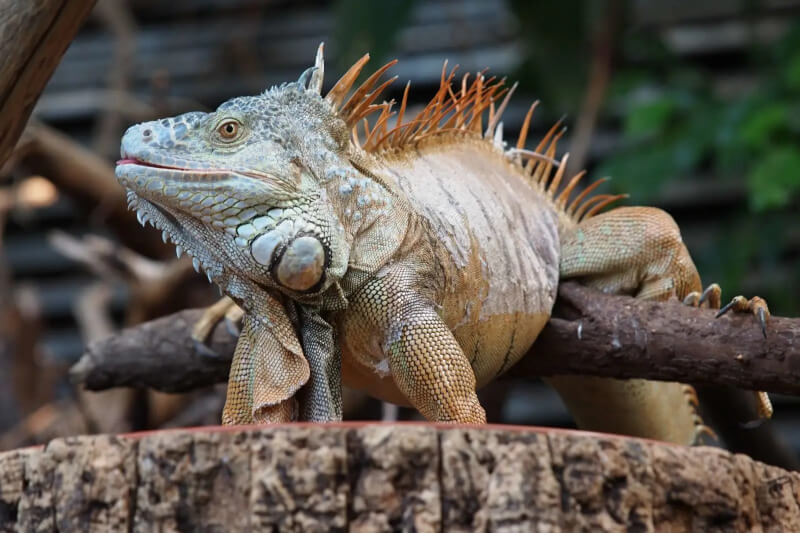
The green iguana can be recognized by its slender body, its long ringed tail and its crest of scales that run along the back. Its color varies from bright green to olive green, sometimes tending towards gray or brown depending on age, environment and season. Adults can exceed 1.50 meters including the tail.
It is a nocturnal reptile, active mainly during the day. An excellent climber, he spends a lot of time in the trees, where he heats up in the sun and watches his territory. In case of danger, he does not hesitate to drop into the water to flee, showing very good swimming skills.
The green iguana is strictly herbivorous in adulthood. It feeds mainly on leaves, flowers, fruits and young shoots. This diet plays an important role in seed dispersal and contributes to the balance of forest ecosystems.
At the Guadeloupe Zoo, the green iguana makes it possible to approach the diversity of tropical reptiles, as is the case with the Tropical House Gecko, the Boa constrictor Or the Caiman lizard.












.svg)


Quelques anecdotes
A multifunction tail
A green iguana's tail accounts for nearly two-thirds of its total body length. It is used as a pendulum when he moves through the trees, but also as a means of defense. In the event of a threat, iguanas can give powerful tail strikes to deter predators.

A master of camouflage
Despite its impressive size, the green iguana knows how to be discreet. Its color is easily confused with vegetation. Immobile in the foliage, it becomes difficult to spot, even at close range. A valuable asset for an arboreal reptile.
.svg)
