.png)
.png)

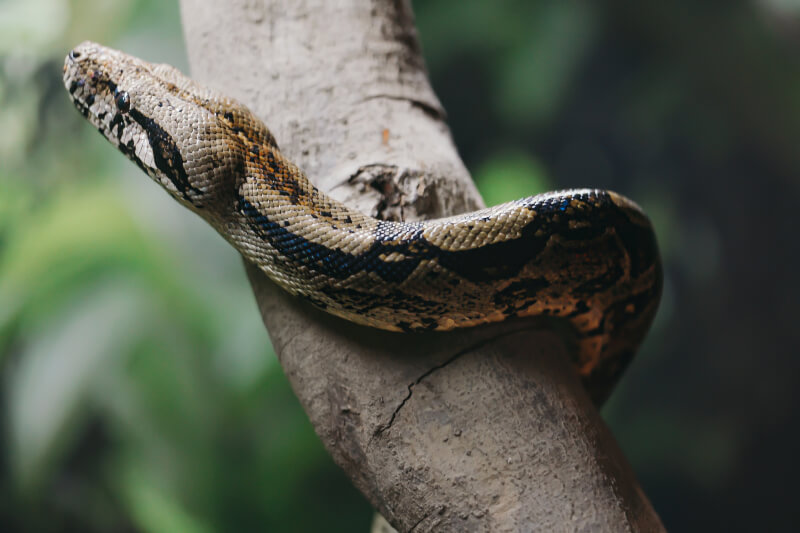
Boa Constrictor
Boa Constrictor


The Boa constrictor, the giant of tropical forests
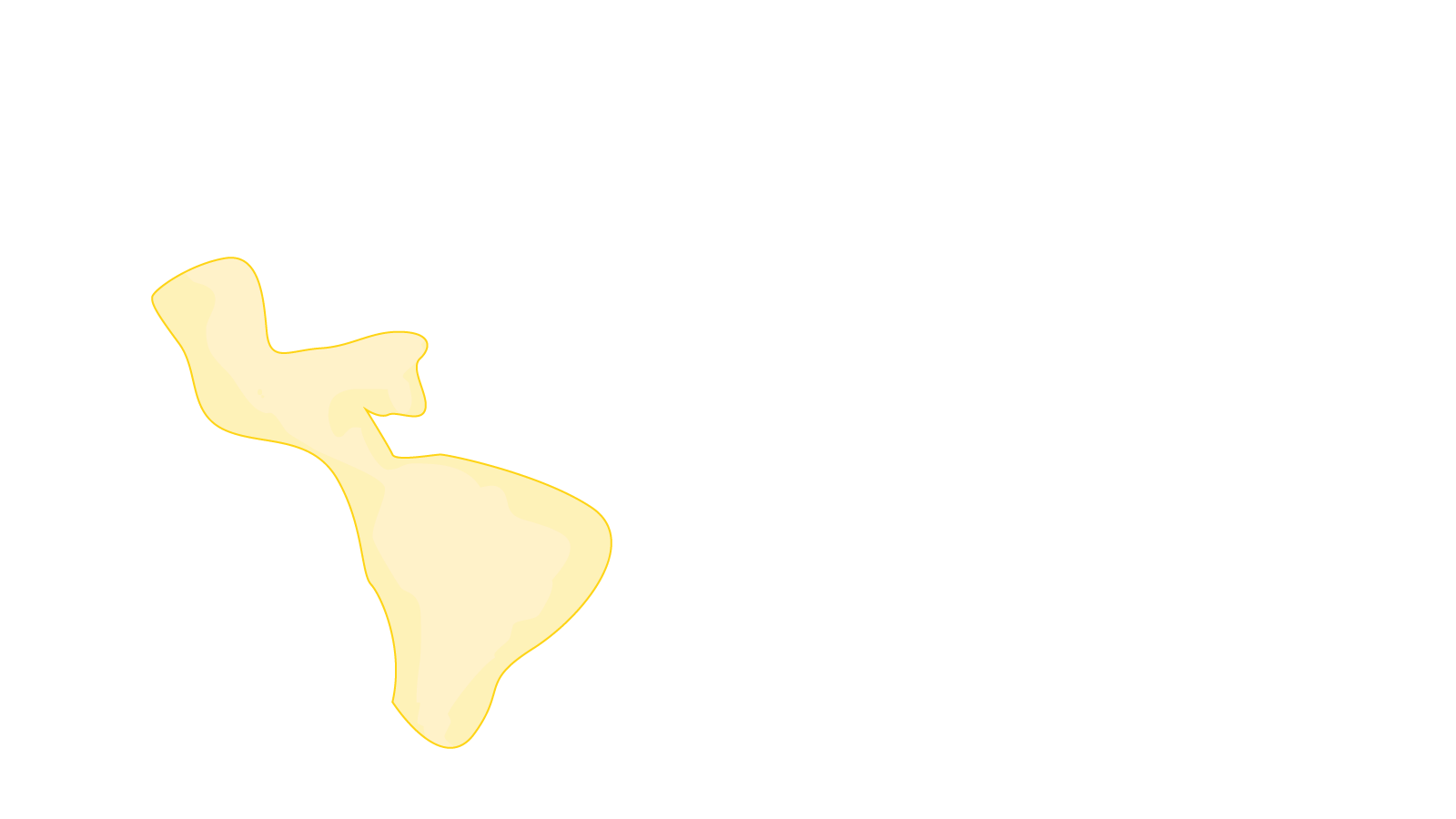
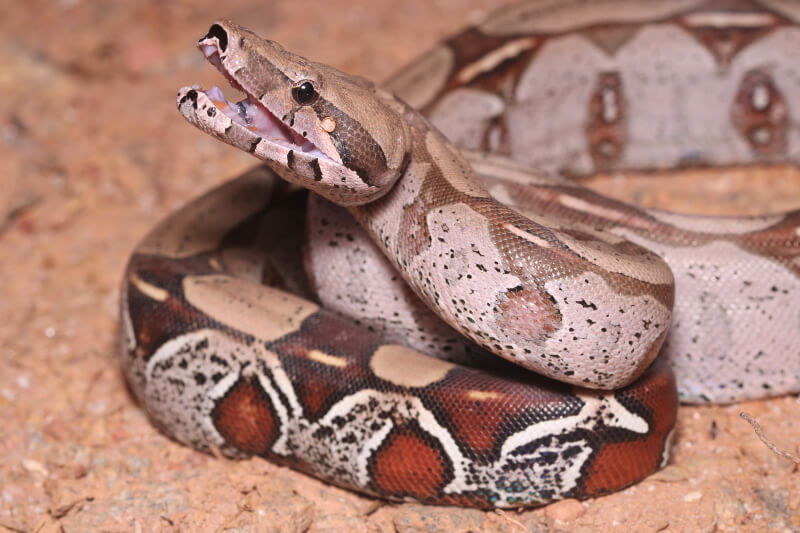
The boa constrictor (Boa constrictor) is one of the largest snakes in Central and South America. It is found in humid forests, dry areas, mangroves, and even on the edge of agricultural areas. Despite its impressive size, it remains a calm and discreet animal, which avoids contact with humans.
The species is classified as Least Concern (LC) by the IUCN. Its populations are still stable, although some sectors are affected by habitat destruction and illegal trade. Resistant and adaptable, the boa plays an essential role in the regulation of populations of small mammals.
The boa constrictor can measure between 2 and 3 meters, sometimes more depending on the subspecies. Its muscular body allows it to immobilize its prey by constriction. It slowly surrounds its victim, tightens its rings and cuts off the breath without crushing the bones. This precise and fast technique makes it an effective predator, without using venom.
Its diet varies: rodents, birds, lizards and small mammals. The boa mainly hunts on the lookout. He doesn't move much, saves his energy and strikes at the perfect time. His digestion is slow; after a large meal, he can go several days without eating.
At the Guadeloupe Zoo, the boa is presented in the insectarium, near its cousin, the rainbow boa. Its calm and size always impress visitors.



.svg)


Quelques anecdotes
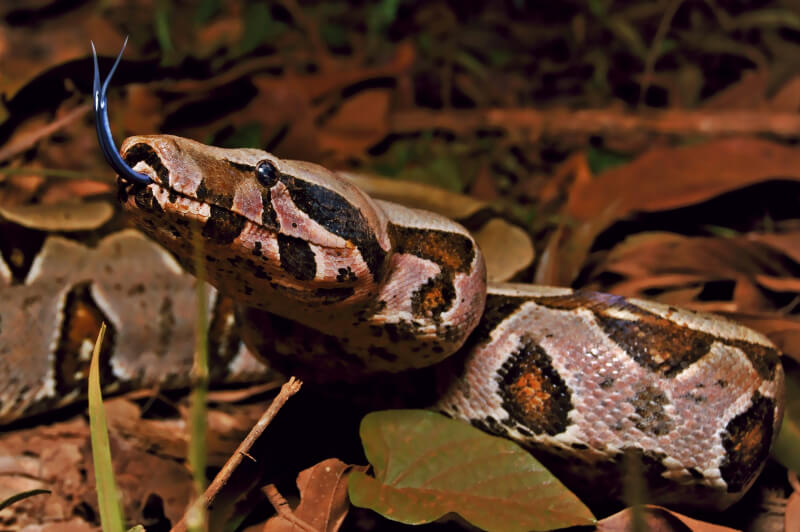
A language that “smells” of the air
The boa uses its forked tongue to analyze its environment. It captures the fragrant particles present in the air and transmits them to Jacobson's organ, located in the palace. Thanks to this highly sensitive system, it can spot prey, identify a predator, or follow a trail left a few minutes earlier.
A master of camouflage
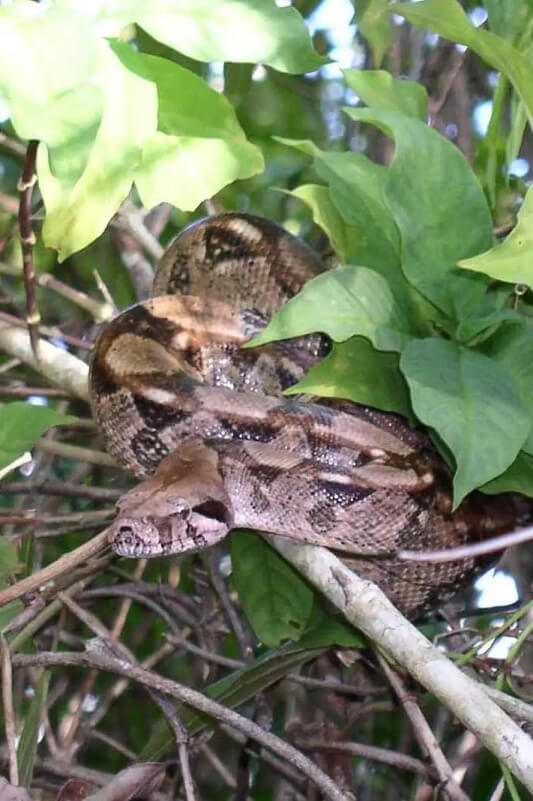
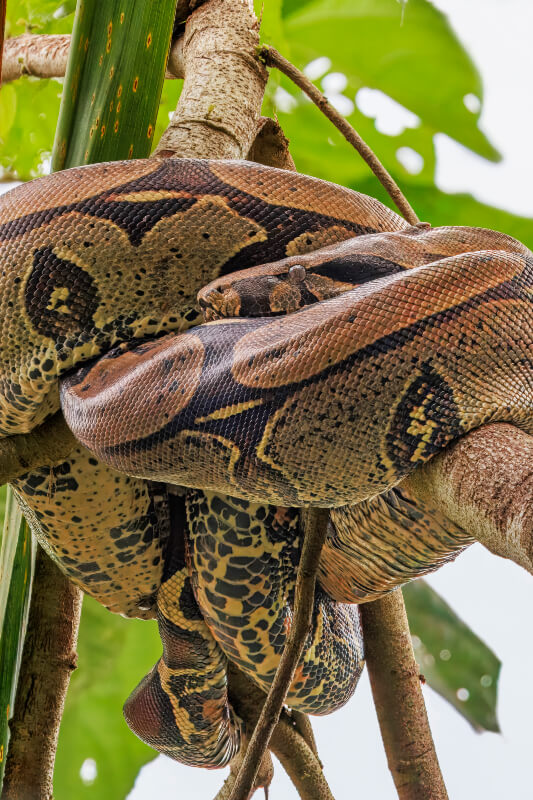
The boa has a pattern of brown and beige spots that allows it to disappear into the vegetation. This camouflage is so effective that, in nature, it can remain invisible even when within a few meters of an observer. This strategy is used both to hunt and to protect itself from larger predators, such as the jaguar.
.svg)
