.png)
.png)


Caiman lizard
Dracaena guianensis


The Caiman lizard, the armoured reptile of the Amazon rivers
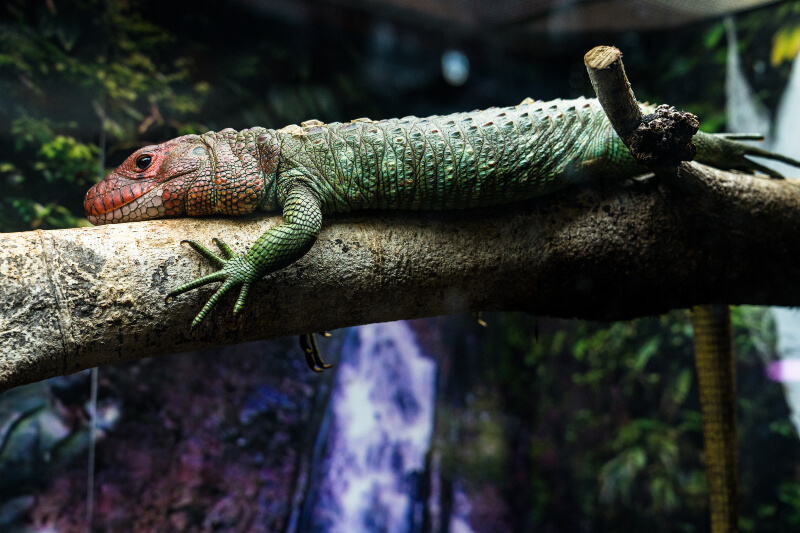
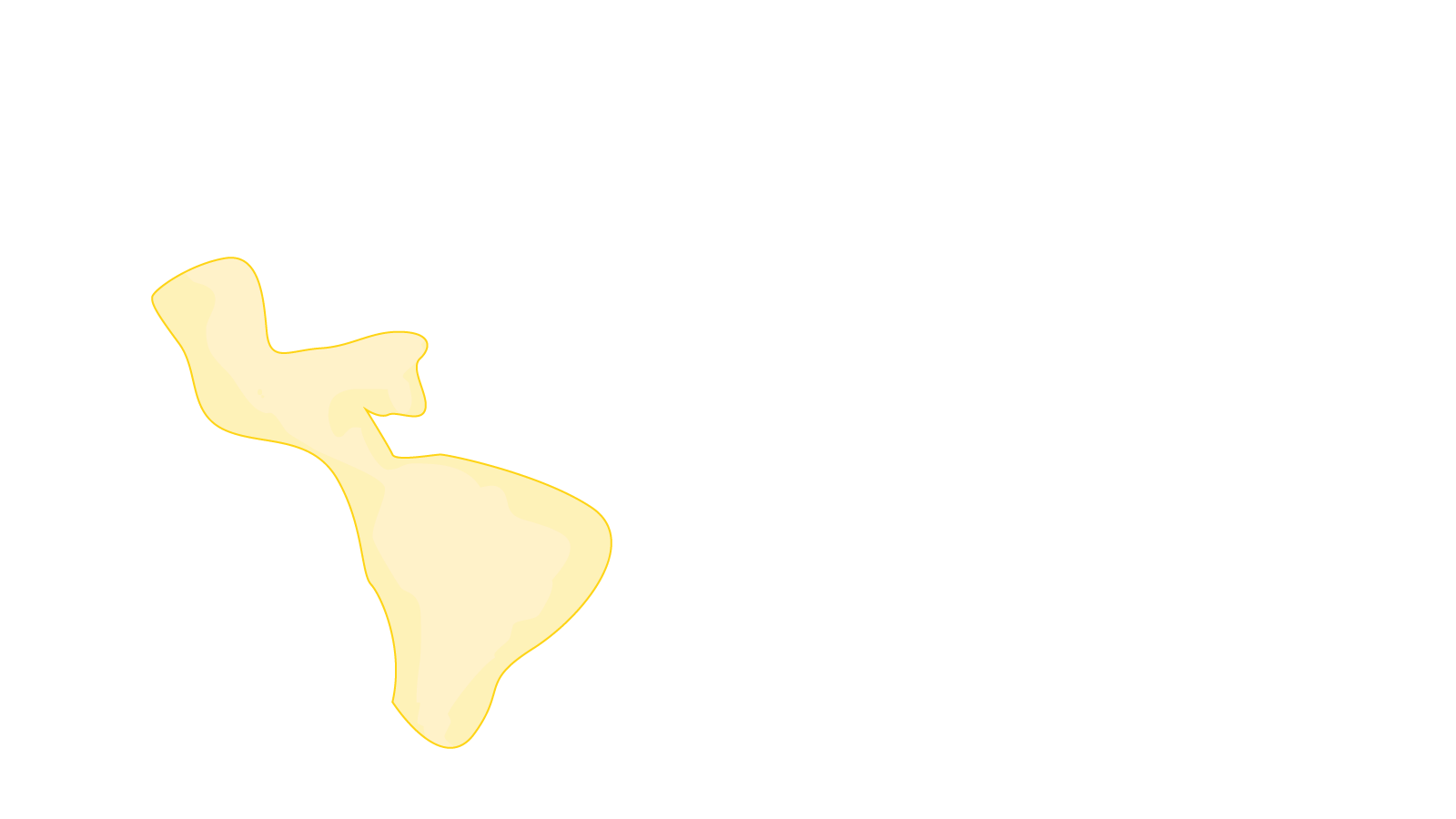
The caiman lizard (Dracaena guianensis) is an impressive reptile native to northern South America, especially the Amazon basin and the regions of Guyana. It mainly frequents rivers, creeks, marshes and forest wetlands. The species is now classified as Least Concern (LC) on the IUCN Red List.
Its appearance is unique. Its massive body is covered with large, thick, very marked scales, which give it a battleship appearance. Its powerful head is reminiscent of that of a caiman, hence its name. Its tail, long and flattened at the sides, is perfectly adapted to swimming.
The caiman lizard is a semi-aquatic reptile. He spends much of his time in the water, where he swims with ease. It often rests on banks or on low branches overlooking waterways. It is mostly active during the day.
Its diet is mainly carnivorous, with a marked specialization for aquatic molluscs, especially snails. Thanks to its powerful jaws and rounded teeth, it can break very hard shells. It supplements its diet with crustaceans, aquatic insects and sometimes small vertebrates.
At the Guadeloupe Zoo, the caiman lizard is in the insectarium near the buffalo toads And Phasms.













.svg)


Quelques anecdotes

A specialist in snails
The caiman lizard is one of the few reptiles capable of feeding almost exclusively on shellfish. Its teeth are not pointed but rounded, designed for grinding. This dietary specialization limits competition with other reptiles and explains its attachment to aquatic environments rich in invertebrates.

An excellent swimmer
Thanks to its laterally compressed tail, the caiman lizard is a very good swimmer. It can remain submerged for a long time and move discreetly under water. This ability allows it to evade predators and surprise its prey in quiet river areas.
.svg)
