.png)
.png)

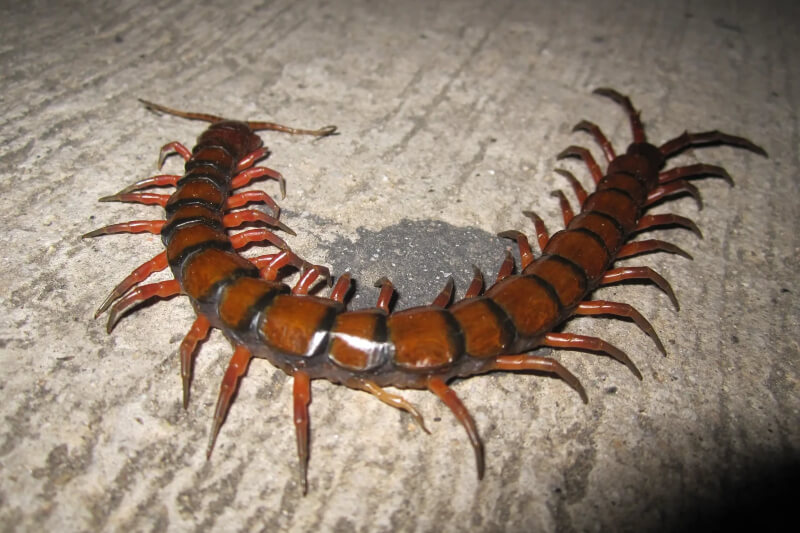
Centipede
Scolopendra sp.


The Scolopendra, a major nocturnal predator of tropical forests
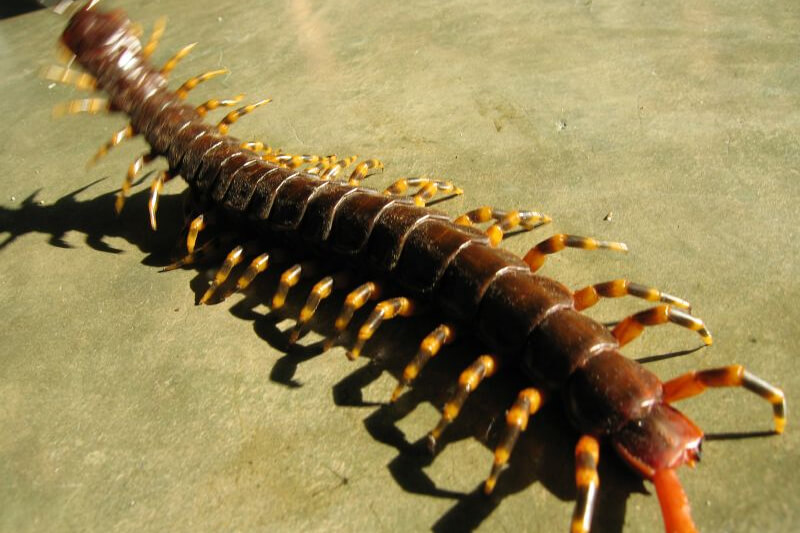
The Centipede (Scolopendra sp.) is a large carnivorous myriapod found in many tropical regions, including the Antilles. It mainly frequents humid forests, rocky areas, soils rich in organic matter and shady environments. To date, Scolopendras are classified Not Assessed (NE) by the IUCN, as they are not subject to accurate global monitoring.
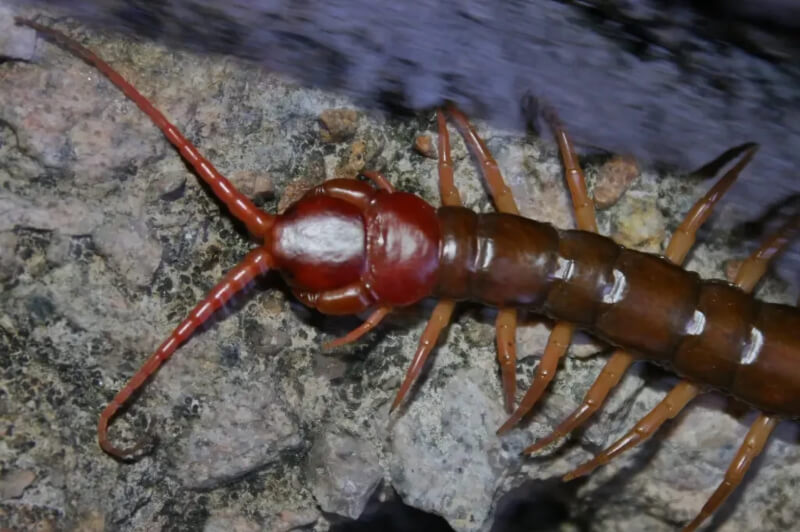
Its body is elongated and segmented. Each segment has a pair of legs, which allows it to move quickly, even on complex terrain. Its color varies from brown to dark red depending on the species. Its head is equipped with forcipules, venomous hooks that come from the first pair of legs. They are used to inject venom into the prey.
The Centipede is a strictly nocturnal animal. During the day, it hides under stones, decomposing trunks, or forest litter. At night, it becomes active and hunts on the lookout. It is an opportunistic predator, capable of capturing insects, cockroaches, spiders, small reptiles, amphibians, and sometimes young rodents.
Its venom makes it possible to quickly immobilize its prey. In humans, a bite is painful but rarely dangerous for a healthy person. The Centipede is not looking for contact. It only bites if manipulated or surprised.
At the Guadeloupe Zoo, the Centipede makes it possible to better understand the role of small invertebrates in tropical ecosystems, alongside species such as Amblypygia, the Phasm Or the cassava ant.





.svg)


Quelques anecdotes

A big fan of cockroaches
Centipede is a natural predator of cockroaches. In tropical environments, these insects are among its most common prey. Active at night, it hunts them effectively and can consume a large number of them. This natural regulatory role contributes to the balance of insect populations in forests and wetlands.
A giant among invertebrates
Some species of Centipede are among the largest terrestrial invertebrates. The largest known species, Scolopendra gigantea, can exceed 30 centimeters in length. The legend says that a 56cm Centipede was captured in Jarry in 1994.
.svg)
