.png)
.png)
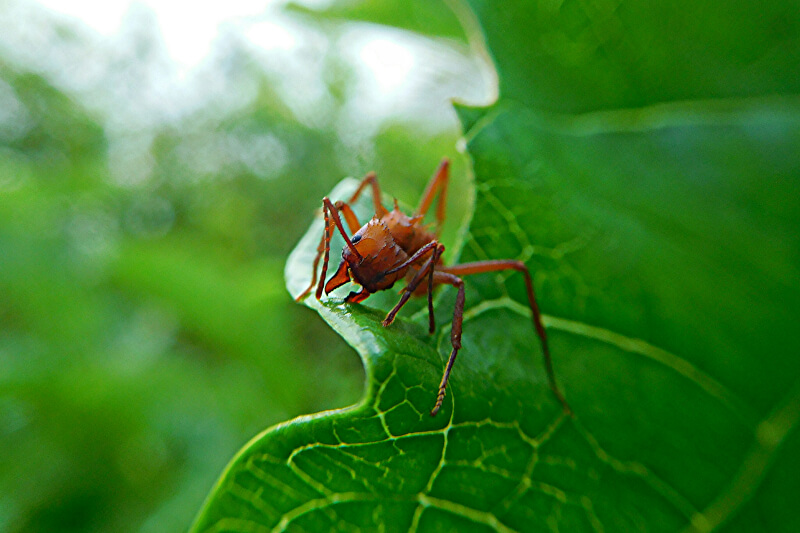
Leafcutter ant
Acromyrmex octospinosus


The leafcutter ant, tropical forest engineer
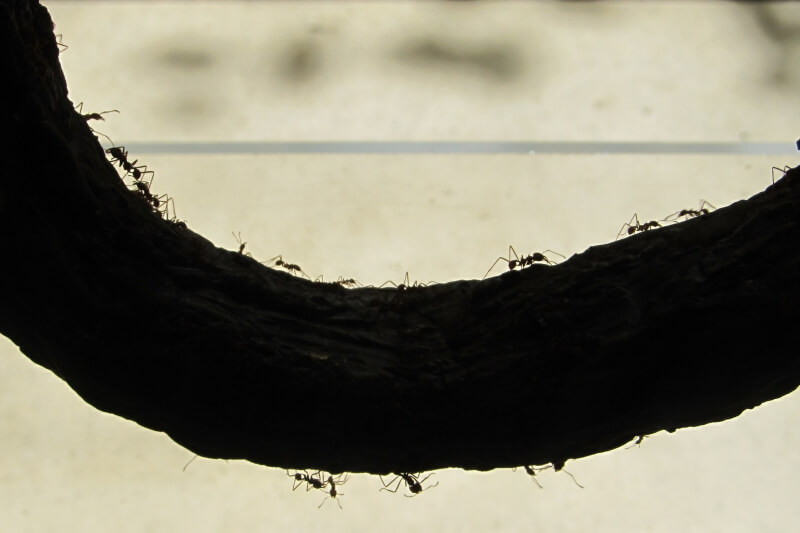
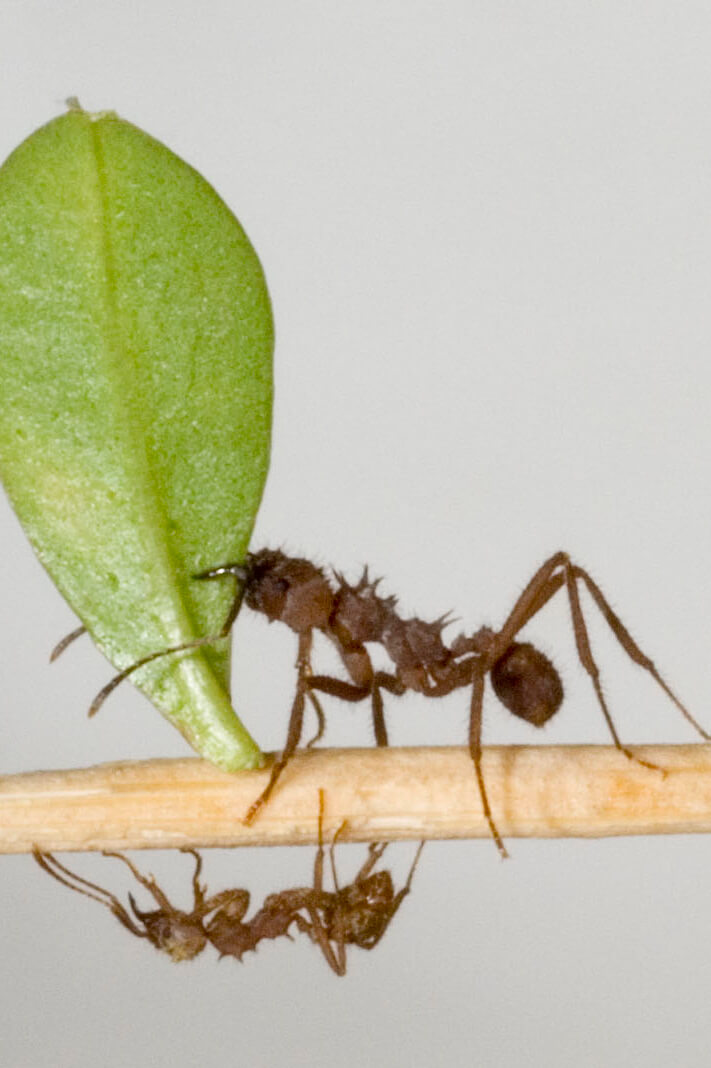
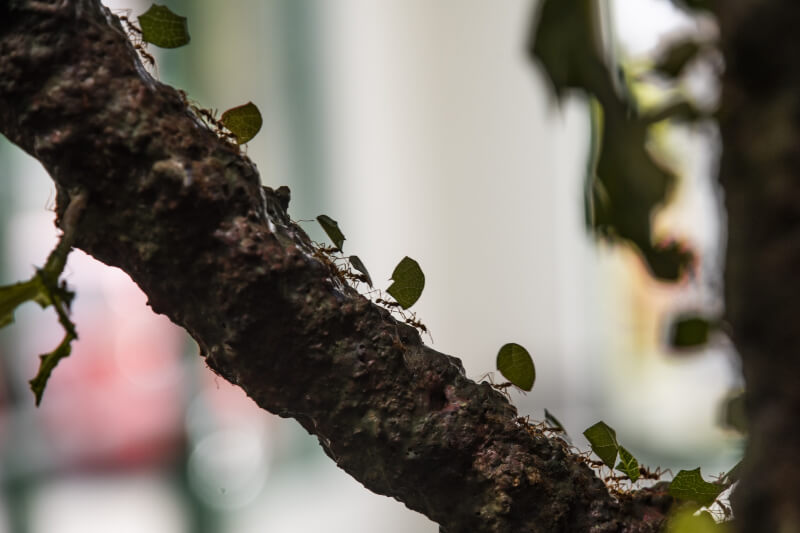
The Caribbean Leafcutter ant (Acromyrmex octospinosus), is a well-known species from the tropical forests of the Antilles. In Guadeloupe, it is frequently encountered in humid undergrowth, where its impressive processions always attract attention: perfectly ordered lines of female workers carrying pieces of leaves much larger than themselves on their backs.
Classified as Least Concern (LC) by the IUCN, the leafcutter ant plays an essential role in the regeneration of tropical forests. By cutting off fragments of vegetation, it contributes to the recycling of organic matter and to the aeration of the soil. Far from being a parasite, it actively participates in the good health of ecosystems.
These ants are famous for their remarkable social organization. Each colony can have several hundreds of thousands of individuals, divided into castes according to their size and function: workers, soldiers, gardeners or queens. Their diet is based on a mushroom that they grow in their underground galleries. The leaves they cut are not used to be eaten directly, but to nourish this fungus on which they depend entirely.
This strategy makes it one of the rare cases of insect agriculture. Their galleries can extend over several meters and form real “underground farms” maintained with care.
At the Guadeloupe Zoo, leafcutter ants evolve freely in the tropical forest. They can be observed throughout the visit, walking along the paths and crossing the undergrowth, transporting their leaf fragments with millimeter precision. They are an integral part of the living nature of the Parc des Mamelles, to be discovered during the walk.


.svg)


Quelques anecdotes
An extraordinary strength
A leafcutter ant worker can carry up to 50 times your own weight ! This impressive record makes it, on a scale, one of the strongest animals in the animal kingdom.
Meticulous women farmers
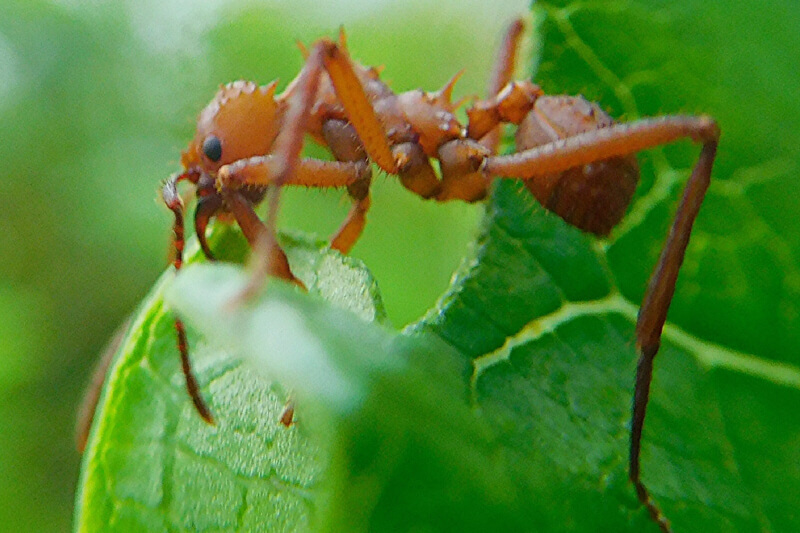
leafcutter ants are real planters : they maintain their mushroom “crops” with precision, removing debris and maintaining ideal humidity. If the fungus dies, the entire colony cannot survive — a perfect dependence between insect and nature.
.svg)
