.png)
.png)

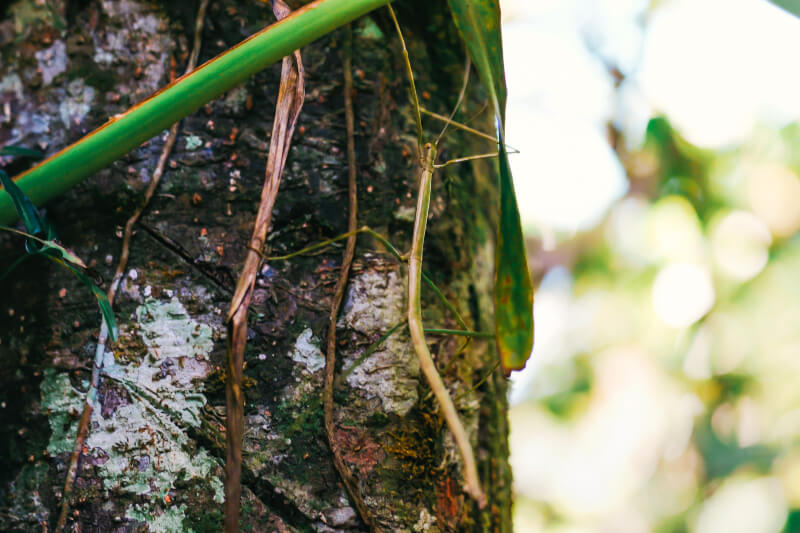
Stick Insect
Phasmatodea


Stick Insect at the Guadeloupe Zoo
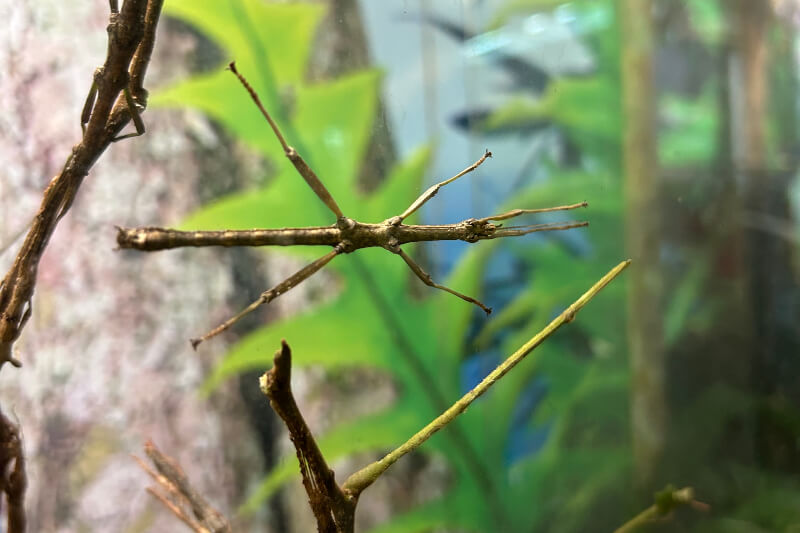
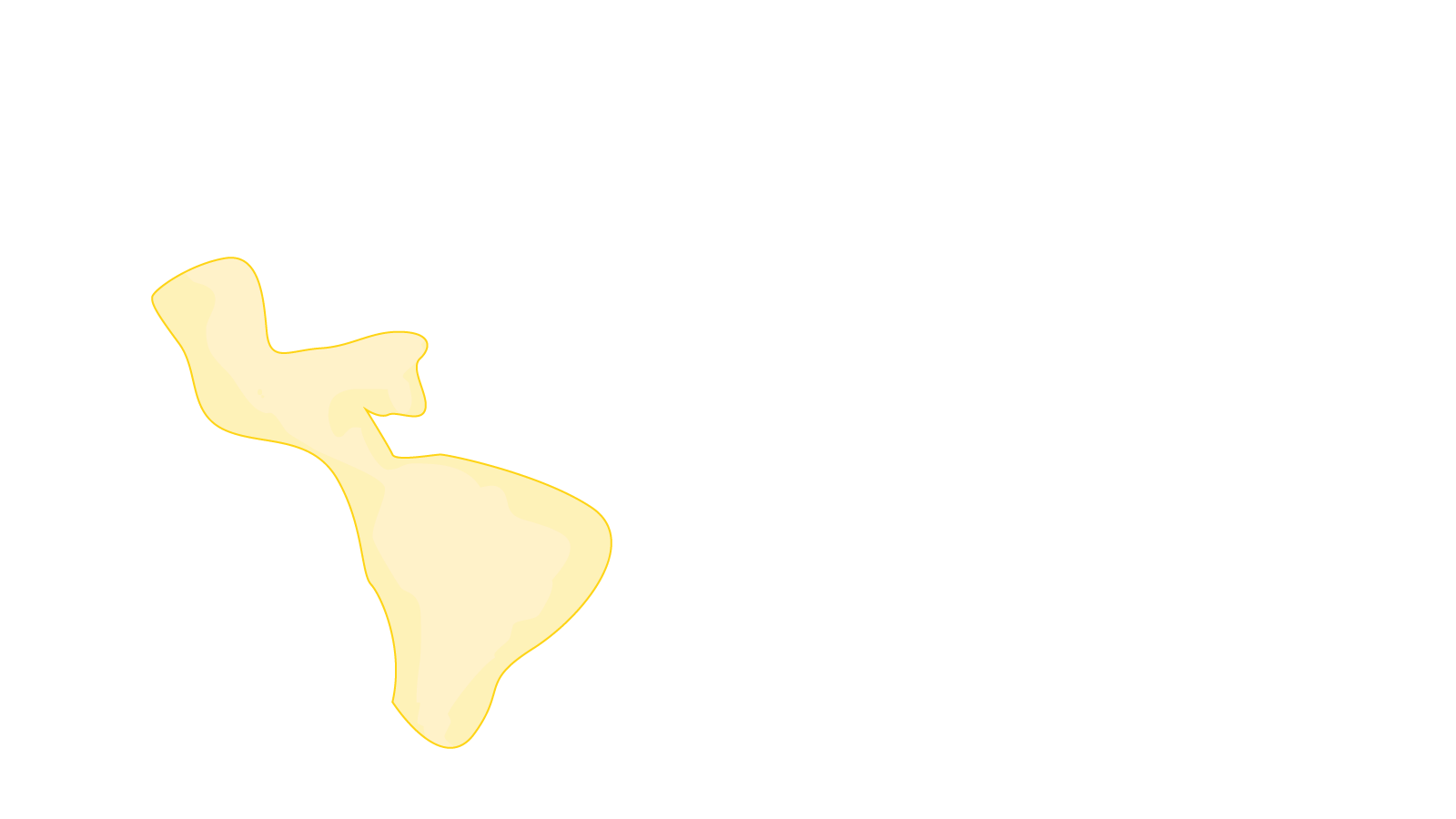
The phasmus is a phytophagous insect with spectacular camouflage. At the Guadeloupe Zoo, three endemic species of the archipelago are presented. They live in humid forests and play a discrete role in the balance of tropical vegetation.
The giant stick insect (Lamponius guerini)
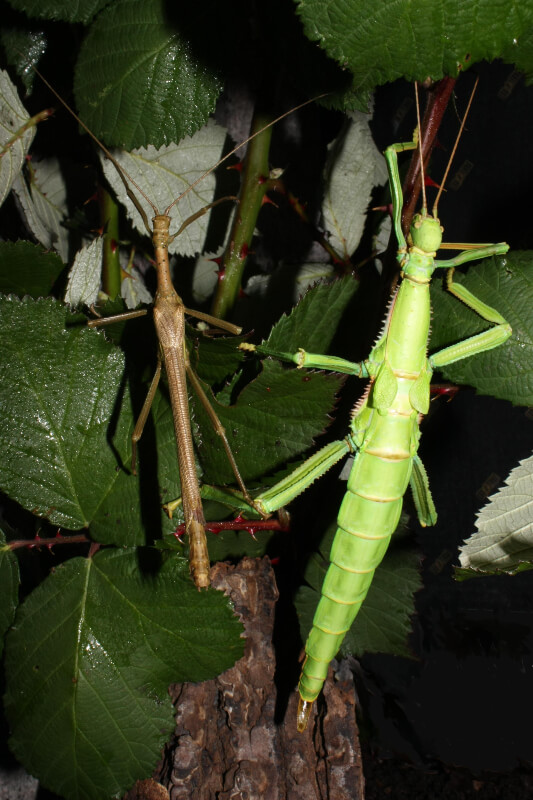
As its name suggests, it is the largest stick walker in Guadeloupe. The female can measure up to 16 cm, twice as long as the male. This stick insect blends perfectly into the vegetation thanks to its elongated body and its green or brown color. It stays still for long periods of time to evade predators.
Guérin's stick bug(Clonistria guerini)
This stick insectis a master of discretion. He can sit still on a branch for hours. His camouflage strategy, called crypsis, allows him to go completely unnoticed.
The orange-cheeked stick walker(Lamponius portoricensis)
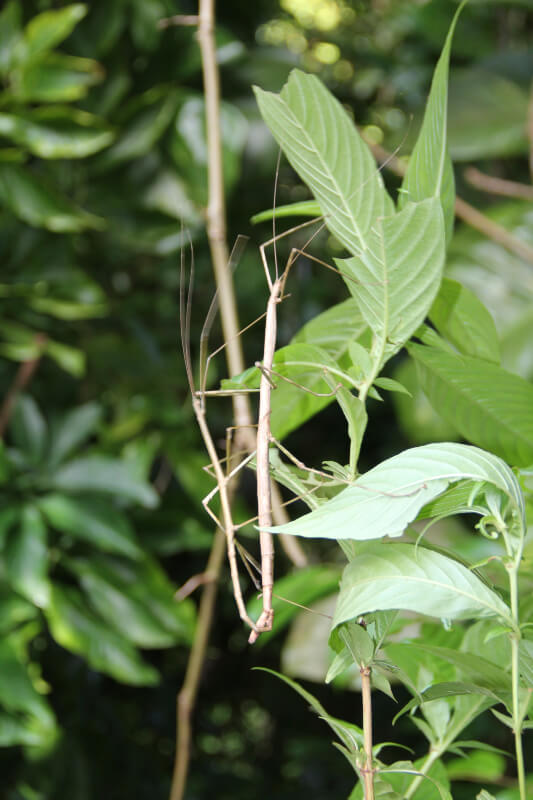
It is the one we encounter most often in Guadeloupe. Its morphology is typical of the stick-shaped stick bug. The small orange spots on his cheeks give him his name. A strict herbivore, it feeds exclusively on leaves.
These three species are classified as Least Concern (LC) by the IUCN. They are not threatened today, but their habitat remains fragile.



.svg)


Quelques anecdotes
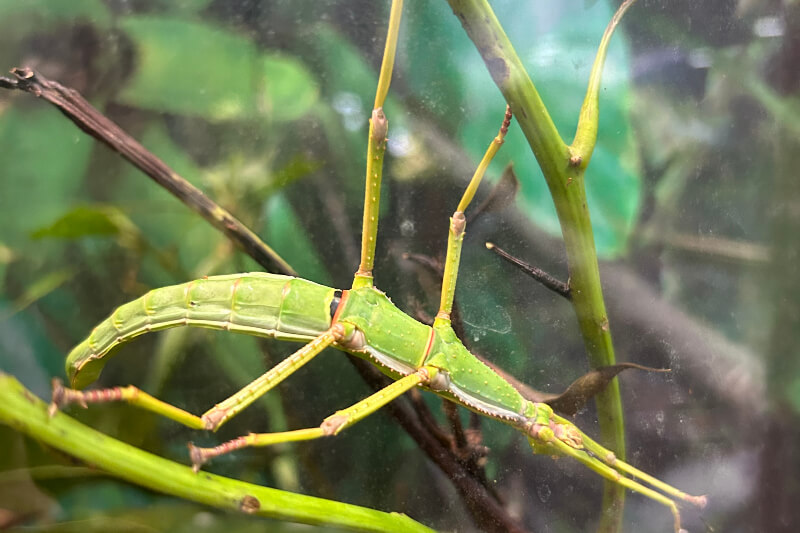
A female that clones itself
If a female stick insect does not encounter a male during her lifetime, she is capable of cloning herself—laying eggs that are genetic copies of her own—to ensure her offspring have the opportunity to find mates and reproduce.
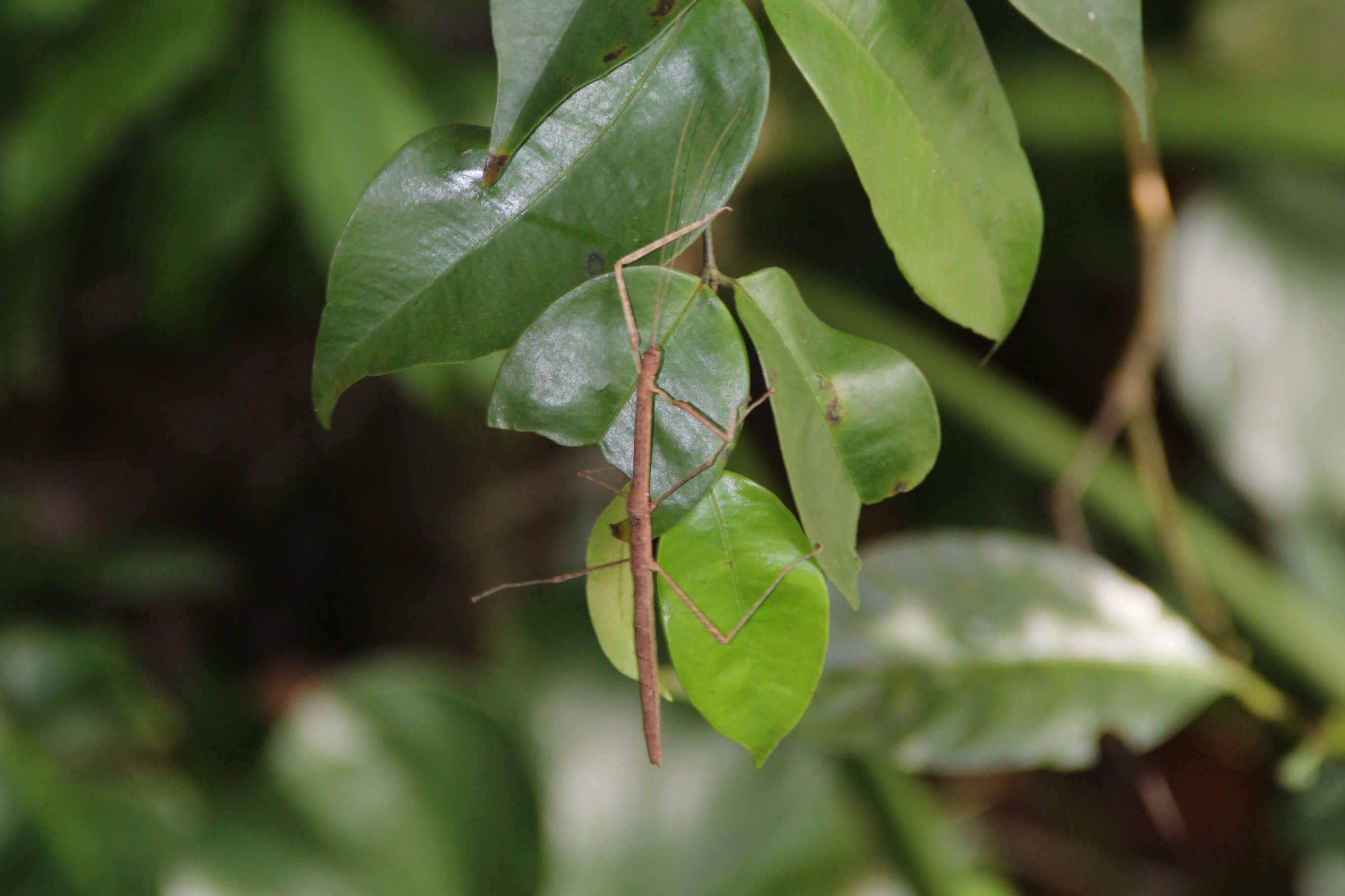
The “Chouval Bwa”
In Guadeloupe, the stick bug is nicknamed “chouval bwa”, literally “wooden horse”. This name comes from its resemblance to a twig. When it stays still, it becomes almost invisible to the human eye.
.svg)
