.png)
.png)

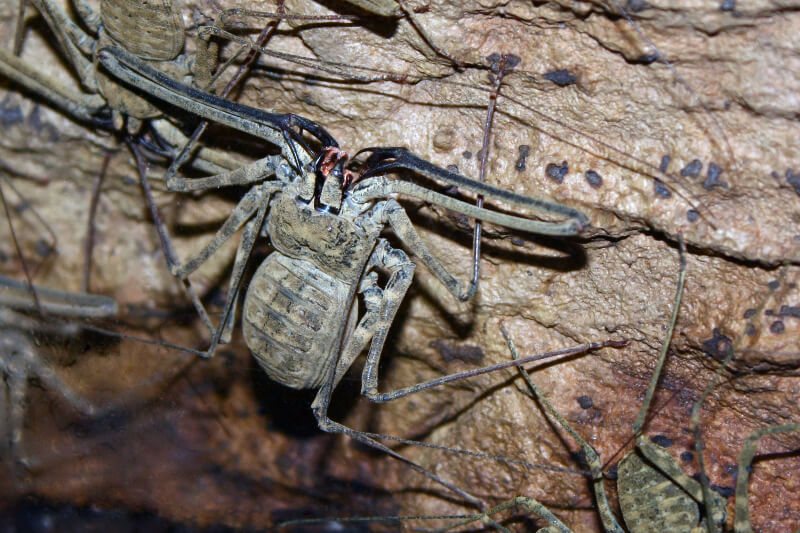
Tailless whip scorpion
Amblypygi


The Tailless whip scorpion at the Guadeloupe Zoo
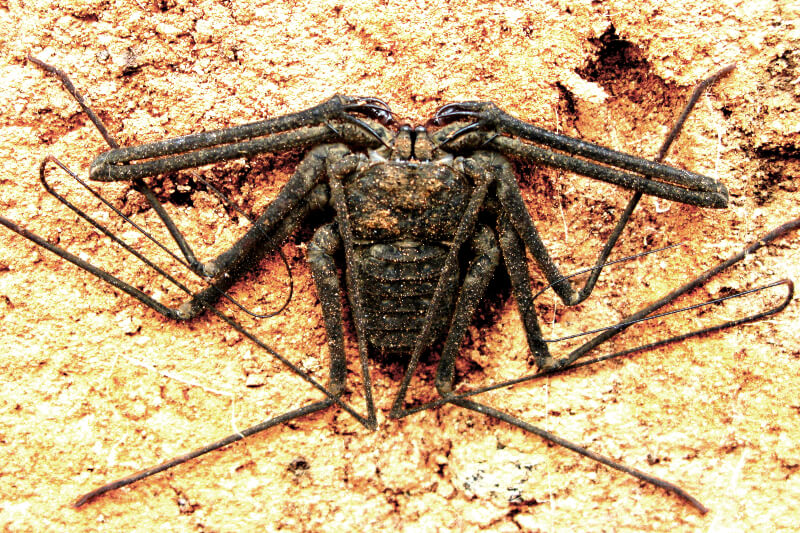
The Tailless whip scorpion (Amblypygi) is a fascinating and unknown arachnid. Often mistaken for a spider or a scorpion, it actually belongs to a very distinct order.
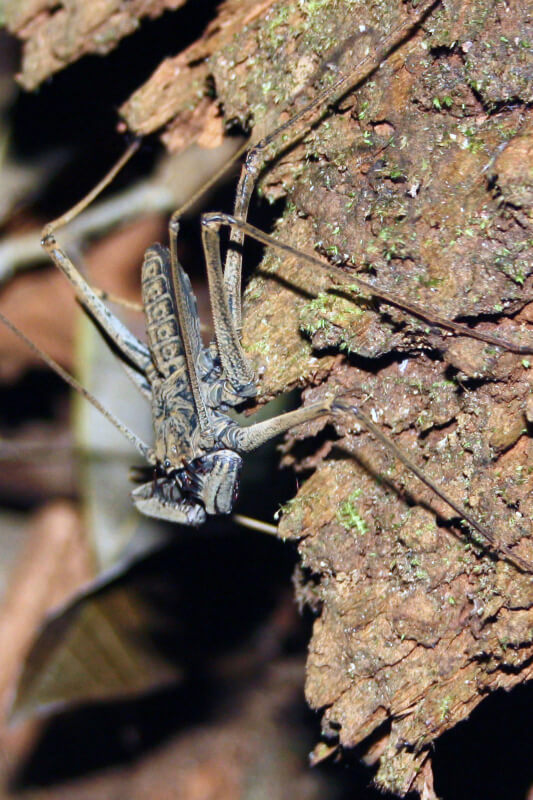
It is mainly found in tropical rainforests, hidden in dark and humid areas: under bark or in caves. These places offer it both freshness, protection and a good cover to surprise its prey. The Tailless whip scorpion is nocturnal. He spends the day motionless and goes out at nightfall to hunt.
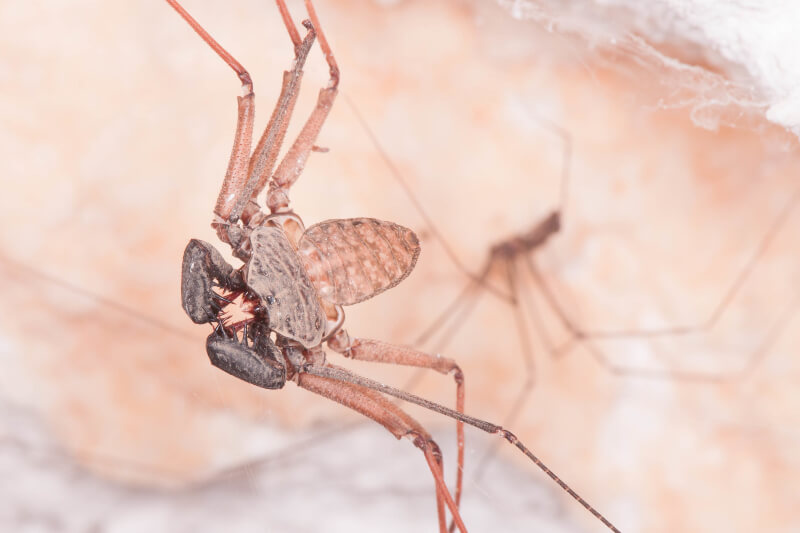
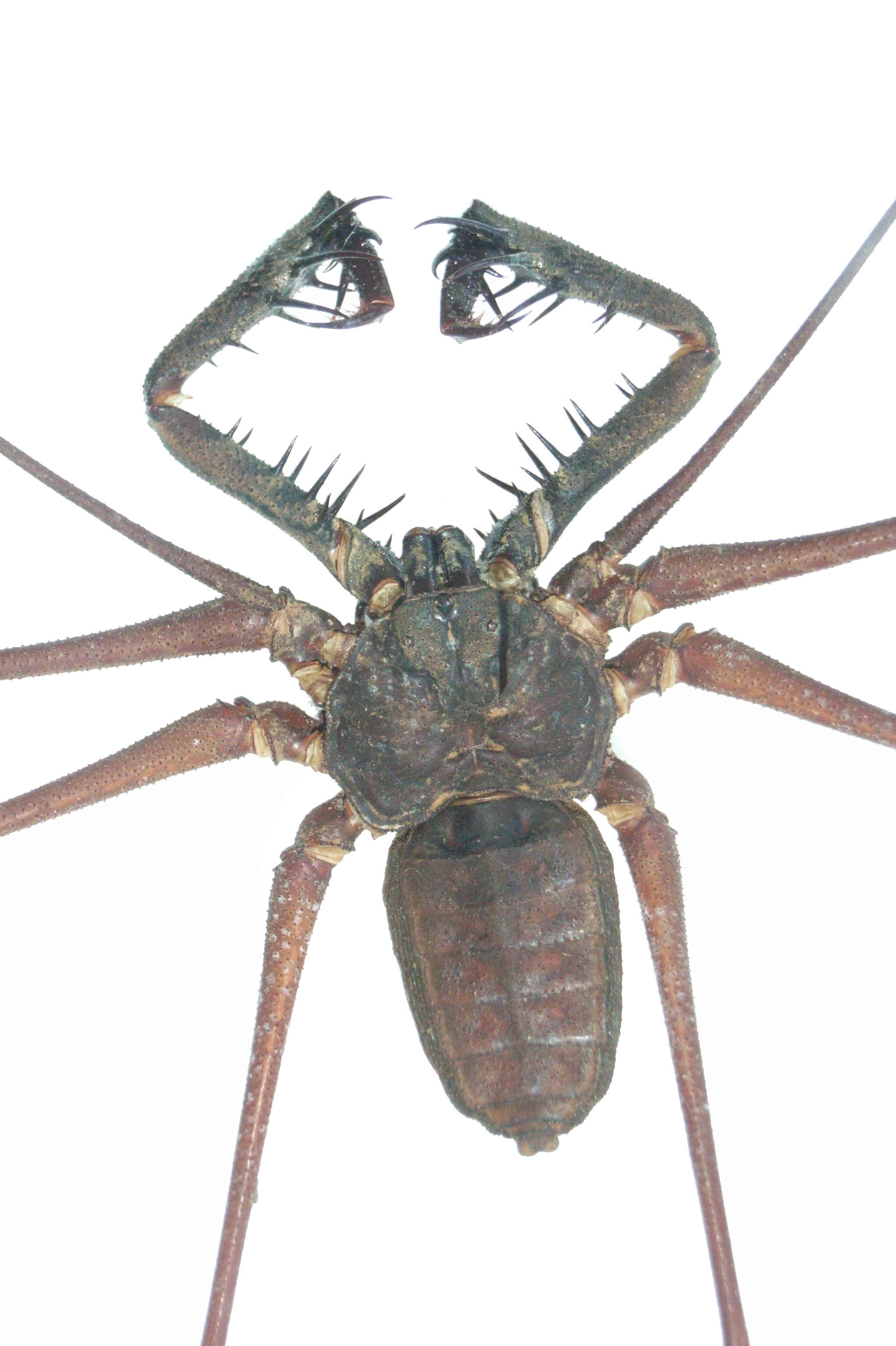
It has a flat body, two long whip-shaped tactile antennae, and large front legs that it uses as radars. Its powerful tweezers allow it to accurately capture insects or small invertebrates. This particular morphology makes it an agile predator and very well adapted to life in tropical undergrowth.
After mating, the female then carries the eggs in a ventral sac until they hatch. The young remain fixed on his back until they first molt. This strategy considerably increases their chances of survival in a dense and humid environment.
The Tailless whip scorpion is little known to the general public. However, it plays an important role in the natural regulation of insect populations. At the Guadeloupe Zoo, this discreet species is presented in the insectarium alongside Achatine And Phasms endemic.
The Tailless whip scorpion is not considered to be threatened on a large scale and is not classified on the IUCN red list. However, deforestation and the disturbance of its natural habitat can locally reduce its populations. Its observation in a preserved environment is therefore a good indicator of the health of the forest ecosystem.












.svg)


Quelques anecdotes
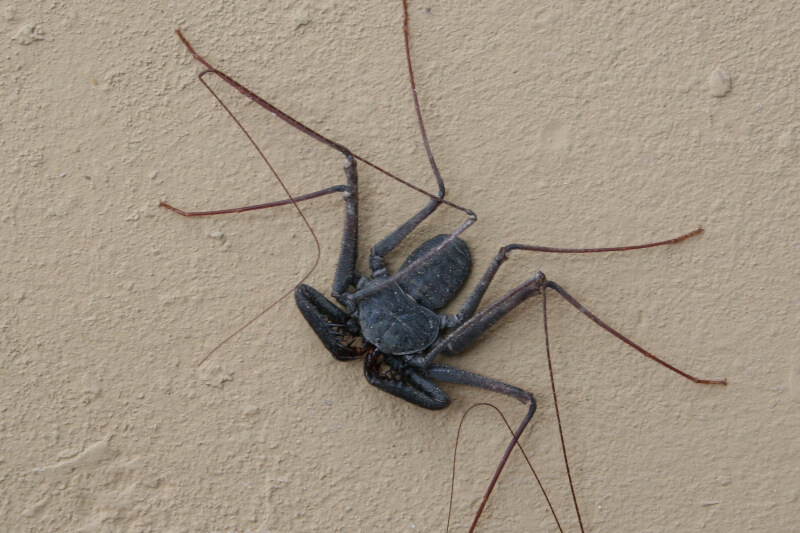
A predator without venom
The tailless whip scorpion is an impressive animal, but it Do not sting and Don't bite. Its long whip-like legs are in fact very sensitive sensory organs, allowing it to detect the slightest vibration. This particularity distinguishes it from most arachnids, which use venom to neutralize their prey.
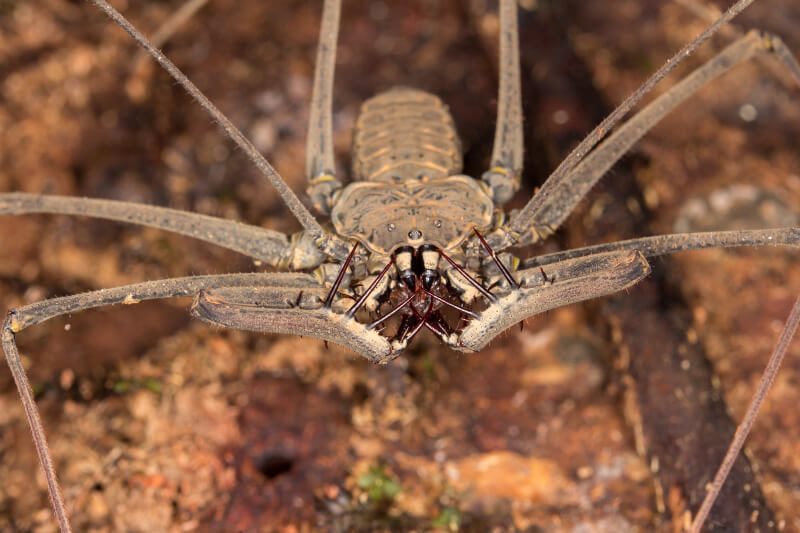
Astonishing tactile communication
The tailless whip scorpion use their long whip antennae to communicate with each other. Before mating or when they intersect in their territory, they delicately “touch” each other with these appendages. This tactile behavior, which is rare in arachnids, testifies to a subtle form of communication.
.svg)
