.png)
.png)
Blue land crab
Cardisoma guanhumi


The blue land Crab - Guadeloupe Zoo
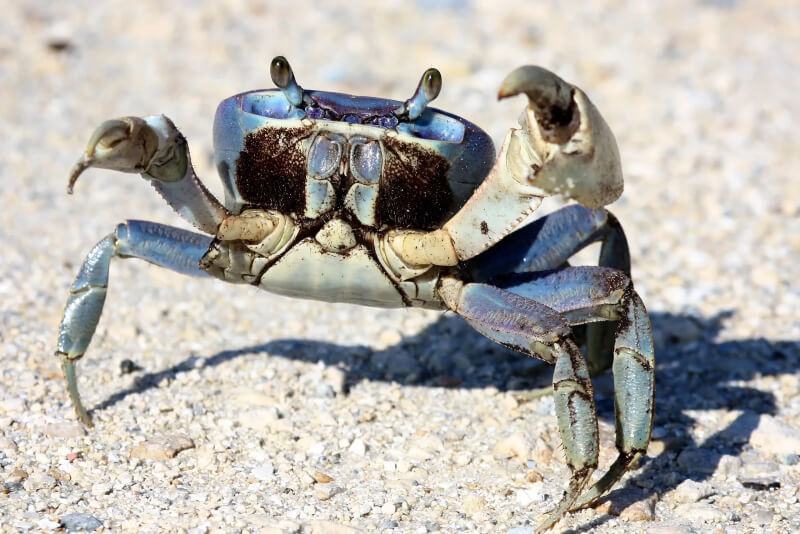
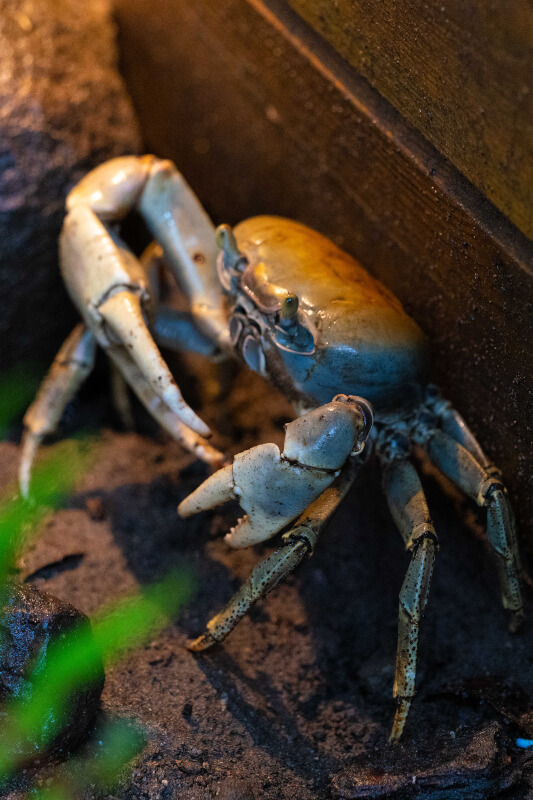
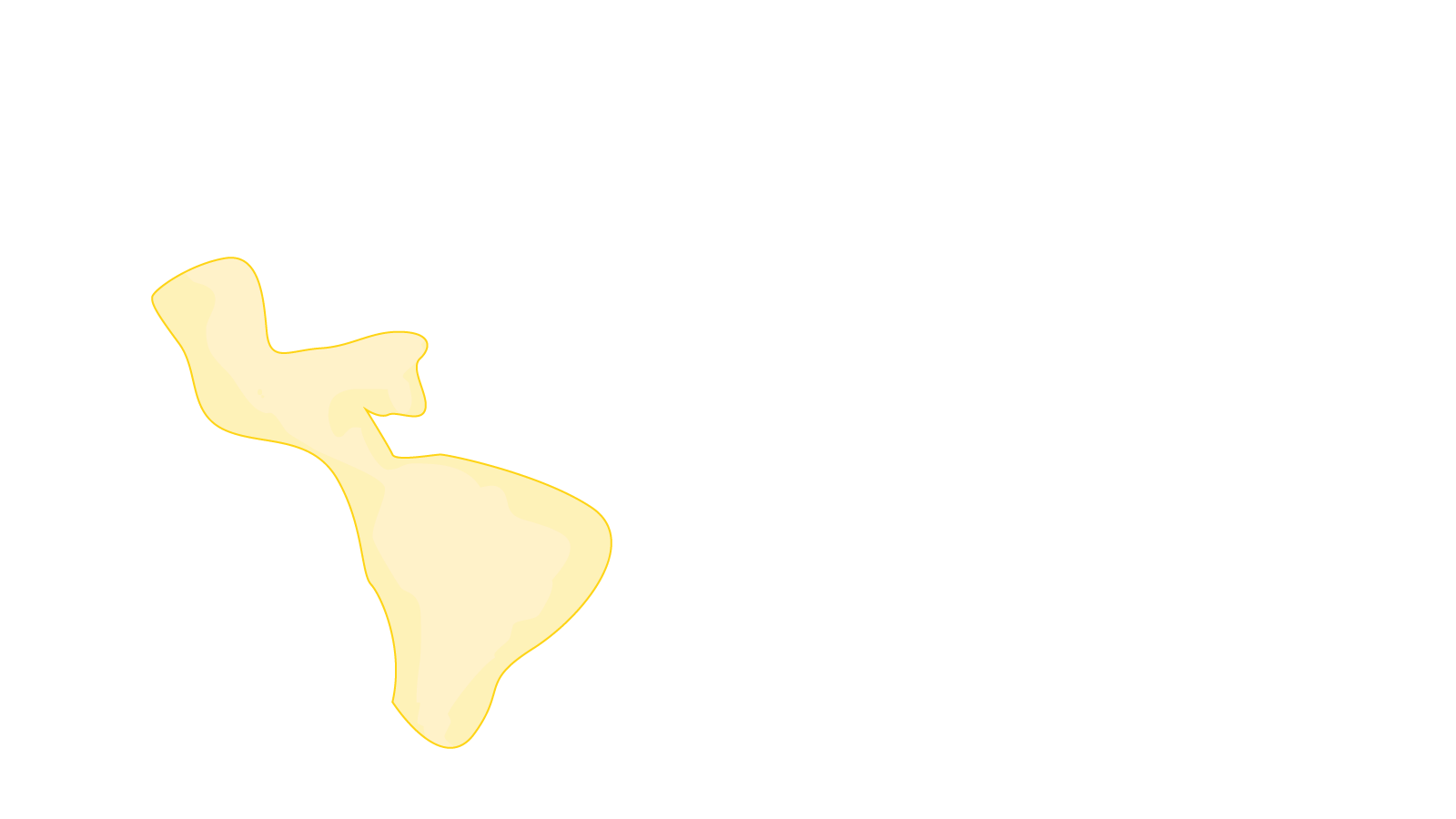
The Blue land crab (Cardisoma guanhumi) is a crustacean typical of the tropical and subtropical regions of the Caribbean and Central America. As its name suggests, it lives on land, digging long burrows in loose soil near wetlands. These galleries, sometimes more than one meter deep, offer both shelter and constant humidity, which is essential for its survival.
The species is classified as Near Threatened (NT) by the IUCN. Its population is declining in some areas due to the destruction of its coastal habitat, pollution, and human consumption. In the Antilles, this crustacean plays an important ecological role in the aeration and fertilization of soils thanks to its burrows.
The blue land crab has a massive shell, often bluish gray, and powerful claws that allow it to defend itself and manipulate its food. It feeds mainly on vegetable matter, decomposing leaves, and fruits that have fallen to the ground, but can also consume small invertebrates. Its activity is mainly at dusk and at night, when the temperatures are cooler and the ambient humidity is higher.
Breeding generally takes place during the wet season. The females then migrate to the sea to release their eggs into the salt water. The larvae develop there before returning to land. This unique life cycle makes it a species closely linked to the balance between terrestrial and coastal environments.
At the Guadeloupe Zoo, the blue land crab is presented in the insectarium, alongside Achatine, of Phasms And of Amblypygia. It illustrates the richness of local species and their ecological role in tropical ecosystems.



.svg)


Quelques anecdotes
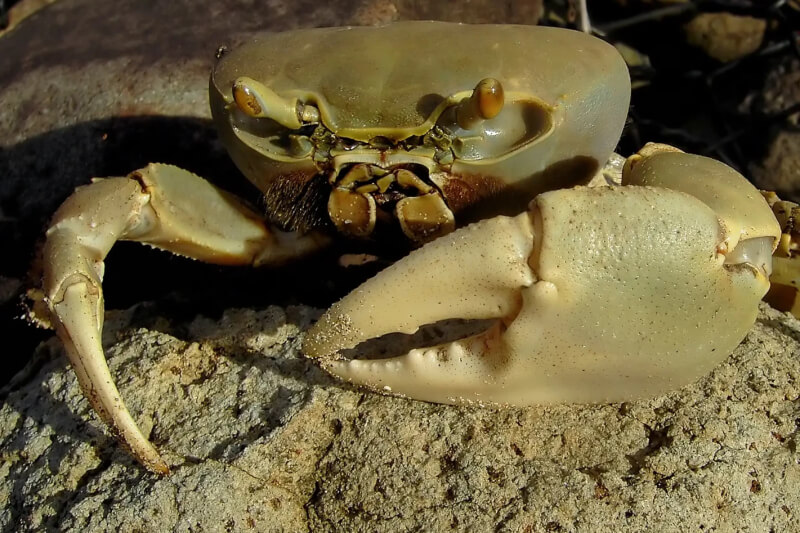
An outstanding digger
The blue land crab is a soil engineer: by digging its deep galleries, it contributes to improving the circulation of water and air in the ground. These mini-tunnels also benefit other small animals.
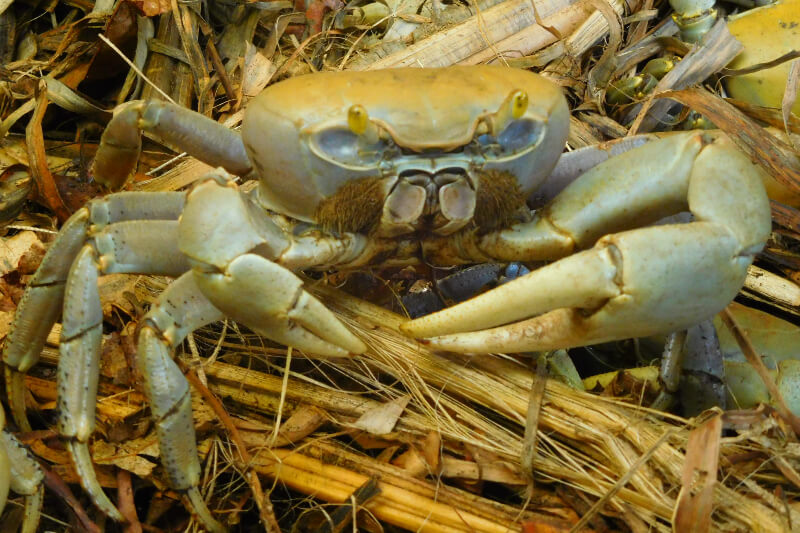
A spectacular migration
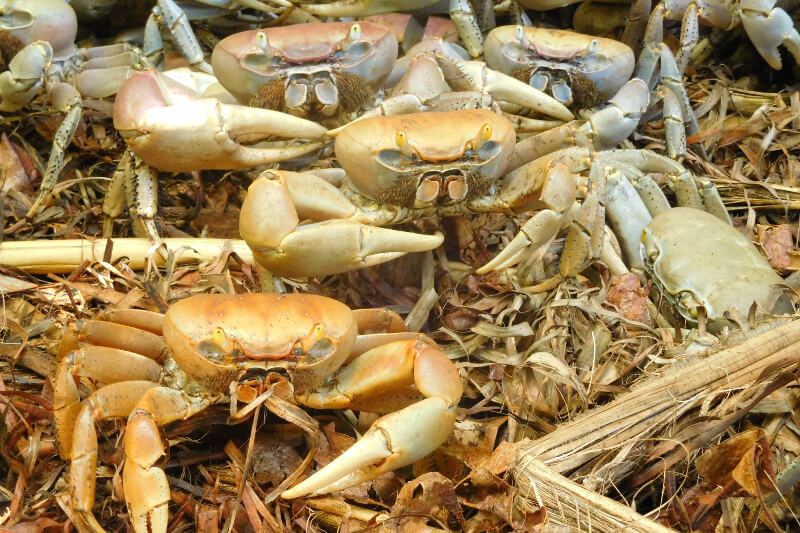
During the rainy season, thousands of crabs set out to sea to lay eggs annually. This impressive natural spectacle marks a highlight in the ecological cycle of tropical coastlines.
.svg)
