.png)
.png)

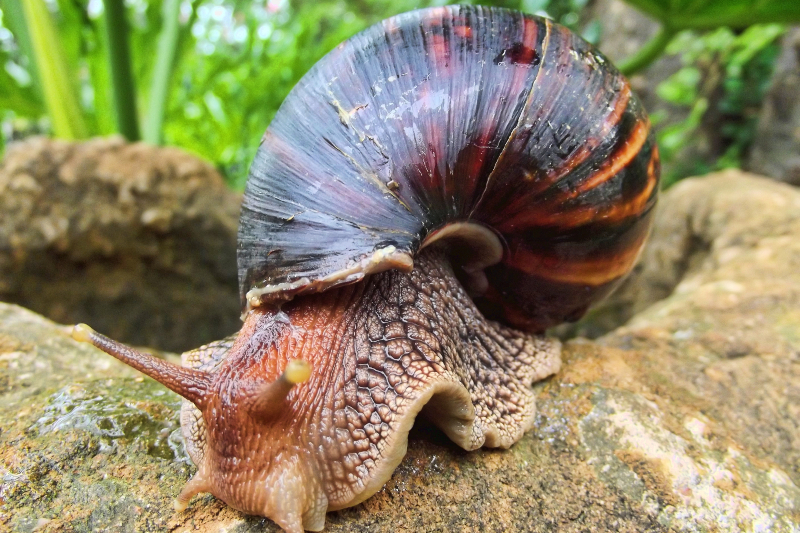
Achatine snail
Achatina fulica


Achatine at the Guadeloupe Zoo
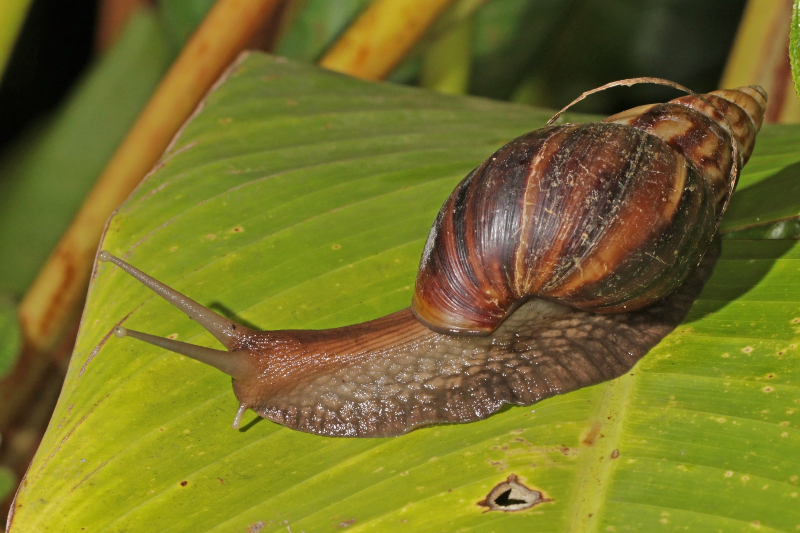
Achatine (Achatina fulica) is a land snail native to East Africa. It is one of the largest gastropods in the world, reaching up to 20 cm in length and weighing over 250 grams. Its conical shell, brownish and streaked with lighter bands, makes it easily recognizable.
She likes hot and humid areas, such as forest edges, tropical gardens or plantations. It stays hidden during the day to avoid dehydration and comes out mainly at night to feed.
Herbivorous, it consumes a wide range of plants: fresh leaves, fruits fallen to the ground and decomposing plants. It thus contributes to the recycling of organic matter and to enriching the soil. But when introduced outside of its natural range, it can quickly multiply and become invasive due to a lack of predators.
The species is classified as Least Concern (LC) by the IUCN. It is therefore not threatened, but is subject to surveillance in several tropical regions where it has settled.
At the Guadeloupe Zoo, she illustrates the importance of small invertebrates in ecosystems, alongside Phasms endemic and dendrobate frogs.


.svg)


Quelques anecdotes
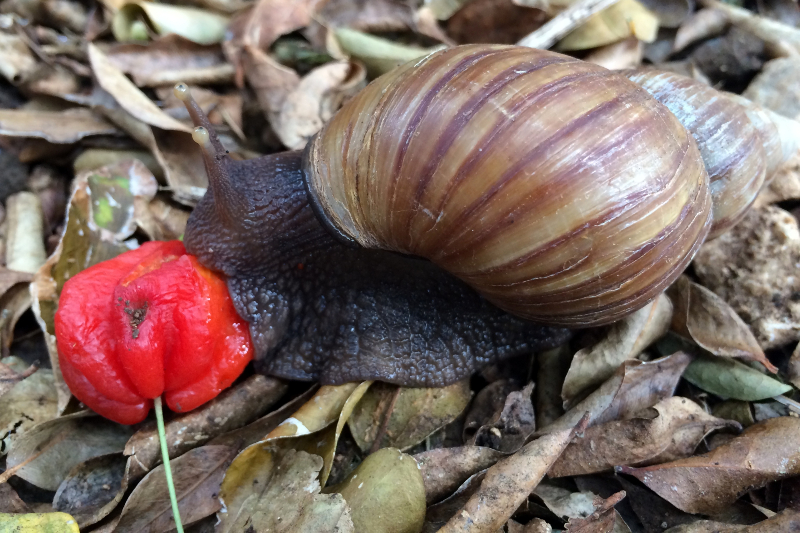
A giant in no hurry
Unlike garden snails, Achatine snail can reach impressive sizes. It moves slowly but effectively thanks to a muscular foot and secretes drool that allows it to slide on the ground or wet trunks.
Hundreds of eggs
The giant African sail Pond several hundred eggs in a single spawn. This exceptional reproductive capacity explains why it is considered a species. obtrusive in many tropical countries. In a favorable environment, a single female can give birth to thousands of young in a few years.
.svg)
