.png)
.png)

Cane toad
Rhinella marina


The cane toad
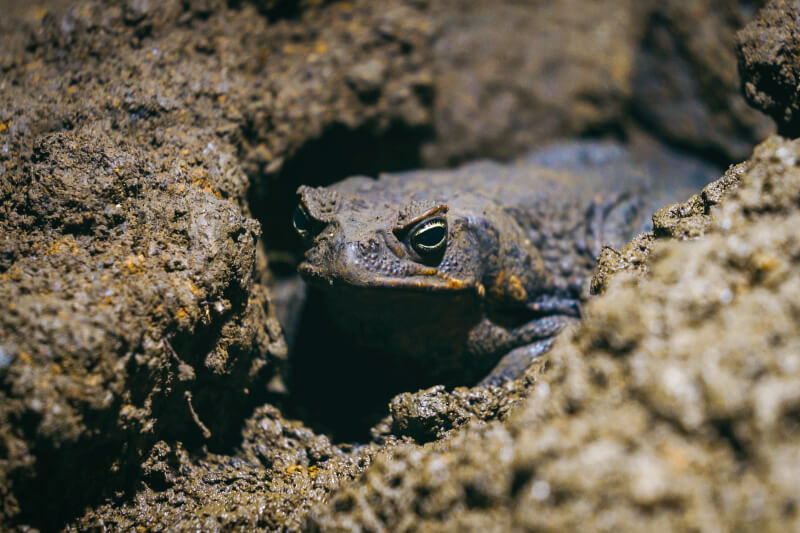
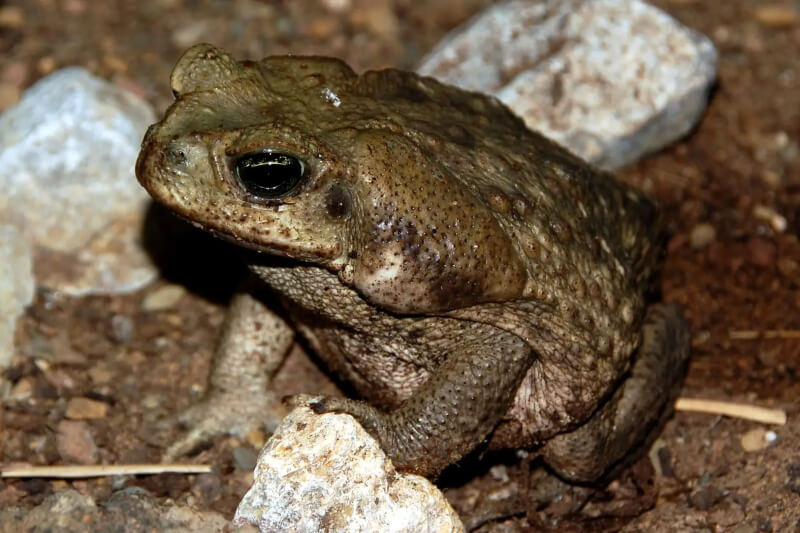
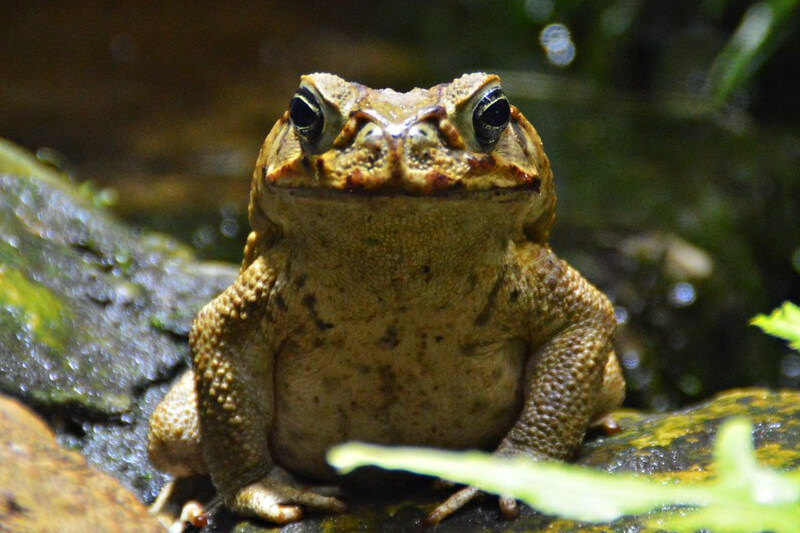
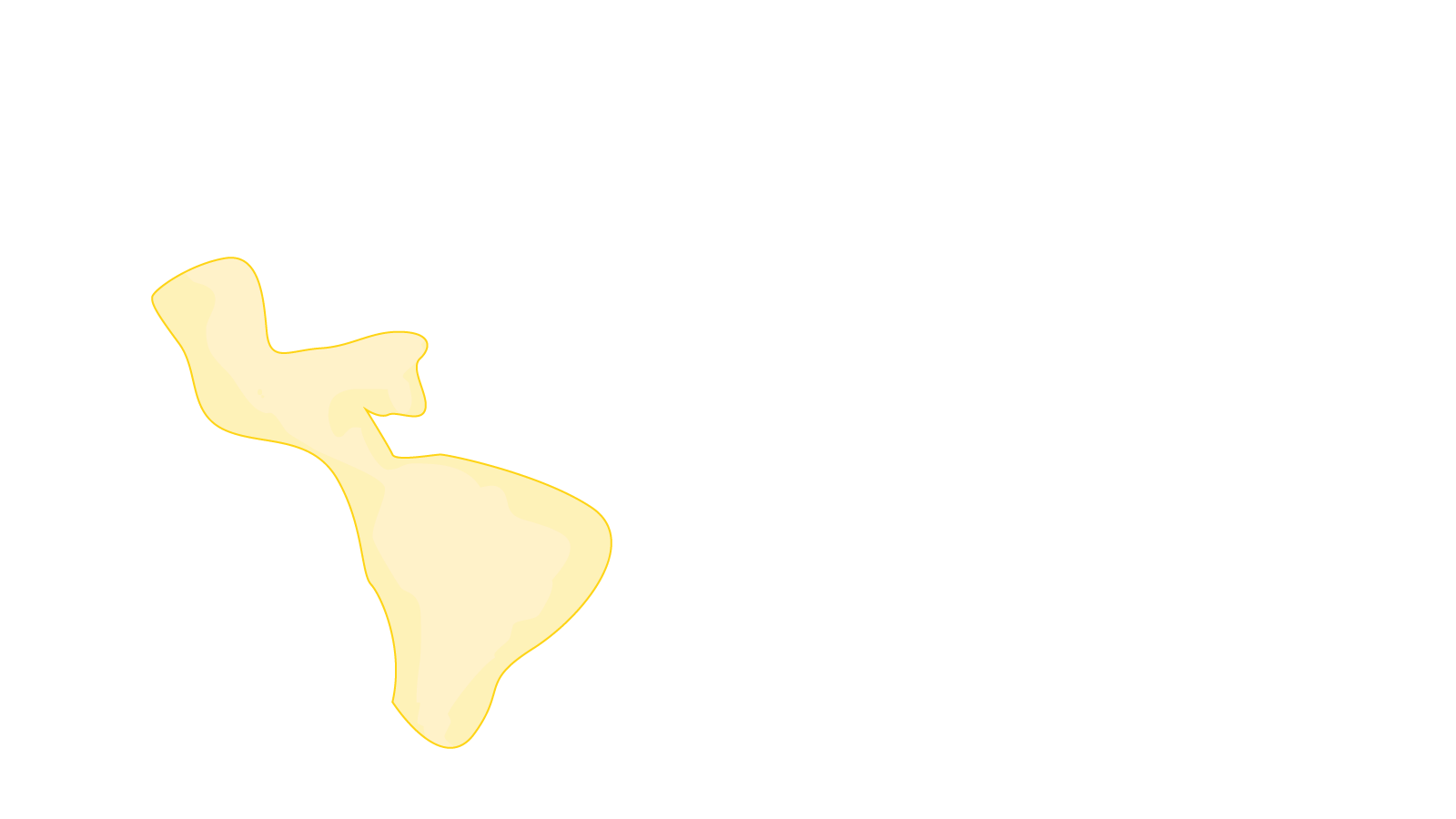
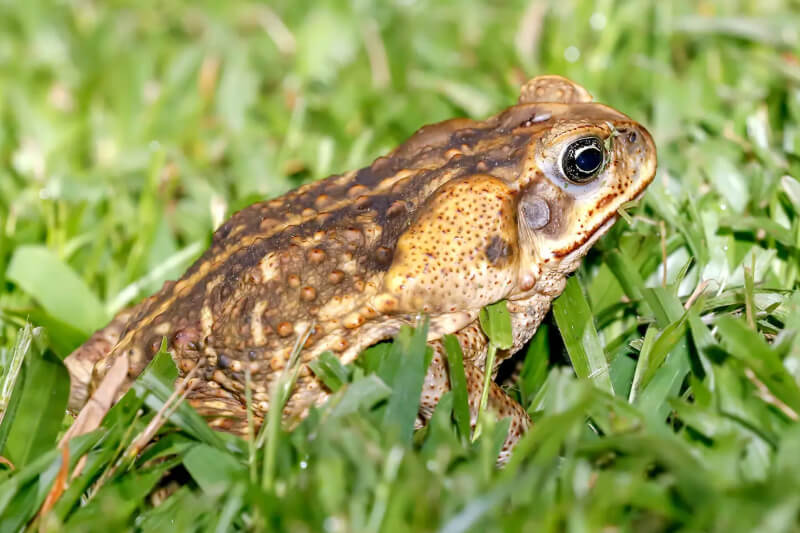
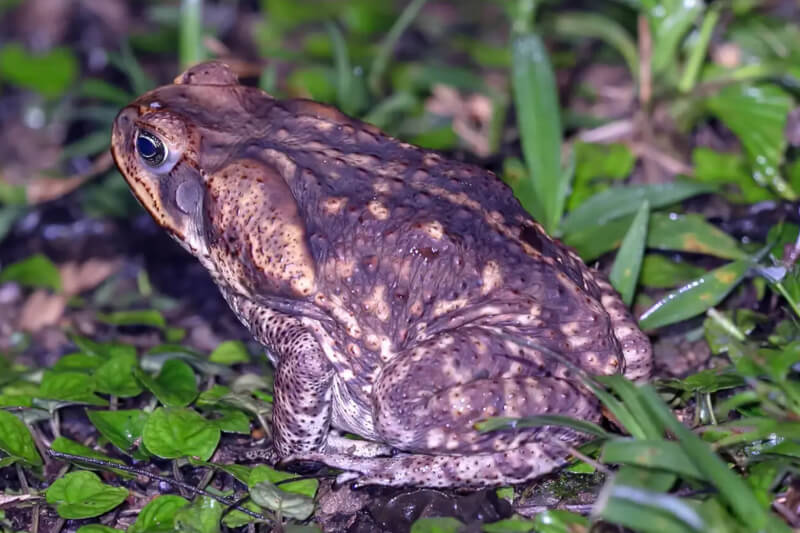
The cane toad (Rhinella marina) is one of the largest terrestrial amphibians in the world. Native to Central and South America, it can reach 15 to 25 cm and weigh up to 1 kg for the largest specimens.
The species is classified as Least Concern (LC) by the IUCN because it has spread widely beyond its native range. This success is explained by her extraordinary ability to adapt. Indeed, the cane toad supports humid areas as well as drier environments. It only needs a waterhole to reproduce.
Its thick, granular skin protects it from predators and dehydration. During the day, it hides in vegetation, under trunks or in burrows, then comes out at night to feed.
It consumes insects, worms, small invertebrates, and can even swallow small mammals or birds if the opportunity arises. This voracity makes it an excellent regulator in its natural environment.
The cane toad produces a powerful toxin secreted by its parotoid glands located behind the eyes. Harmless for humans if not handled with bare hands, this substance is dangerous for many natural predators. This is one of the secrets of its great ecological success.
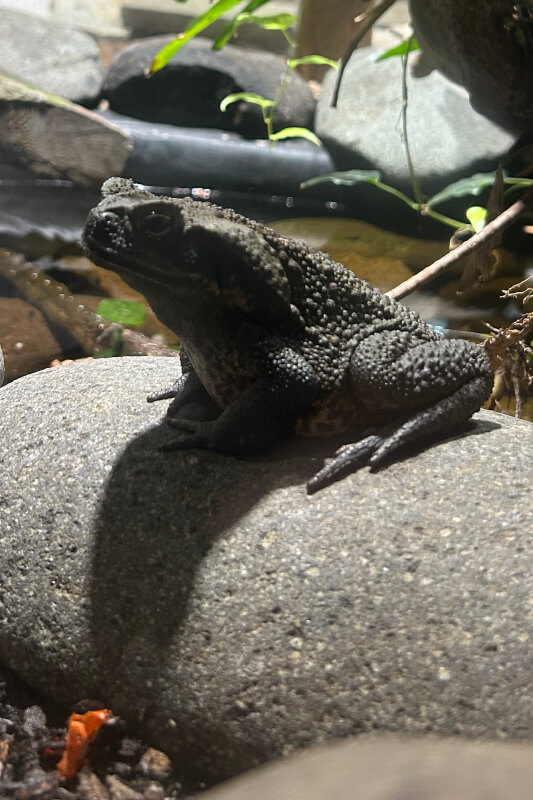
At the Guadeloupe Zoo, it is presented in the small invertebrates and amphibians space, alongside Amblypygia, of Achatine and other tropical species. It is an animal that is often observed by visitors in the evening, as it is more active at night.






.svg)


Quelques anecdotes
A champion of resistance
The cane toad can survive very difficult conditions. It tolerates heat, variable humidity, and even temporary drought by burrowing into the ground. This “survival mode” has allowed it to thrive in a wide variety of tropical environments.
A surprising nocturnal choir
Males emit a very loud and continuous song to attract females, especially at nightfall. This collective concert can be heard several dozen meters away and is one of the typical sounds of tropical forests.
.svg)
