.png)
.png)

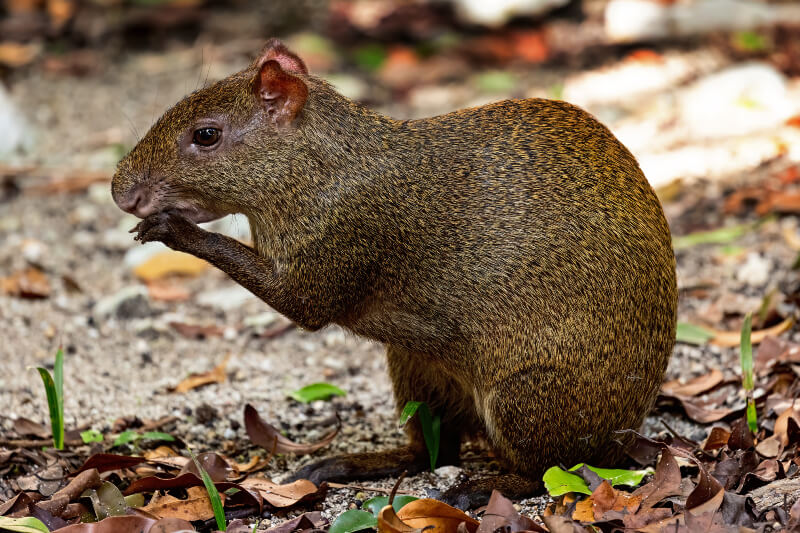
Red-rumped agouti
Dasyprocta leporina


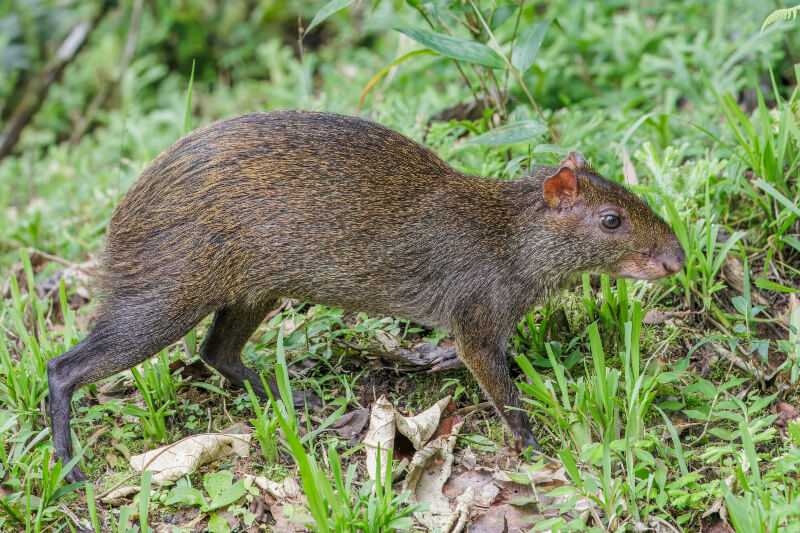
Red-rumped agouti at the Guadeloupe Zoo
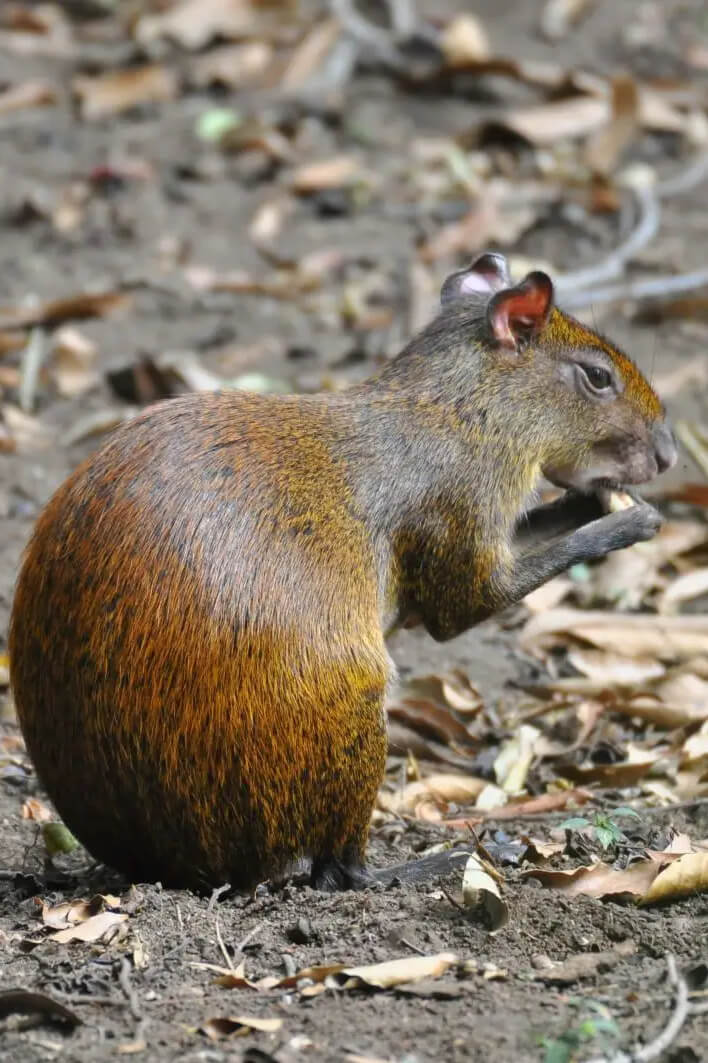
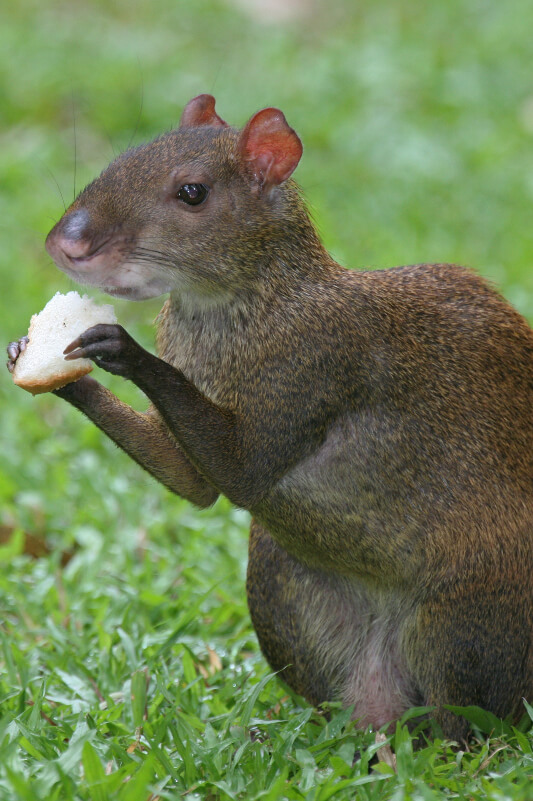
The red-rumped agouti (Dasyprocta leporina) is a small rodent native to South America. It is mainly found in tropical rainforests, but also on forest edges or in certain cultivated areas rich in fruits.
Its slender figure, slender legs and reddish-brown dress allow it to move quickly and silently. It is a terrestrial and diurnal animal, active from the first hours of the day. It often moves alone or in pairs, and takes refuge in small burrows or natural shelters to protect itself from predators.
The red-rumped Agouti is frugivorous. It feeds on fruits that have fallen to the ground, seeds and sometimes young shoots. By burying certain seeds to preserve them, it promotes their germination and contributes to the regeneration of tropical forests.
Its species is classified as Least Concern (LC) by the IUCN. It is not threatened on a large scale, but deforestation and hunting can weaken some local populations.
At the Guadeloupe Zoo, the red-rumped agouti lives in the heart of the forest area alongside other neotropical mammals such as the Tandoir, tea Unau Sloth Or Even the Red-faced spider monkey.












.svg)


Quelques anecdotes

A Gardener in Spite of Himself
The red-rumped Agouti often bury seeds to preserve them. But he doesn't always find a trace of it. These forgotten seeds germinate and contribute to the natural dispersal of tropical trees. A valuable ecological role, a bit by accident!
A forest sprinter
Despite its small size, the red-rumped agouti runs very quickly. This ability allows it to escape predators such as the jaguar or the boa snake. It can also swim to cross wetlands, a skill that is little known to the general public.
.svg)
