.png)
.png)

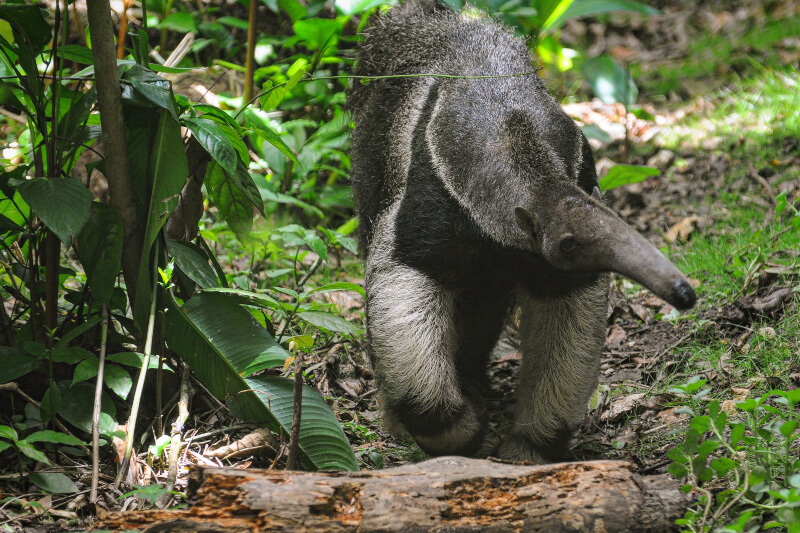
Giant anteater
Myrmecophaga tridactyla


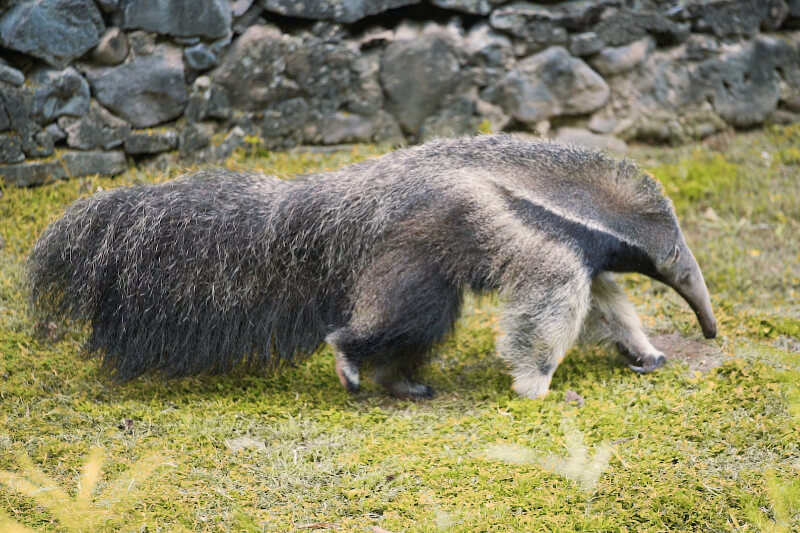
The Giant Anteater at the Guadeloupe Zoo
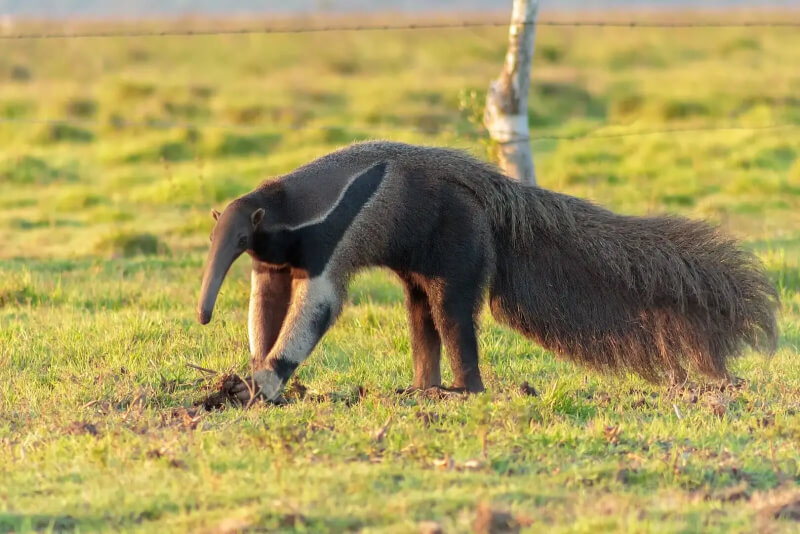
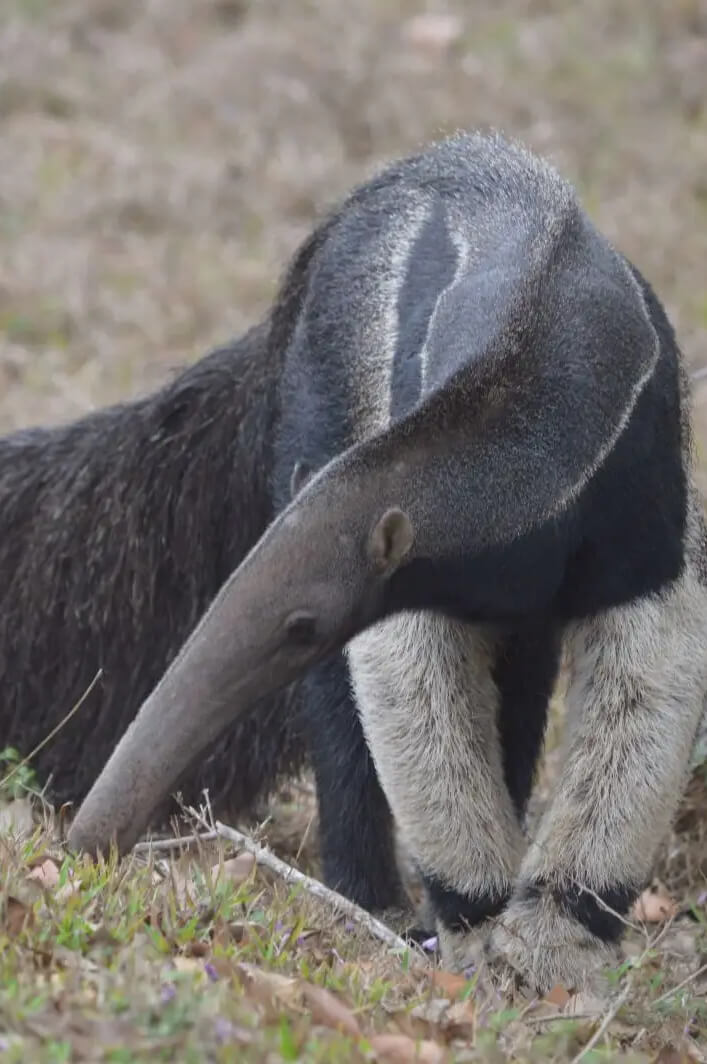
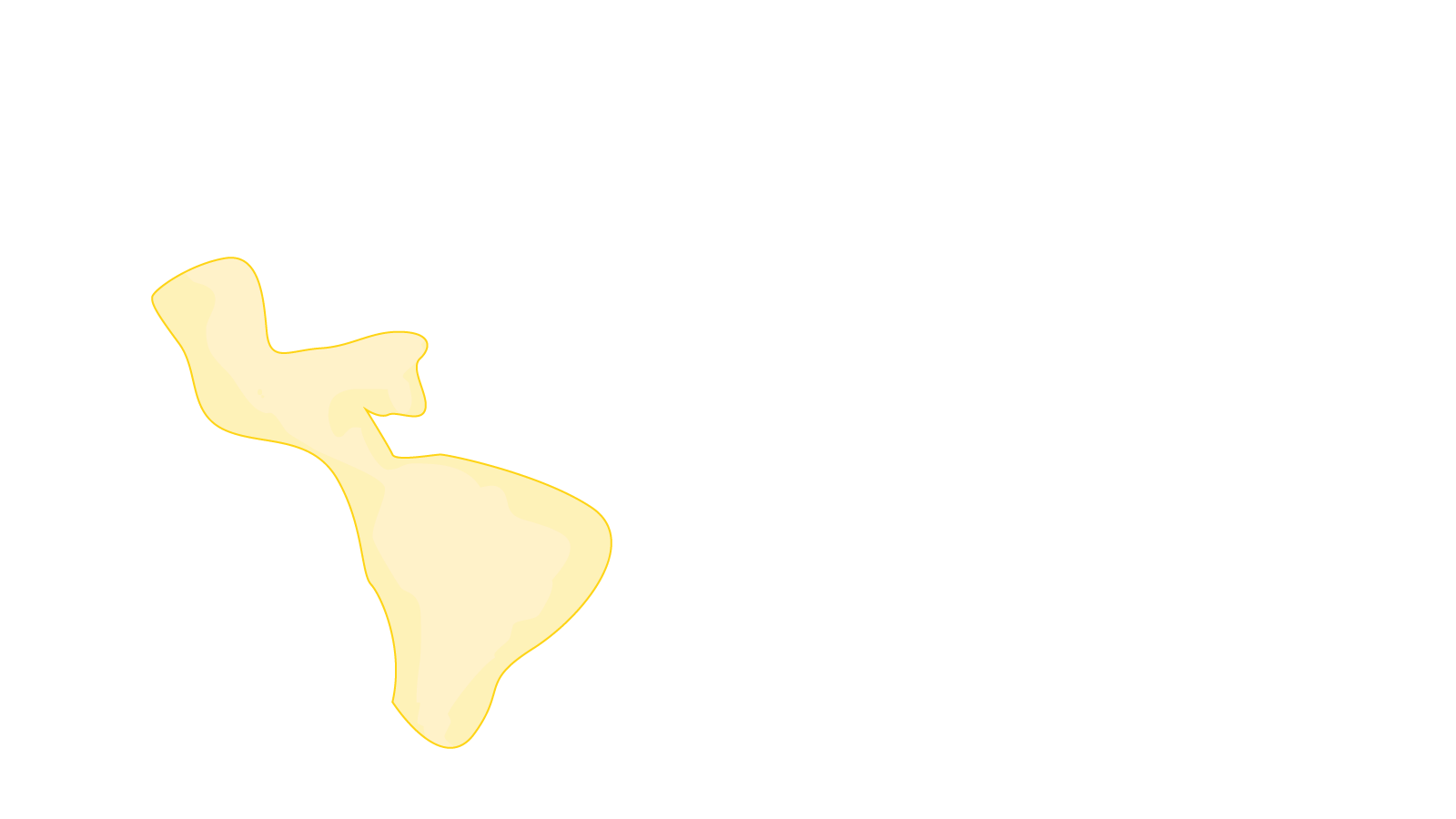
The The Giant Anteater, also called giant anteater (Myrmecophaga tridactyla), is a mammal native to Central and South America. It is found in a wide variety of environments: open grasslands, wooded savannas and tropical rainforests. He spends the majority of his time there combing the ground looking for food. It is part of the same family as the Unau sloth.
Despite its large size and unique appearance, it is a peaceful and discreet animal. His highly developed sense of smell compensates for his rather poor eyesight. It allows it to easily identify ant and termite colonies buried in the ground.
It uses its powerful, long and curved claws to break termite mounds, dig soil and access insect galleries.
The The Giant Anteater is a solitary animal. Individuals meet for breeding purposes only.
It is classified as Vulnerable (VU) by the IUCN. Its populations are threatened by deforestation, forest fires, road expansion, and poaching.
In the wild, their main predator is the jaguar. In case of danger, the The Giant Anteater stands on its back legs and uses its long claws as a powerful defense.
At the Guadeloupe Zoo, a The Giant Anteater can be observed in a forest enclosure.


.svg)


Quelques anecdotes
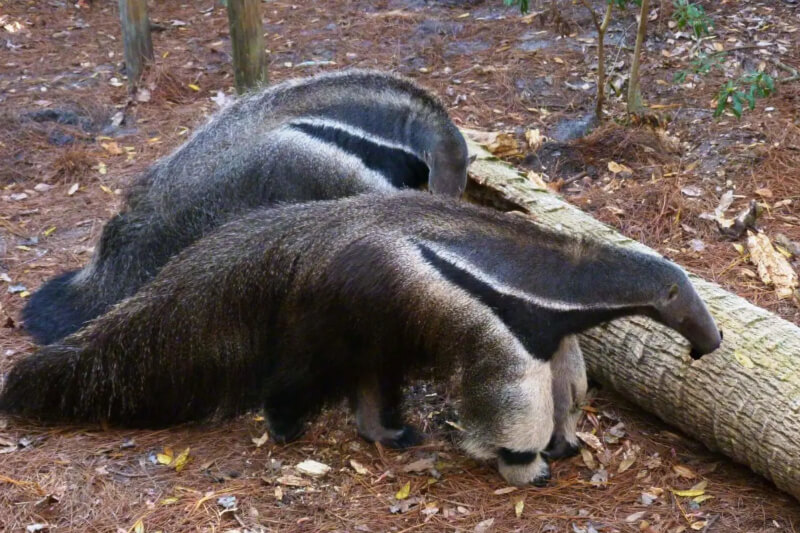
A language that breaks records
A Giant Anteater's tongue can measure up to 60 cm. It goes back and forth up to 160 times per minute to catch insects. The animal never stays on a termite mound for long to avoid ant attacks. In one day, it can swallow up to 30,000 ants.
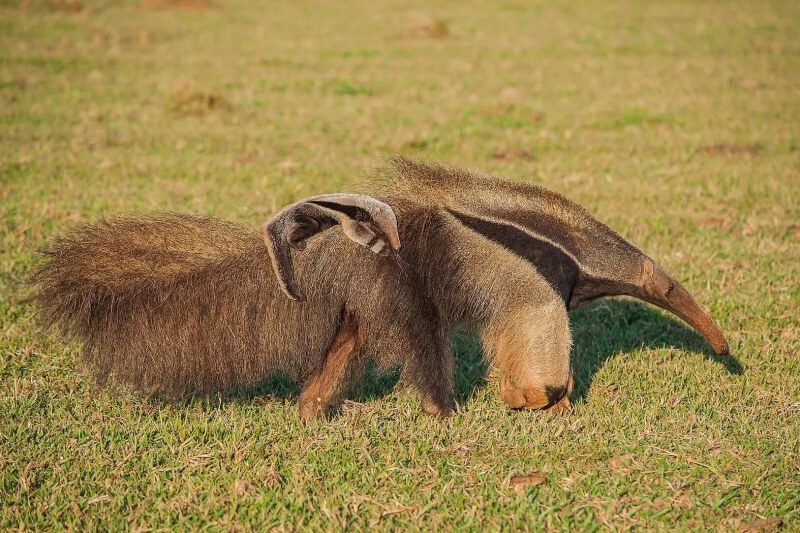
A baby in its mother's petticoats
The gestation period is approximately 90 days. At birth, the baby immediately climbs onto its mother's back and stays attached to it for about six months. Its coat, identical to that of an adult, hides it perfectly. At two years of age, he became independent and learned to eat on his own.
.svg)
