.png)
.png)

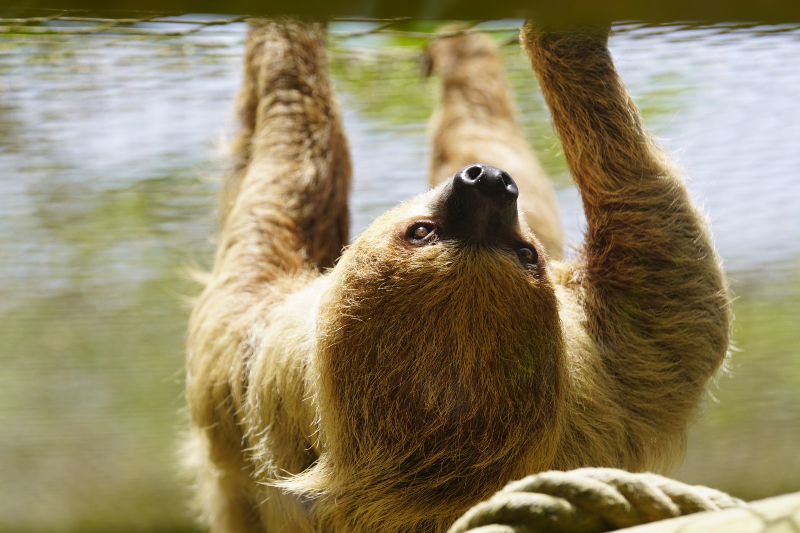
Unau sloth
Choloepus didactylus


The slowest mammal in the world
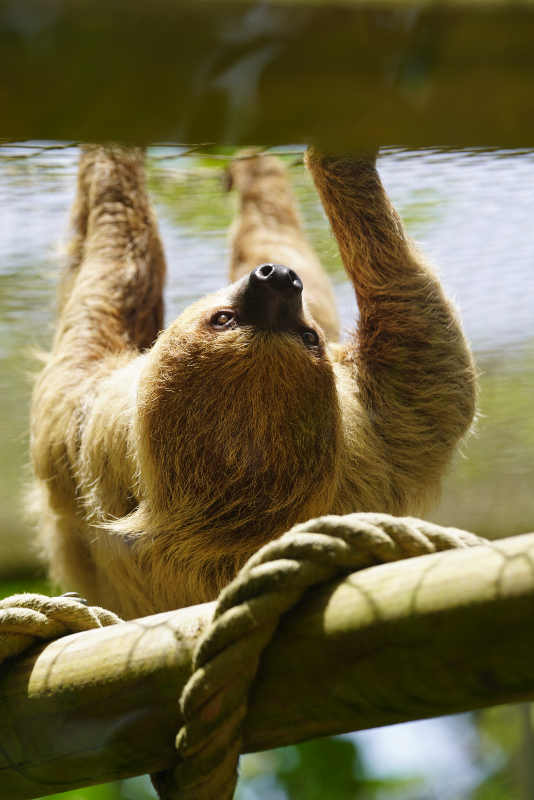
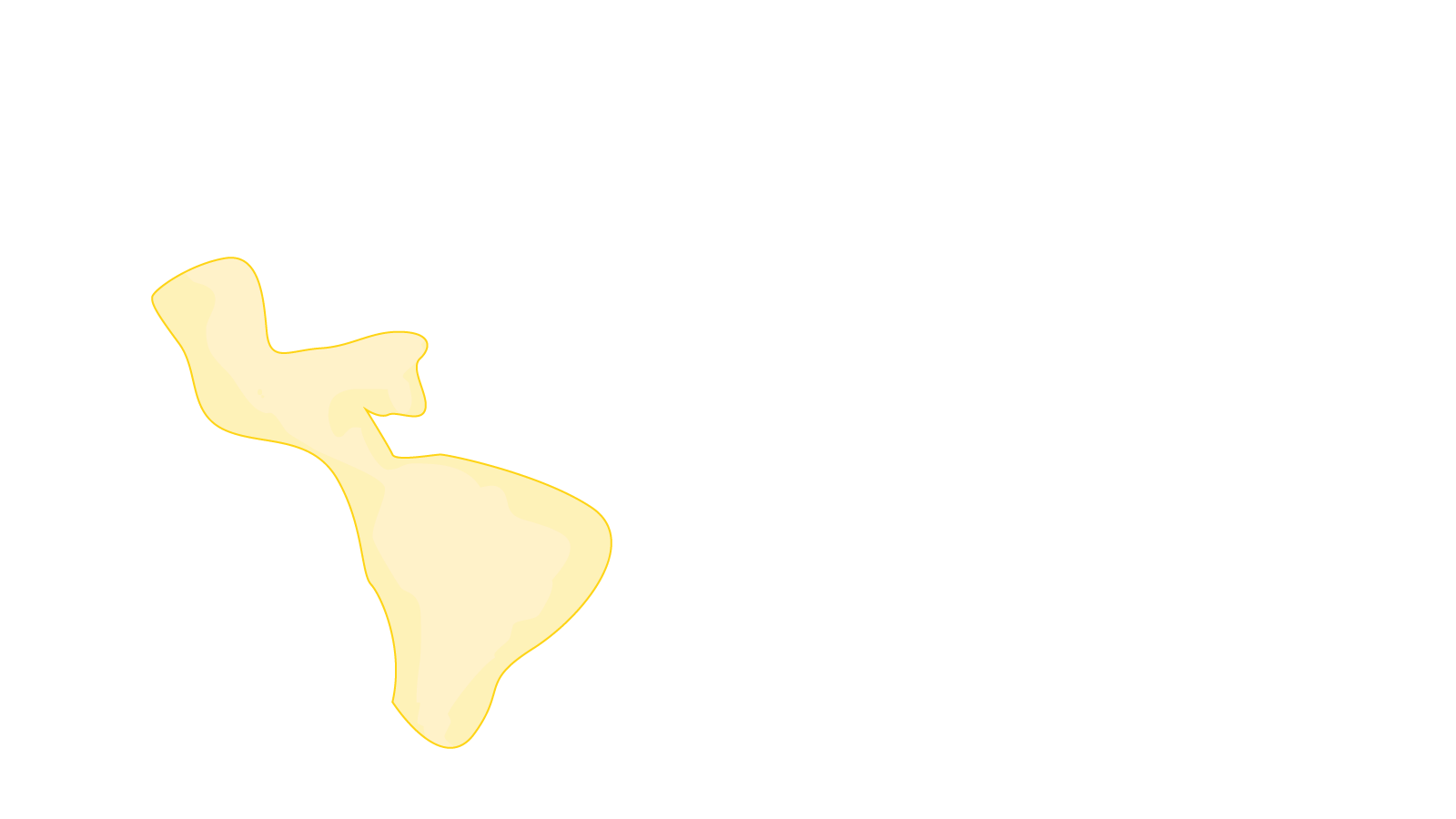
The unau sloth, also called two-toed sloth, is the slowest mammal in the world. Its speed of movement varies between 0.5 and 1.5 km/h. This animal lives perched in the canopy of Central and South America, where it leads a peaceful and discreet life.
He spends almost 80% of his time sleeping. Its metabolism is extremely slow and its body temperature, surprisingly low, is between 24 and 33°C depending on the weather. His heart rate sometimes drops to 40 beats per minute, even when moving.
Its coat is home to microscopic algae that give it a greenish tint in the wet season and browner in the dry season. This camouflage allows it to escape its predators, such as the jaguar, which has a hard time identifying an immobile animal hidden in the vegetation.
The unau sloth is primarily herbivorous. It feeds on young leaves, flowers, stems, and berries. It can also swallow some insects or larvae. Its digestion is as slow as its movements: some meals take nearly a month to be assimilated.
At the Guadeloupe Zoo, you can observe this amazing lifestyle and understand why the sloth plays an essential role in the regeneration of tropical forests.







.svg)


Quelques anecdotes
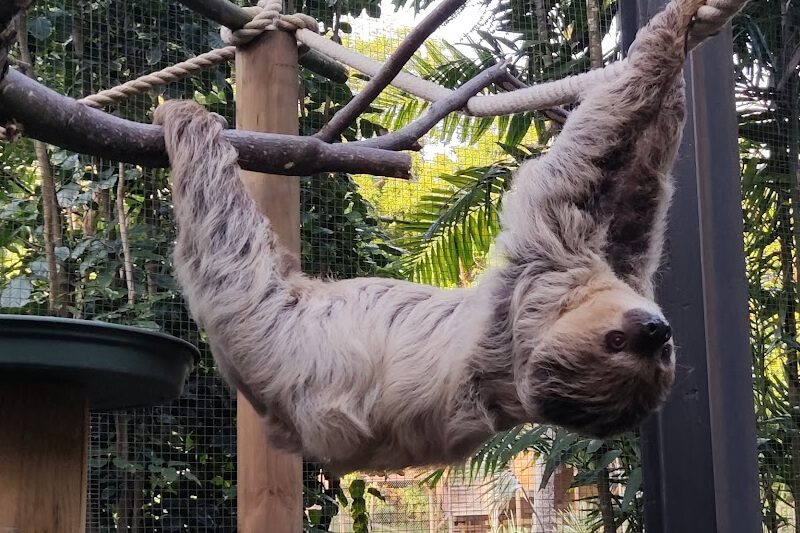
A life with your head down
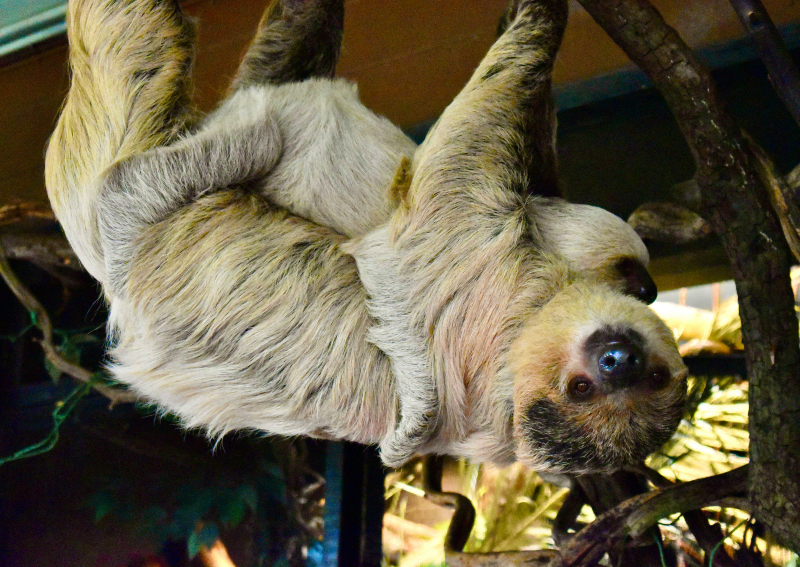
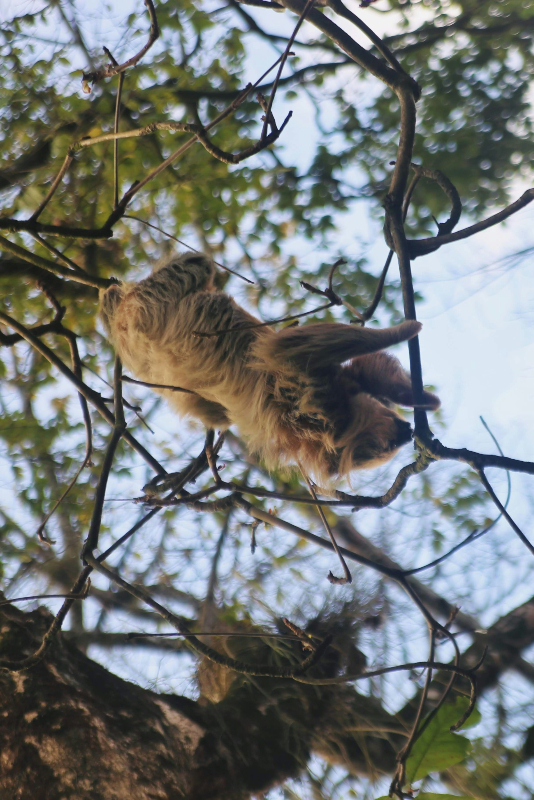
The sloth spends about 90% of their time hanging upside down. Unlike other mammals, its hair grows from the belly to the back. Rainwater thus flows naturally when it is returned. And to save his energy, he only comes down from his tree once a week... only to do his needs. howls, growls, and body signals, strengthening the bonds within the pack.

L'Unau, a patient lover
For the lazy, love is lived without haste. The female is fertile from 3 years old, the male from 4 or 5 years old. When the season comes, couples hug for 48 hours straight.
The gestation lasts 10 to 11 months and gives birth to a single pup weighing 300 to 400 grams. Clinging to his mother's womb, he gradually discovers her diet by tasting what she consumes. As with the antèle, another arboreal species in the zoo, the mother-child bond is vital for its survival.
.svg)
