.png)
.png)
Alligator turtle
Macrochelys temminckii


The Alligator Turtle, the quiet strength of the swamps
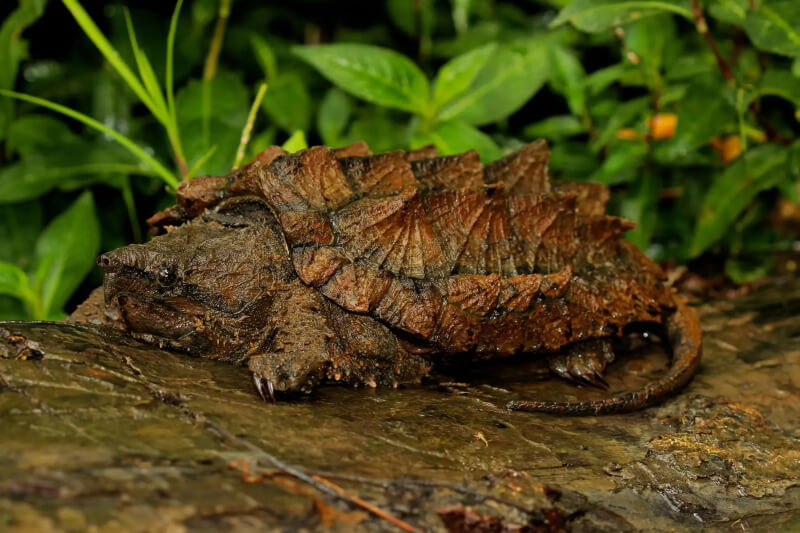
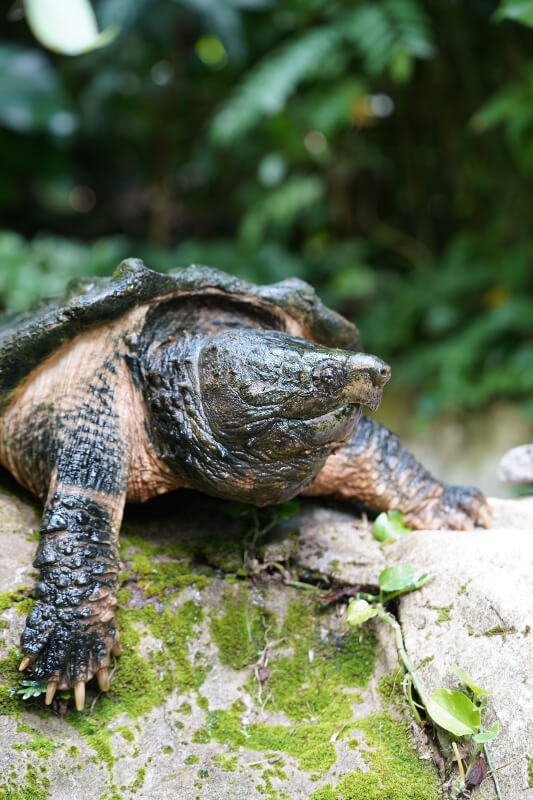
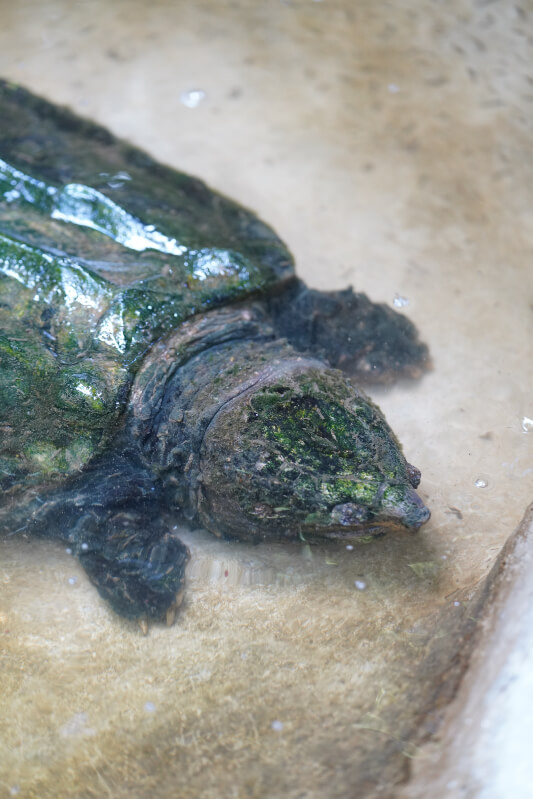
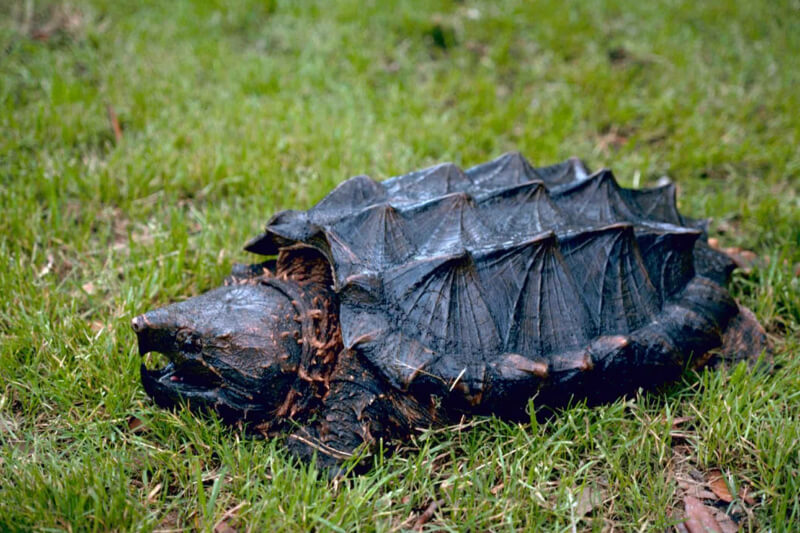
The alligator turtle (Macrochelys temminckii) is one of the largest freshwater turtles in the world. It impresses with its massive shell, bristling with three dorsal crests, and by its broad head with primitive features. This morphology often leads to it being described as a “living fossil”. The species is now classified Vulnerable (VU) on the IUCN Red List, in particular because of the destruction of wetlands and past human pressure.
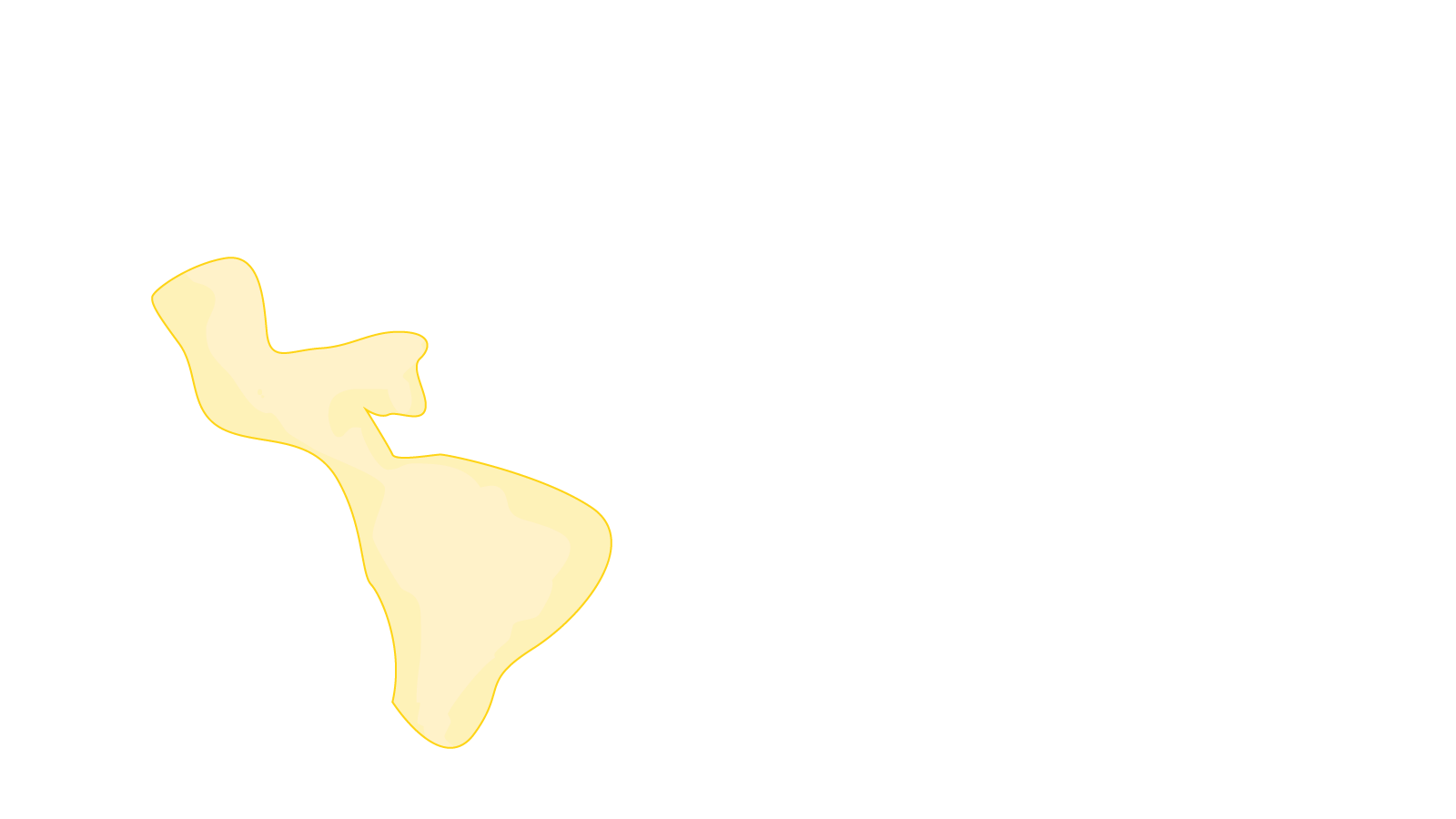
Native to the southeastern United States, the alligator turtle frequents slow rivers, marshes, bayous and freshwater streams rich in vegetation. She leads a very discreet life and spends most of her time immersed. It moves slowly and chooses quiet areas, often at the bottom of the water, where it can remain still for long hours.
It is a solitary species, not very active, with a slow metabolism. It can go long periods without feeding and adapts its rhythm to the conditions of its environment. Unlike other turtles, it rarely goes out onto land, except during breeding, when the female comes to lay her eggs on soft ground near water.
At the Guadeloupe Zoo, the alligator turtle illustrates the diversity of aquatic reptiles such as the bespectacled caiman or the Great Turtles or the Seychelles presented in the park.

.svg)


Quelques anecdotes
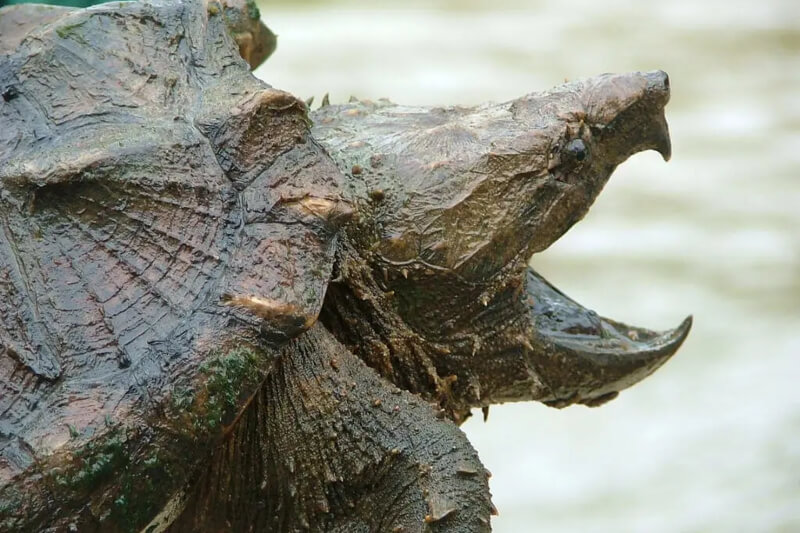
A tongue in the shape of a bait
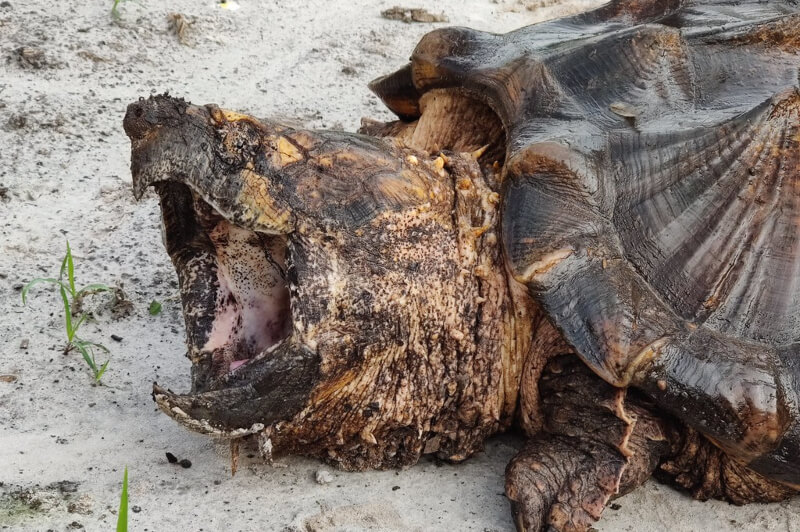
The alligator turtle is one of the few species that uses a decoy hunting technique. The tip of his tongue mimics the movement of a worm. The fish, attracted, come too close. The jaw then closes with impressive power. This strategy allows the turtle to save its energy, which is essential for an animal with a slow metabolism.
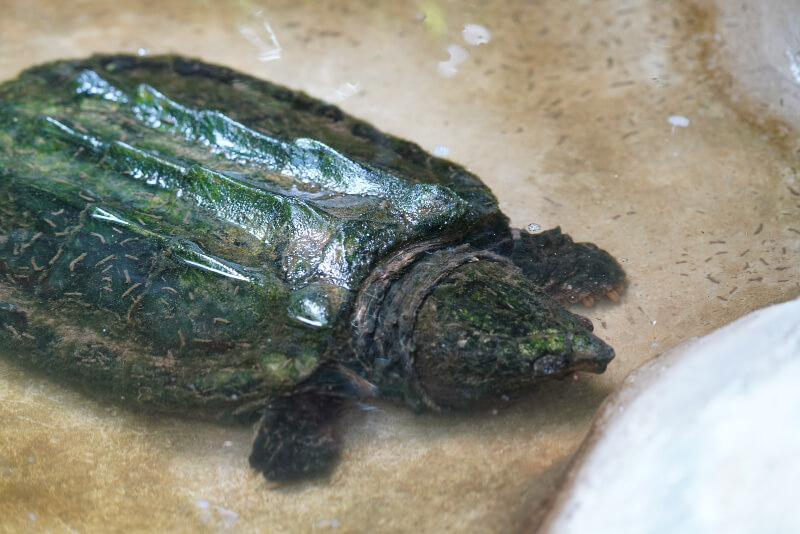
A force to be respected
Despite its calm appearance, the alligator turtle has an extremely powerful bite. She is not aggressive, but she fights back if she feels threatened. In the wild, this strength allows it to capture robust prey and protect itself from predators. It is also for this reason that it must be observed from a distance and never manipulated.
.svg)
