.png)
.png)

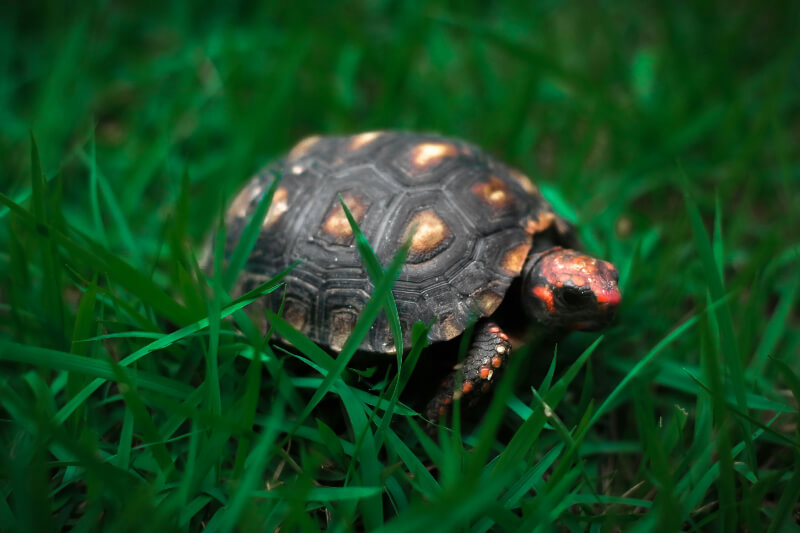
Red-footed Tortoise
Chelonoidis carbonaria


The Red-footed Turtle
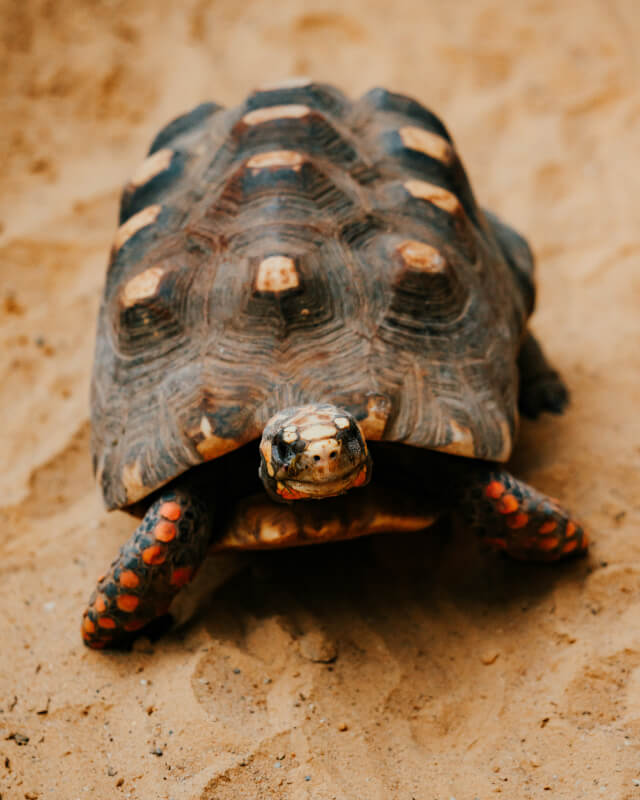
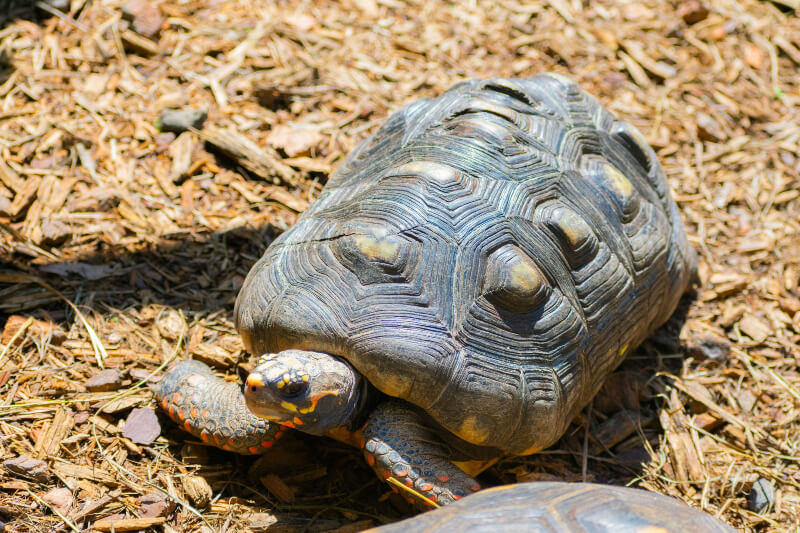
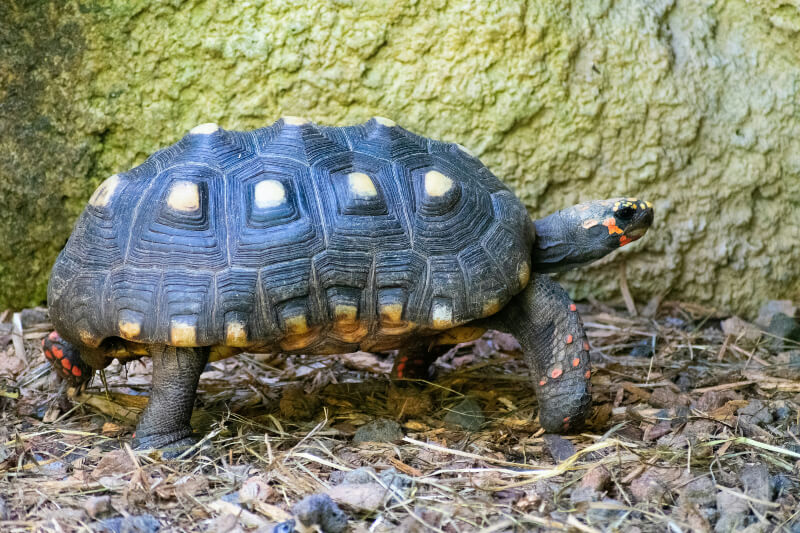
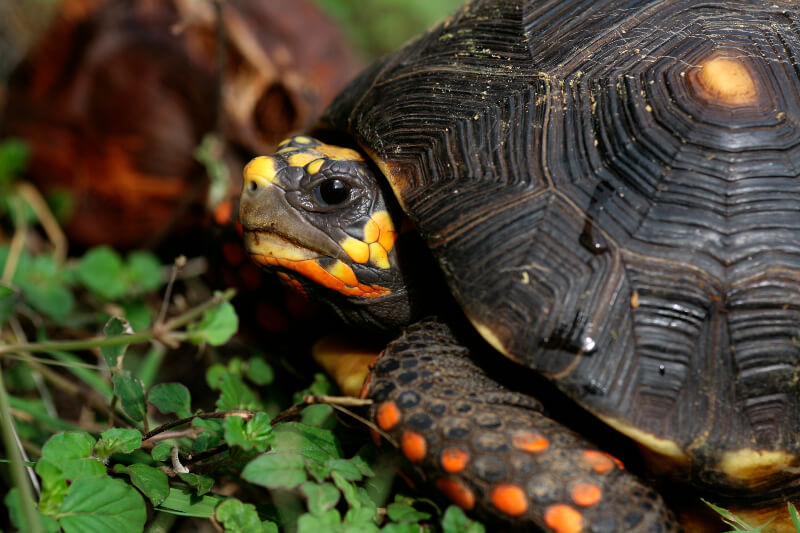
The charcoal turtle, also called the red-legged coal turtle, is a small land turtle that measures up to 40 cm in size when adult. She lives an average of 50 years when conditions are favorable. Its dark gray shell is marked with yellow or orange spots that make it easily recognizable.
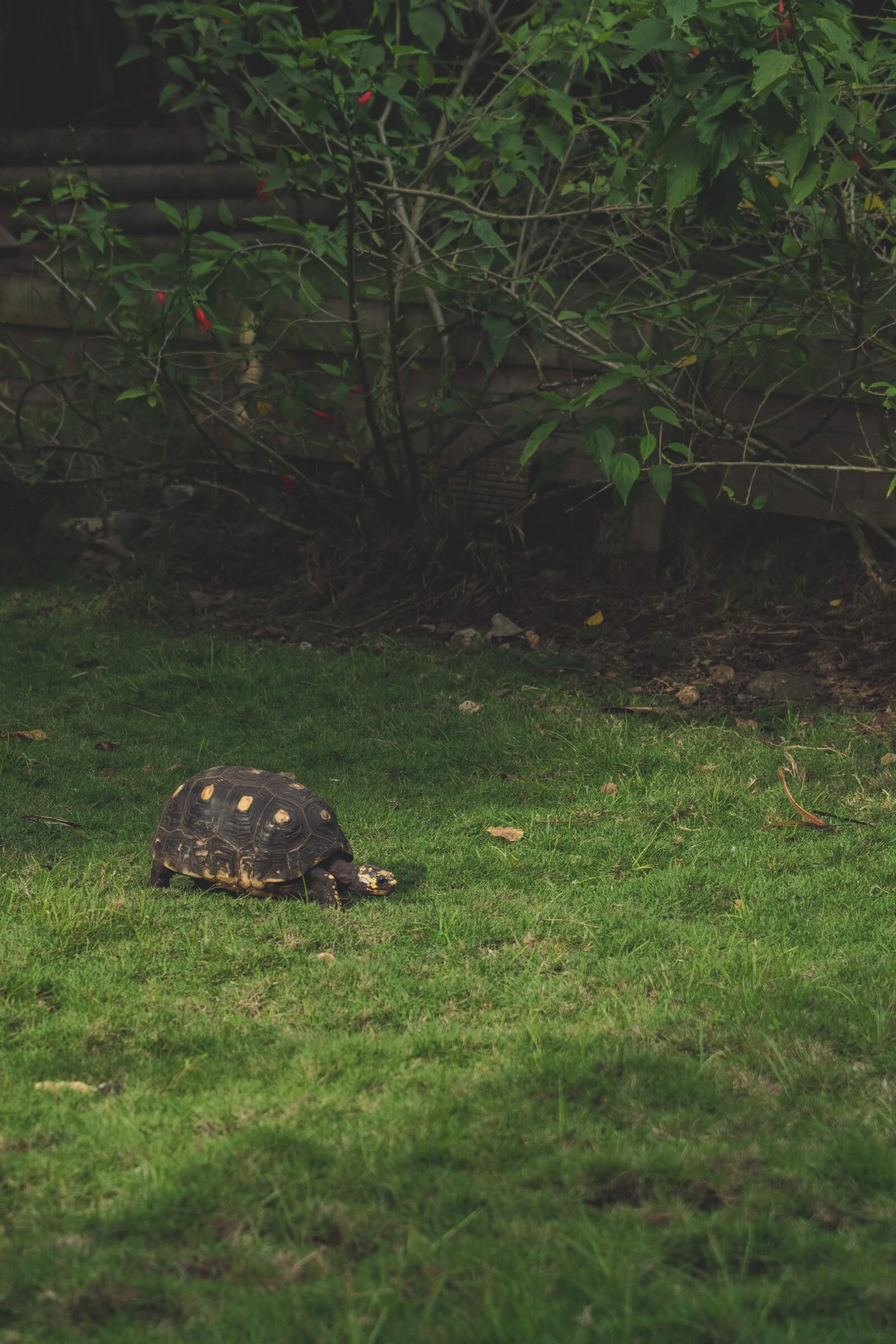
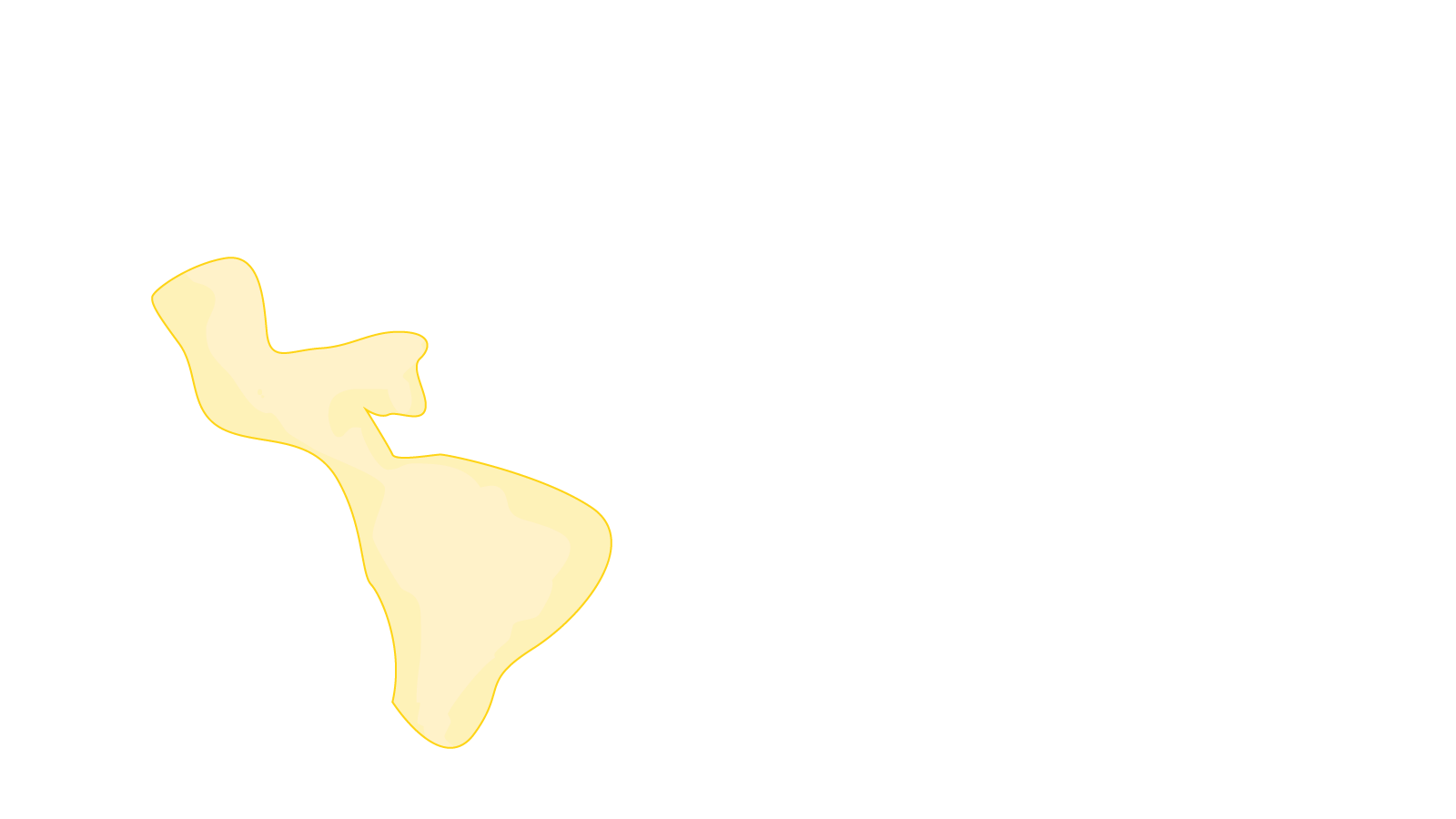
It is found in several Latin American countries, including Venezuela, Panama or Guyana. It is also present in the Antilles (Martinique, Guadeloupe, Grenadines), where it is known by the local name of the Molokoi turtle.
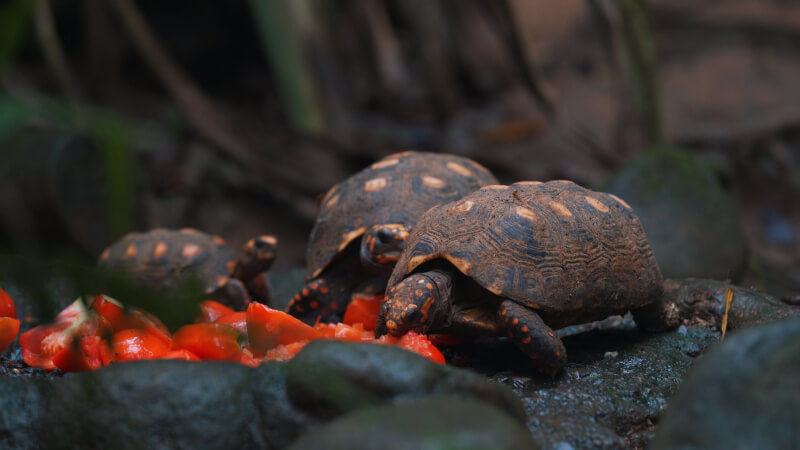
It is a terrestrial and omnivorous species. It feeds mainly on fruits, mushrooms and plants, but can also consume small invertebrates when it finds them. Its slowness and varied diet make it an important link in the forest ecosystem, as it contributes to the dispersal of seeds.
At the Guadeloupe Zoo, this turtle is presented as an ambassador of neotropical fauna, alongside emblematic species such as the unau sloth or the stele.

.svg)


Quelques anecdotes
A solitary turtle
The red-footed tortoise is a very discreet animal. Individuals rarely meet, except at the time of breeding. Mating takes place especially during the rainy season, when the smells of ripe fruits and humidity stimulate their activity. After mating, everyone goes back on their way. The female lays her eggs about 5 to 6 weeks later in a hole that she digs herself.
A mysterious traveller
The presence of the Molokoi turtle in the Antilles remains a subject of curiosity. How did she get to these islands? Scientists put forward several hypotheses: natural transport by marine currents, voluntary introduction by Native American peoples, or even accidental arrival via ancient trade. Whatever the origin of this trip, this turtle is now part of the natural and cultural heritage of the Antilles.
.svg)
