.png)
.png)


Yellow-footed tortoise
Chelonoidis denticulatus


The Zoo's Yellow-footed Turtle
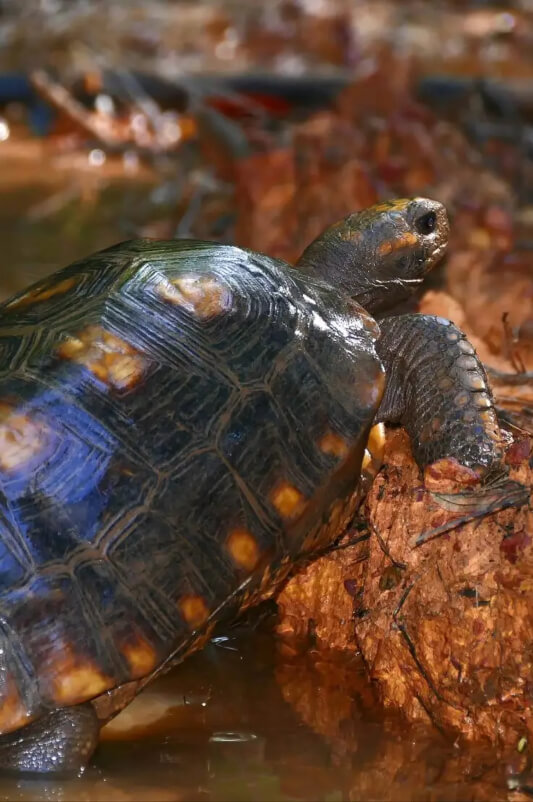
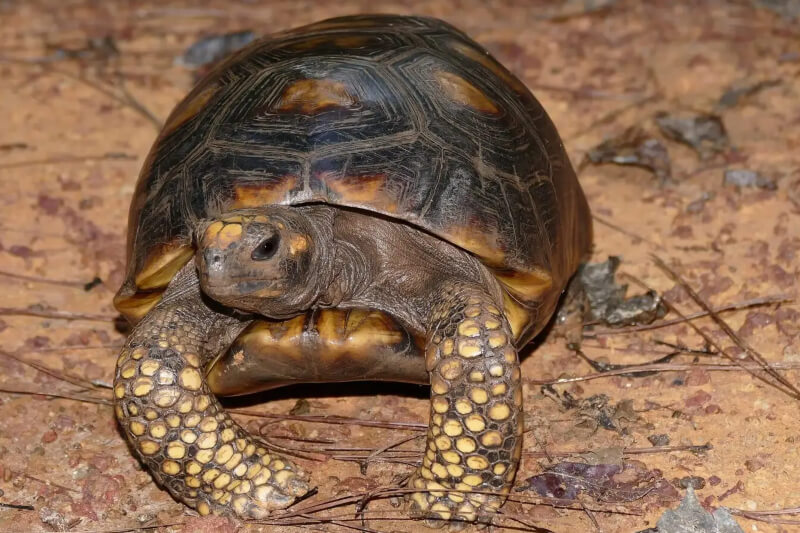
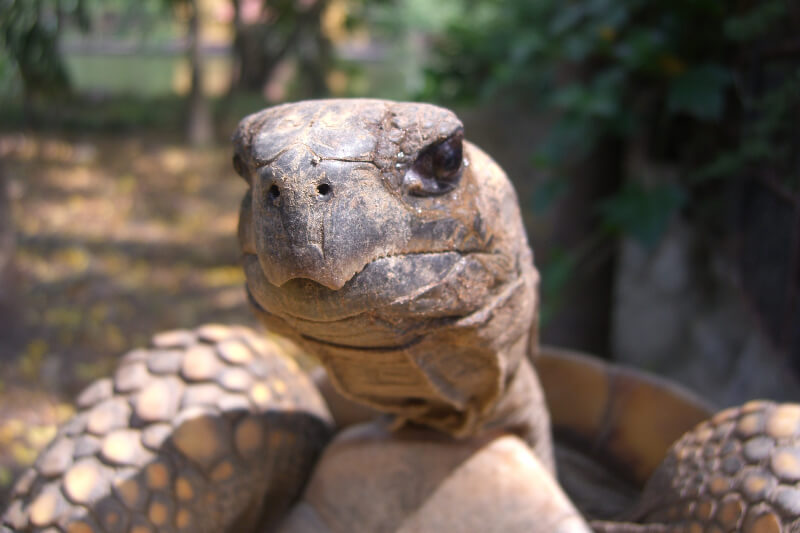
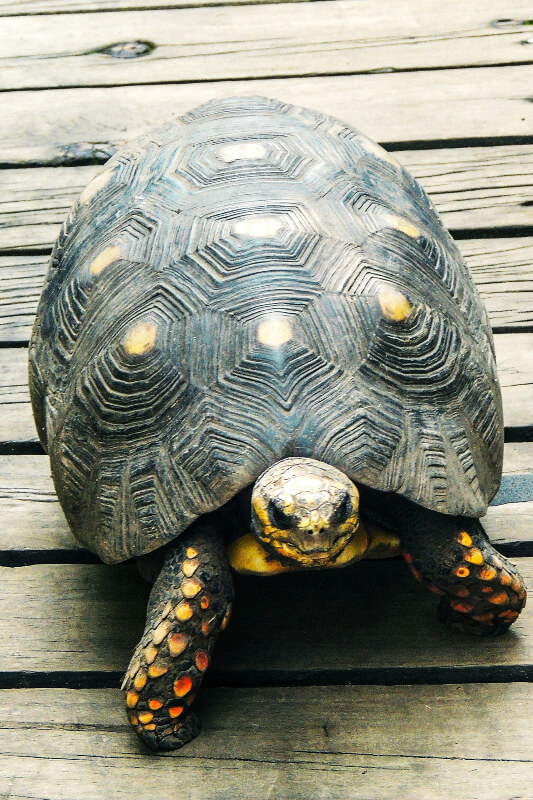
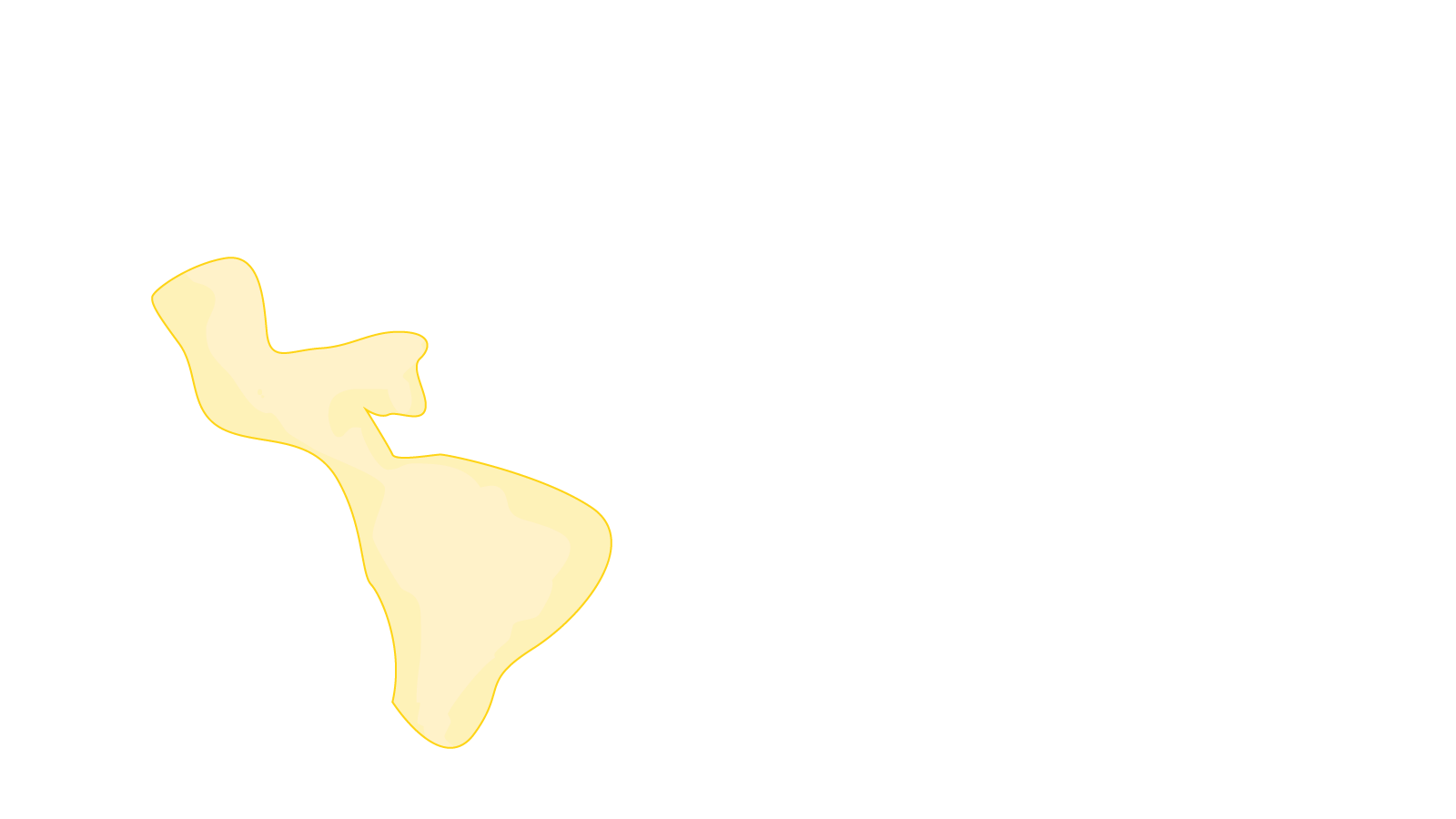
The Yellow-footed Turtle (Chelonoidis denticulata) is a large land turtle native to South America and the Lesser Antilles. It owes its name to the small “teeth” visible on the edge of its shell, a characteristic that distinguishes it from the red-legged coal turtle.
It lives in tropical rainforests, often in the shade of trees and in cool areas. It is generally active early in the morning or at the end of the day, when temperatures are more bearable.
Its brown and slightly domed shell is marked with yellow or orange patterns. It can measure up to 45 cm and live for over 50 years.
Omnivorous, it feeds mainly on fruits, mushrooms, leaves and flowers, but can also consume small invertebrates occasionally. This varied diet allows it to play an important role in seed dispersal and the maintenance of forest biodiversity.
The species is classified as Vulnerable (VU) by the IUCN. It is threatened by deforestation, hunting, and the illegal pet trade.
At the Guadeloupe Zoo, the Yellow-footed Turtle lives with the Red-footed tortoise and other iconic neotropical species.

.svg)


Quelques anecdotes
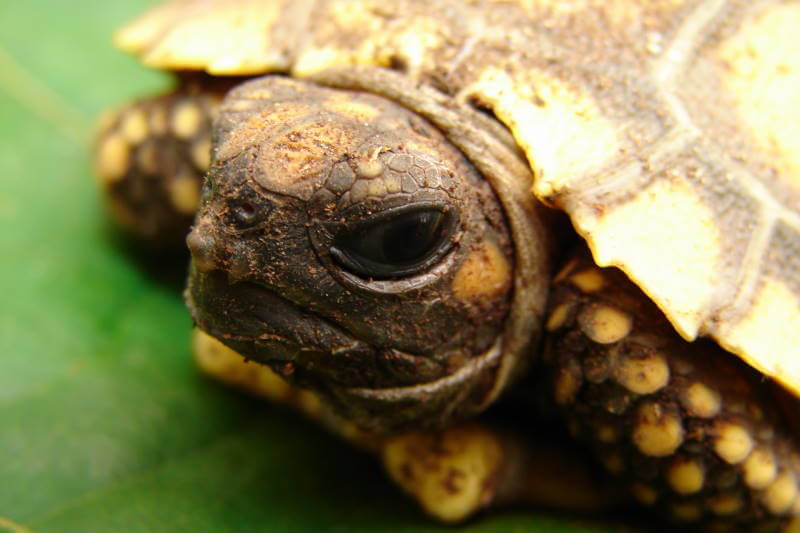
A nap expert
The denticulated turtle avoids the hot weather of the day. She spends much of her time resting in cool, shady areas. This strategy allows it to limit its energy expenditure and to better withstand humid tropical climates.
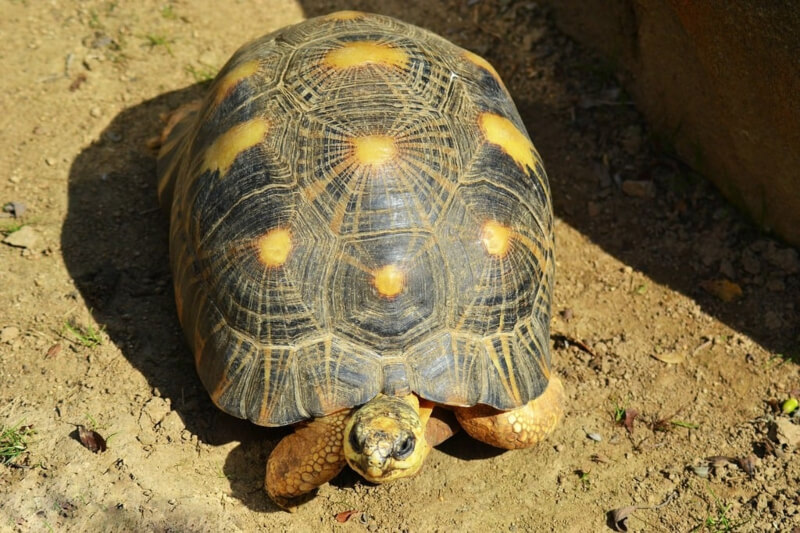
A discreet traveller
Although it moves slowly, the Yellow-footed Turtle can travel long distances in the forest to find new water points or fruit that has fallen to the ground. This slow but regular movement contributes to the natural dissemination of seeds. It is therefore considered an ally of the tropical forest.
.svg)
