.png)
.png)

.avif)
Red pandas
Ailurus fulgens


A unique species
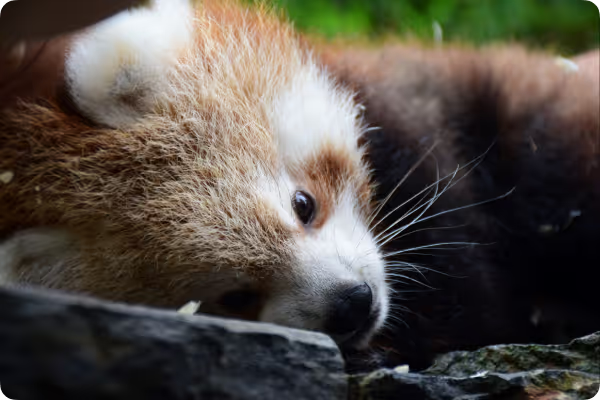
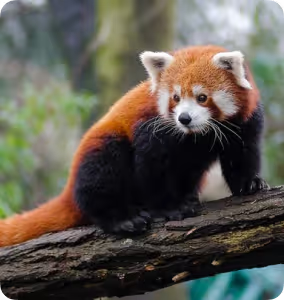
The red panda is not related to the giant panda, despite its misleading name. This little tree acrobat is often mistakenly associated with other species. In English, it is nicknamed “fire fox” because of its flamboyant color, while its scientific name, Ailurus fulgens, means “bright cat.” In China, it is even nicknamed the “little cat bear”.
So what species is it really the closest to? As surprising as it may seem, the red panda is genetically closer to raccoons, skunks, and weasels than bears or pandas!
The Guadeloupe Zoo is actively involved in the preservation of the red panda, a species that is now classified as “Vulnerable” by the IUCN. This small mammal faces multiple threats, including agricultural expansion and habitat degradation, exacerbated by forest fires.
To remedy this, the NGO Red Panda Network has set up a community conservation program in Nepal. This project mobilizes 42 forest rangers, from local communities, who ensure the census, monitoring of red panda populations and fighting fires. The Guadeloupe Zoo has been financially supporting this program since 2021, thus participating in the protection of this emblematic species.





.svg)


Quelques anecdotes
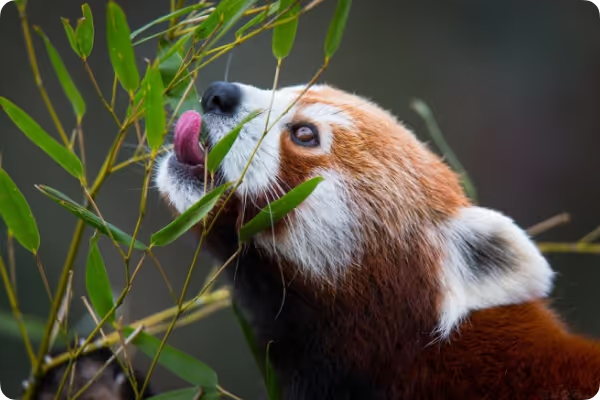
A bamboo enthusiast... but not only!
Like the giant panda, the red panda is a big fan of bamboo. His body is perfectly adapted to this diet: he has a false thumb, an opposable sixth finger, which allows him to easily grasp the shoots. His semi-retractile claws make him an excellent climber, able to cling to narrow branches and bamboo trunks.
Although it feeds primarily on leaves, fruits, lichens, and roots, the red panda is still a carnivore. It complements its diet with rodents, lizards, larvae, and other small invertebrates. In spring, he can even treat himself to a few eggs or baby birds to vary his menu.
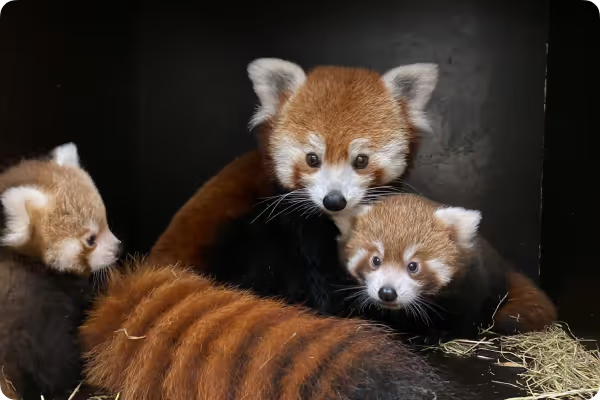
Discreet but effective reproduction
The red panda is a rather solitary animal that in the wild only joins its congeners during the breeding season. After a gestation period of approximately 135 days, the female gives birth to two to four young, which she places in a carefully prepared burrow. The children, totally dependent, stay there for nearly 3 months before daring their first outings.
Did you know that? The red panda can pause its gestation. This phenomenon allows him to adjust the birth of his young to more favorable conditions, when food is abundant.
.svg)
