.png)
.png)

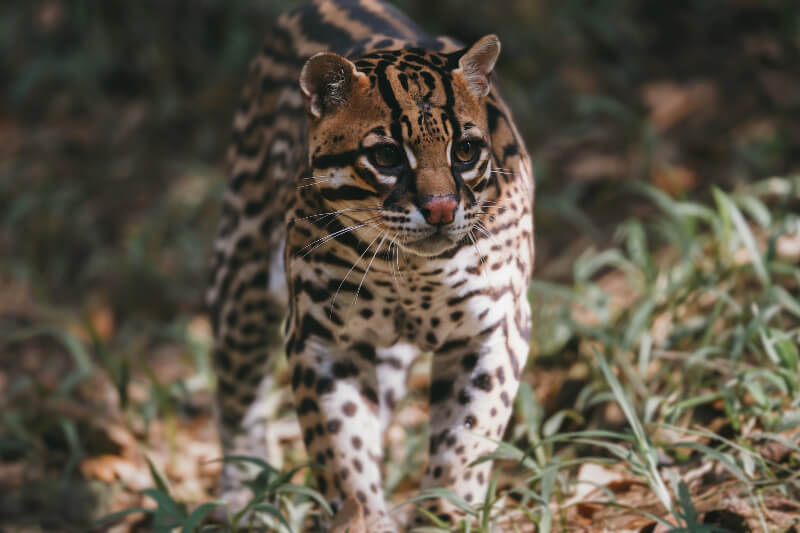
Ocelot
Leopardus pardalis


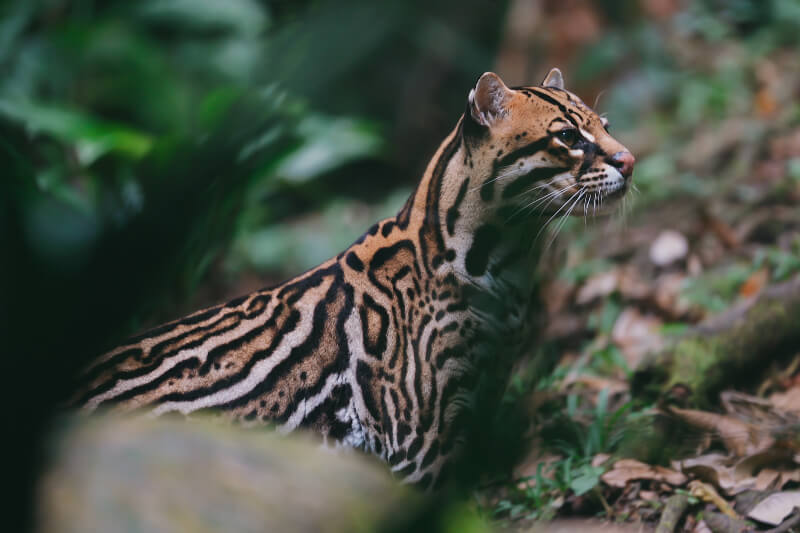
The ocelot in the Parc des Mamelles
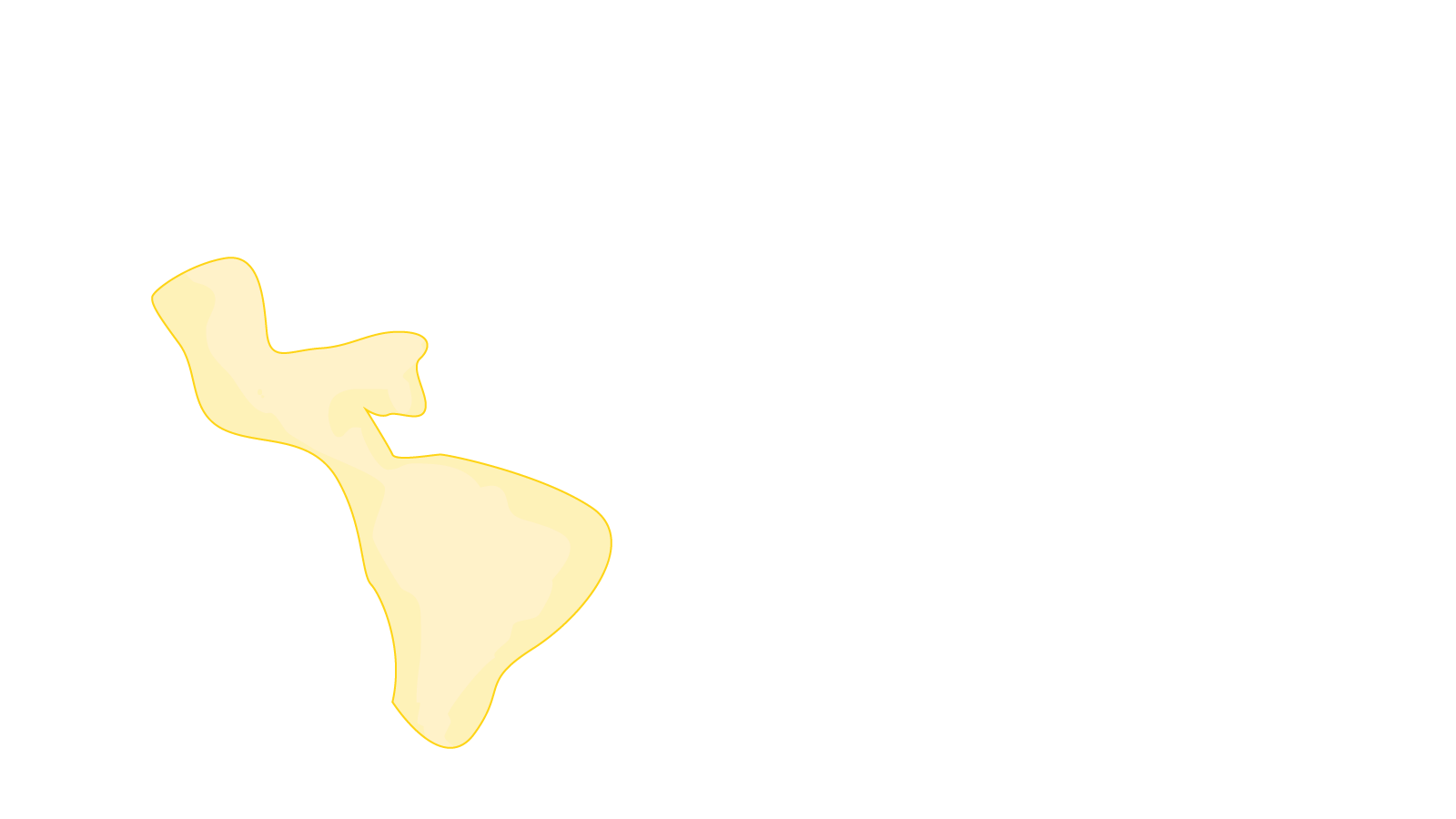
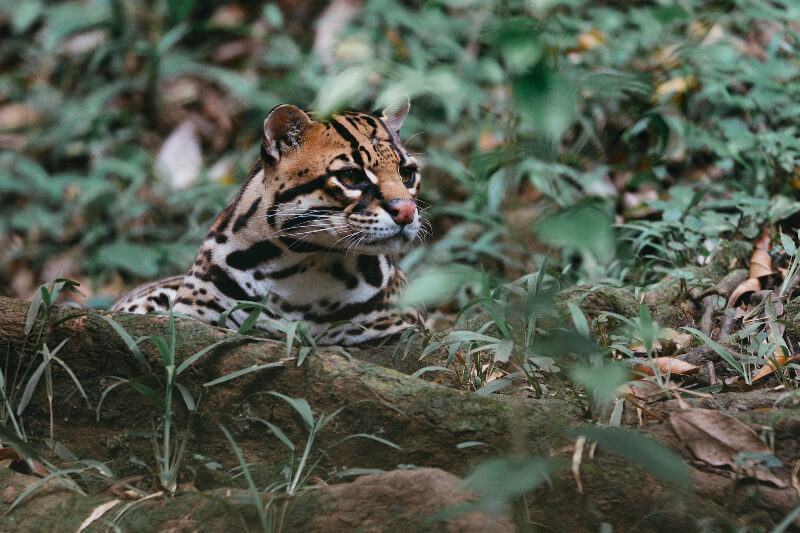
The ocelot (Leopardus pardalis) is a wild feline native to Central and South America, present from Mexico to Argentina. It lives in tropical rainforests, dense woodlands, and sometimes tree-lined savannas. It is a solitary, agile and fierce animal, which likes environments where it can easily hide.
The species is classified as Least Concern (LC) by the IUCN, but its populations are declining in some areas due to deforestation and habitat fragmentation. Illegal hunting for its fur also contributed to its rarity, before protective laws allowed for a slow recovery.
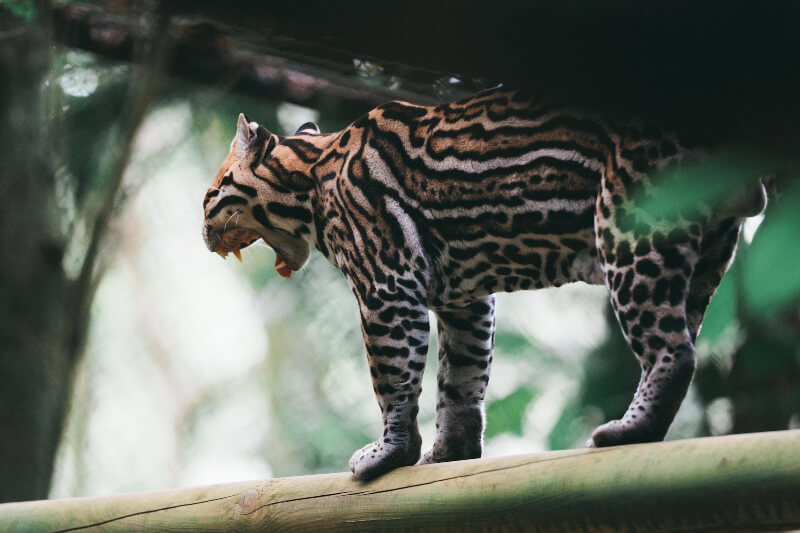
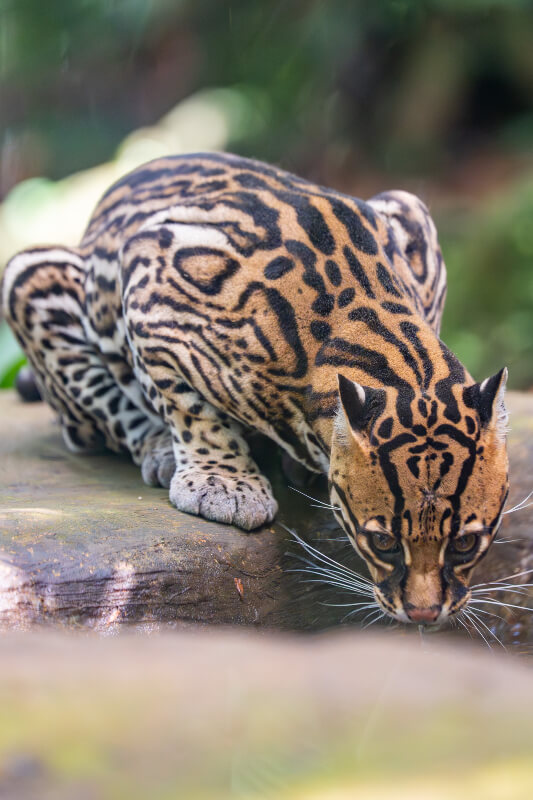
The ocelot is a nocturnal and territorial predator. It hunts on the lookout, taking advantage of its exceptional camouflage to approach its prey silently: rodents, birds, reptiles and small mammals. His keen eyesight and keen hearing make him a fearsome hunter. An excellent climber and swimmer, he moves easily between trees and forest waterholes.
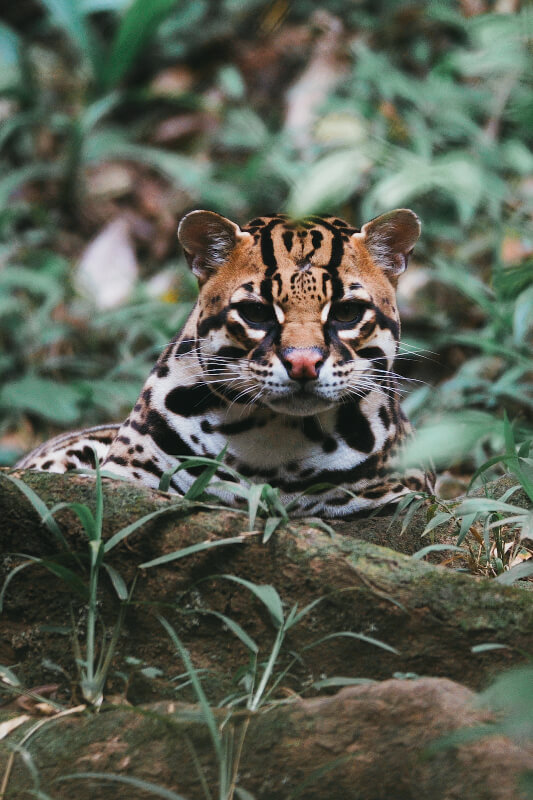
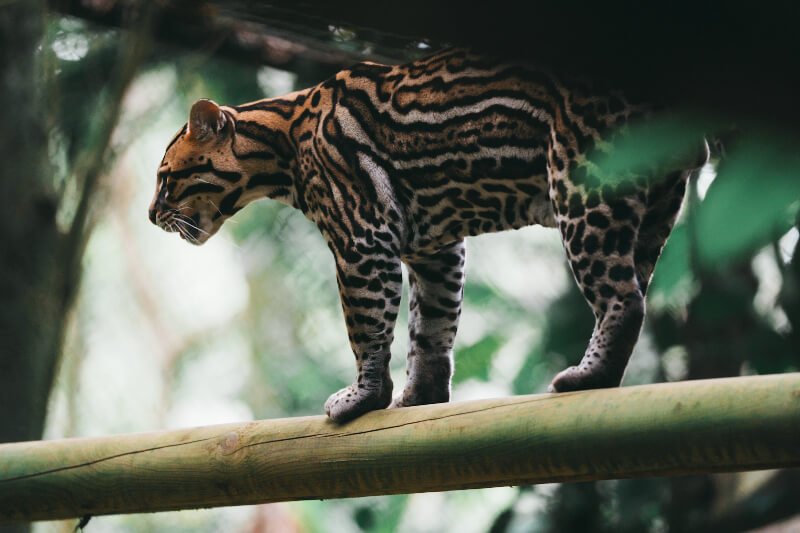
This feline measures between 70 cm and 1 meter and weighs up to 15 kg. Its golden beige coat covered with spots and black rosettes varies from region to region and offers perfect camouflage under vegetation. Its beauty and intense gaze make it one of the most admired felines in Latin America.
At the Guadeloupe Zoo, the ocelot is one of the mammals most appreciated by the public. In particular, it associates with the jaguar, with which it shares certain behaviors, although much smaller in size.



.svg)


Quelques anecdotes
A charmer named Gringo
The ocelot at the Guadeloupe Zoo is called Gringo. He is a true dean, with a sweet and curious character. Over the years, Gringo has become the team's secret darling, always watched with tenderness while napping in the sun.
A feline that meows, hisses and growls
Contrary to what one might think, the ocelot does not roar. He whispers, hisses, or growls to communicate. These surprising sounds are sometimes reminiscent of those of a domestic cat... but with a very wild accent!
.svg)
