.png)
.png)

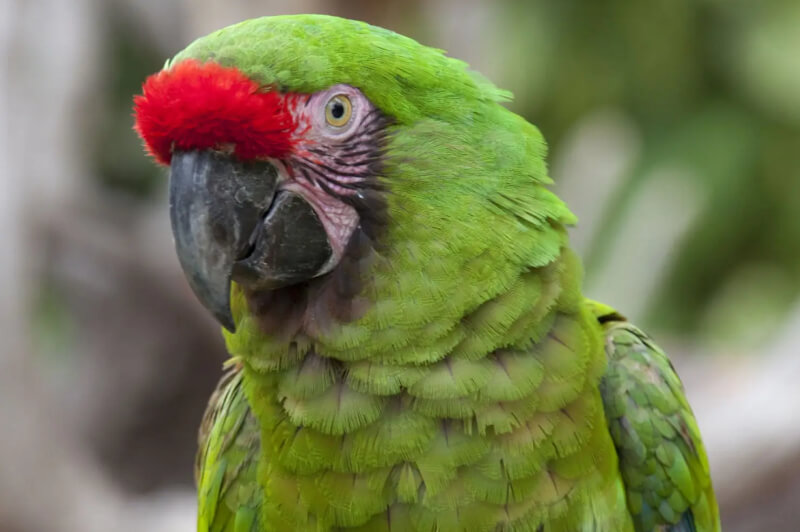
Military Macaw
Ara Militaris


The military macaw, sentinel of tropical forests
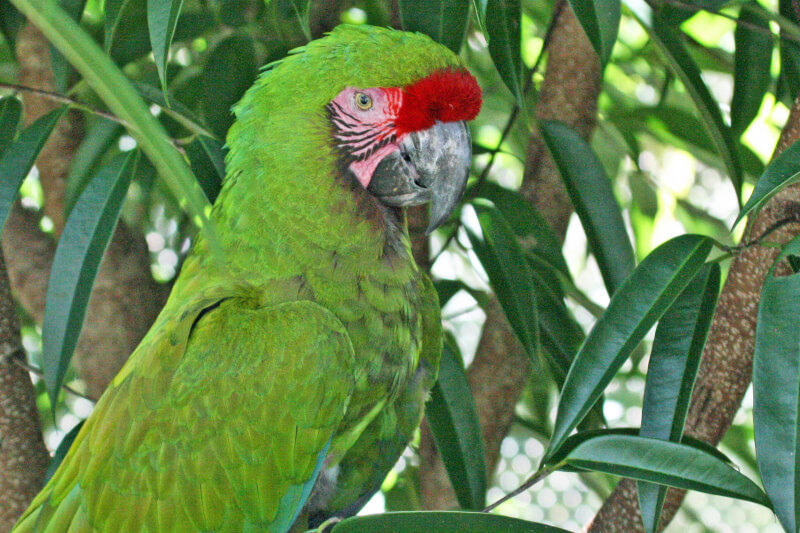
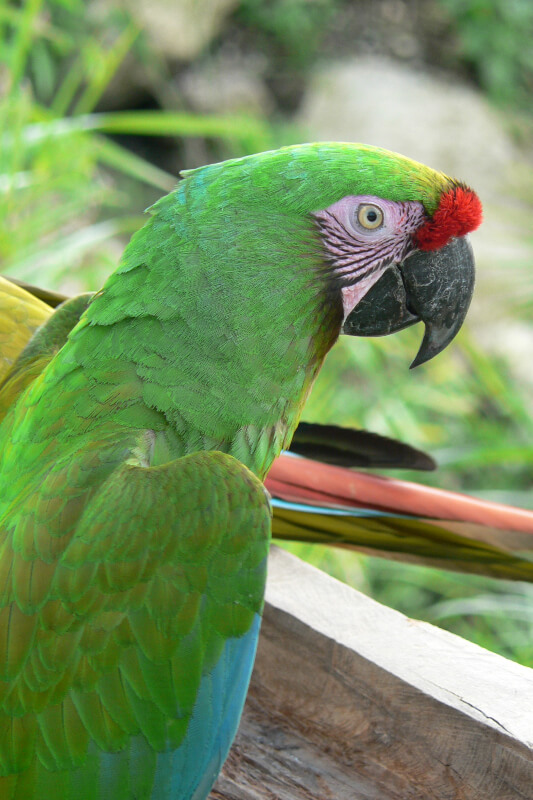
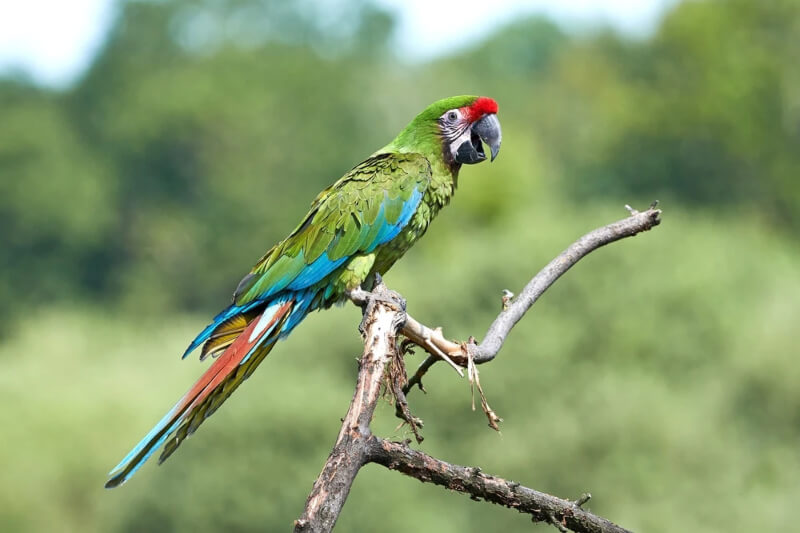
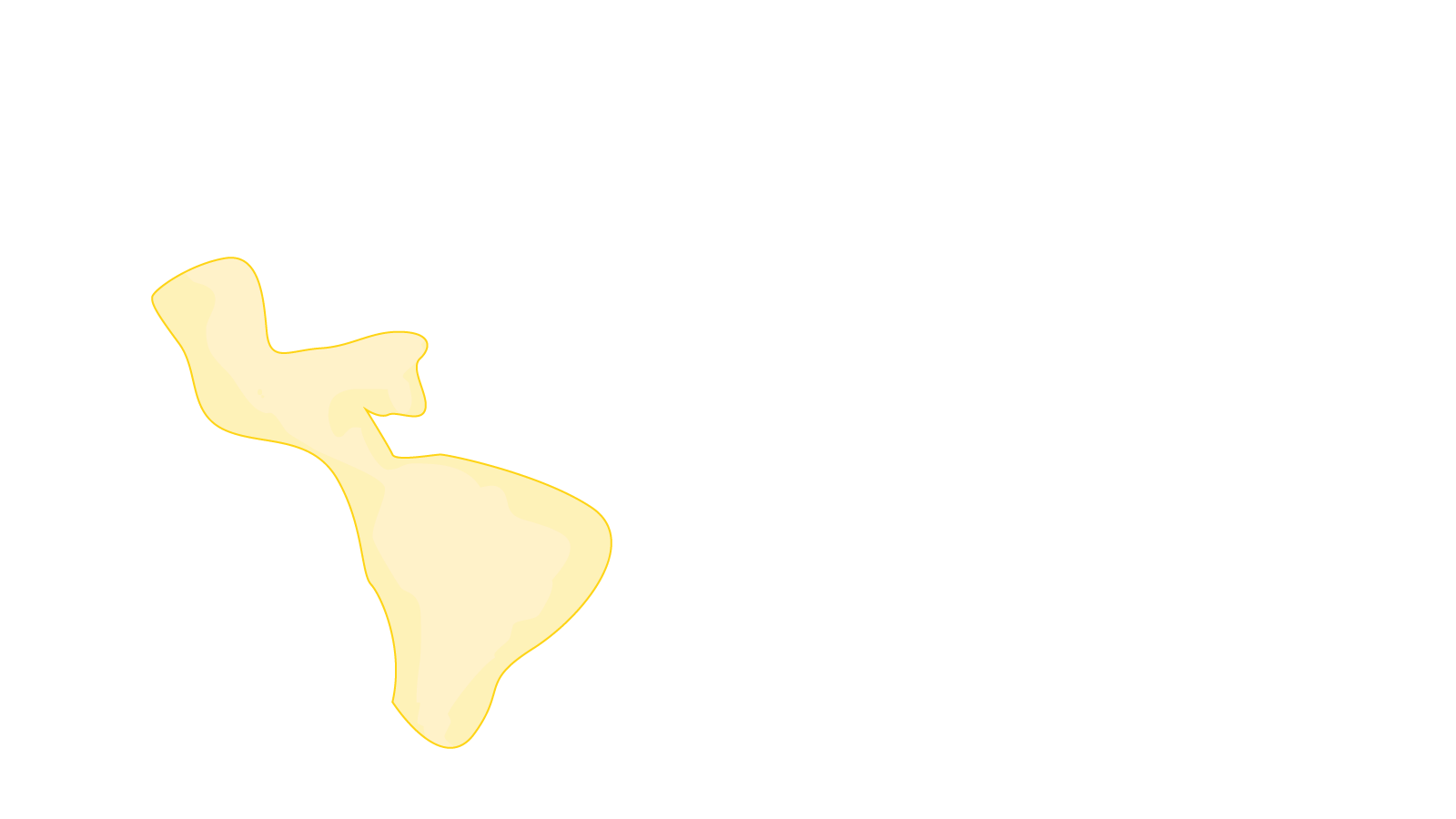
The military macaw (Ara militaris) is a large parrot native to Latin America. It is distinguished by its mostly green plumage, punctuated by red spots on the forehead and blue on the wings. Its slender silhouette and long, powerful beak make it an easily recognizable bird.
The species is now classified Vulnerable (VU) on the IUCN Red List. Populations are declining mainly due to deforestation, habitat fragmentation and poaching. The military macaw depends on vast areas of forest for food, reproduction, and movement.
It is found in tropical and subtropical forests, but also in drier areas, sometimes in the mountains. It can live at high altitudes, up to 2,000 meters. It frequents tall trees, which are essential for nesting, and travels long distances every day in search of food.
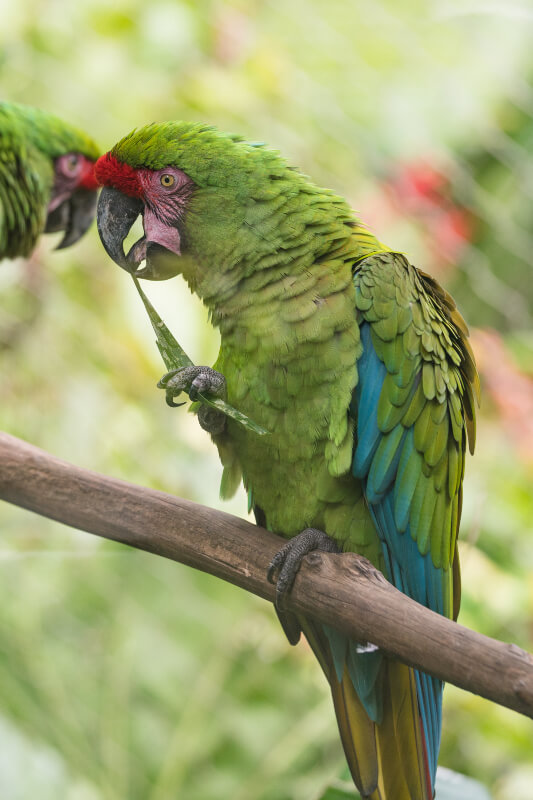
Its diet consists of fruits, seeds, nuts and young shoots. Thanks to its very sturdy spout, it can open particularly hard shells. Like other parrots, it plays an important role in seed dispersal, contributing to forest regeneration.
At the Guadeloupe Zoo, the military macaw illustrates the conservation challenges associated with large parrots in Latin America, alongside species such as theBlue macaw, theWhite-throated Macaw Or theBuffon's Macaw.


.svg)


Quelques anecdotes
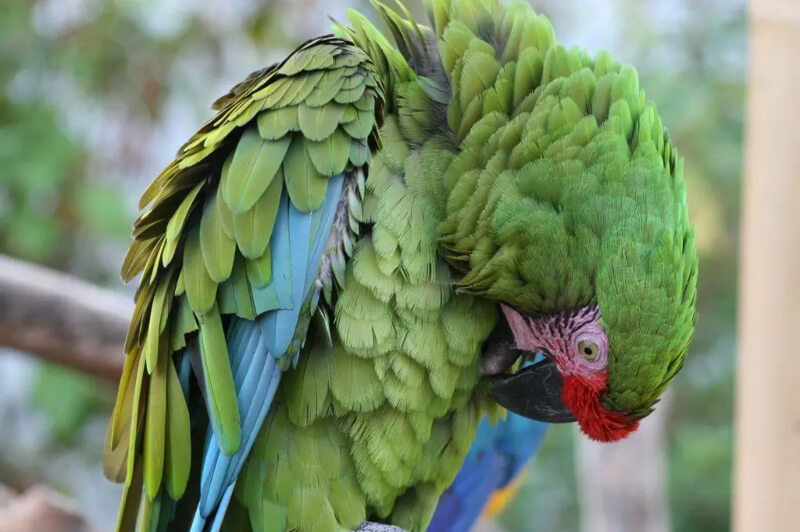
A name linked to its plumage
The military macaw owes its name to the colors of its plumage, which were once reminiscent of green and red military uniforms. This name has no connection with its behavior, but it contributed to making the species easily identifiable from the first naturalistic descriptions.
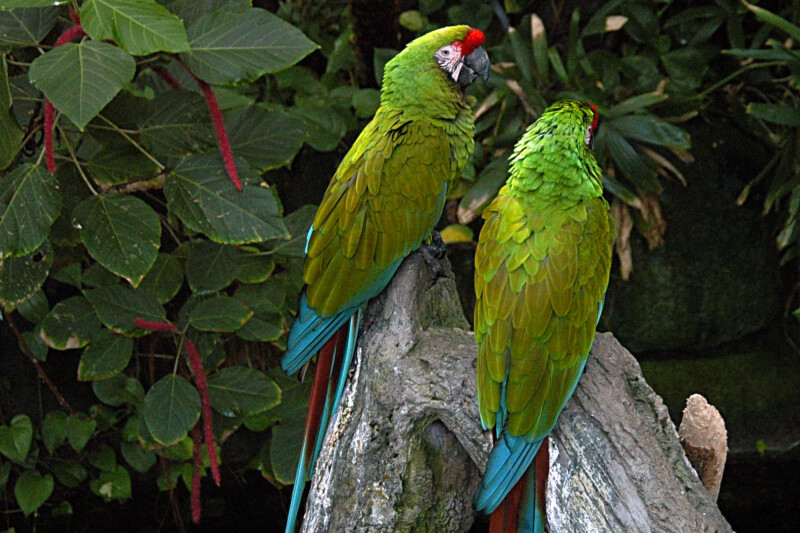
A key role in the ecosystem
Like many macaws, the military macaw is a very expressive bird. Its powerful calls serve to maintain contact between individuals when they fly over long distances or evolve in dense vegetation. This vocal communication plays an essential role in group cohesion and orientation in the forest.
.svg)
