.png)
.png)

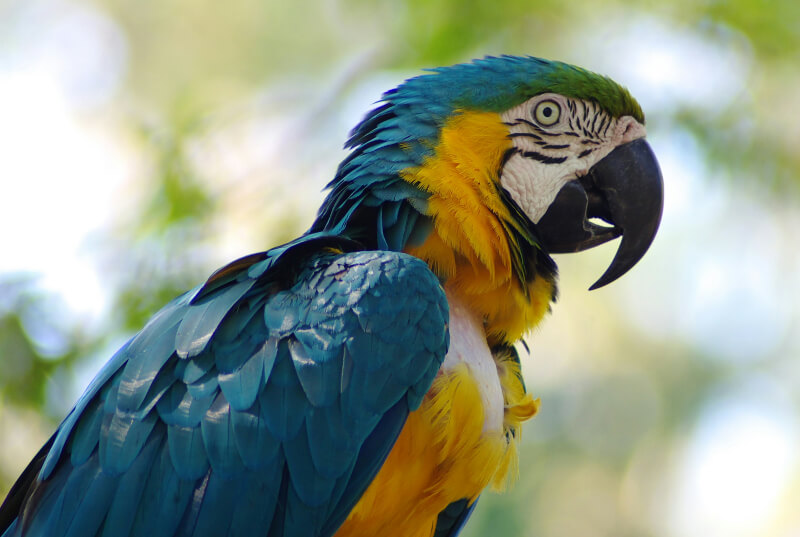
Blue Macaw
Ara ararauna


The Blue Macaw at the Parc des Mamelles
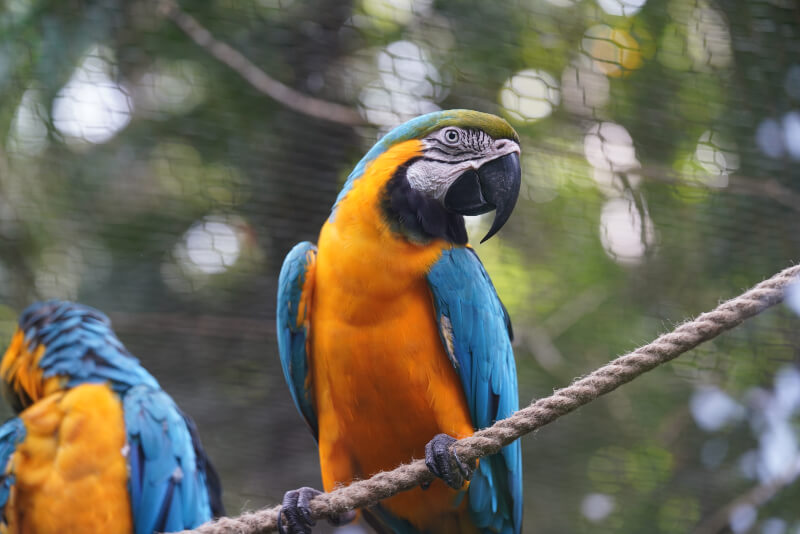
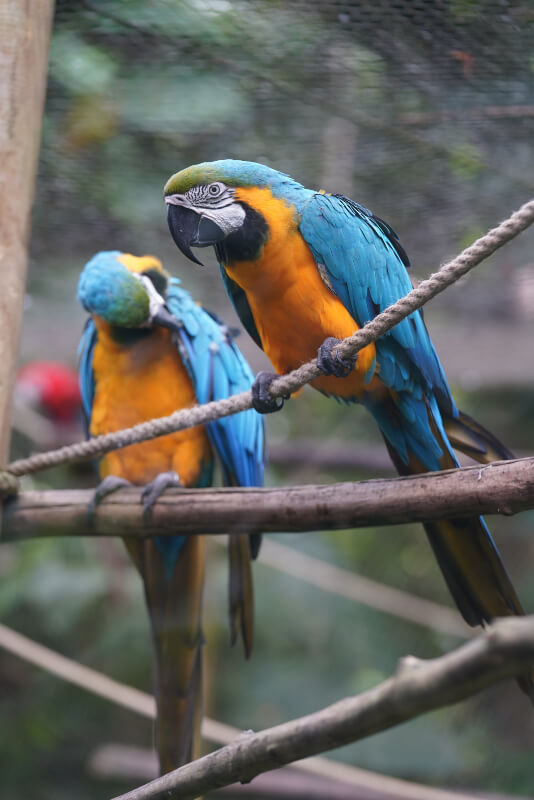
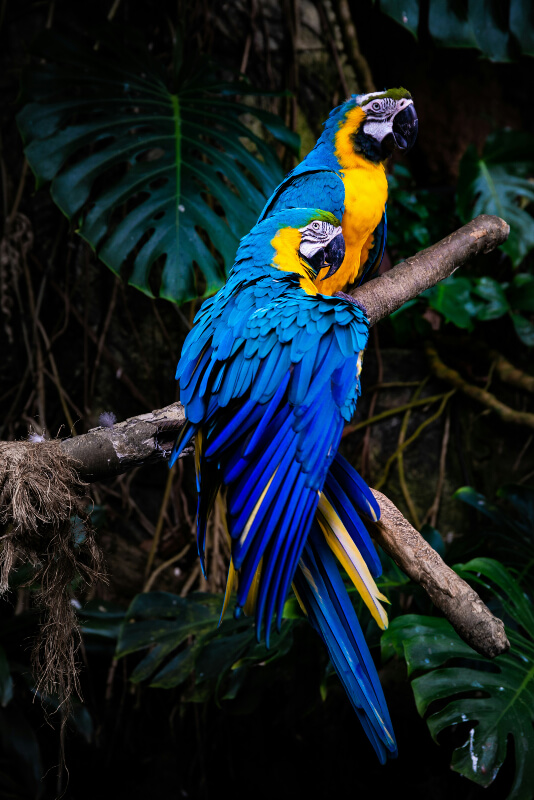
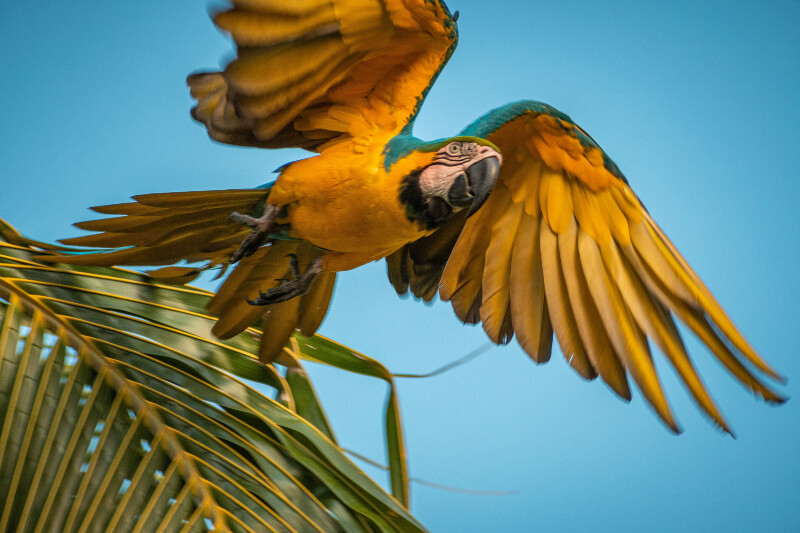
The blue and yellow macaw (Ara ararauna) is an emblematic parrot of South America. It is recognized by its bright plumage, bright blue on the back and golden yellow on the belly. Its unique sound and its wingspan of more than one meter are as impressive as its beauty.
Its conservation status is classified as Least Concern (LC) by the IUCN. The species is not in danger of extinction globally. However, its populations are declining locally due to deforestation and poaching for illegal trade.
The macaw lives in tropical forests. It feeds on fruits, seeds, nuts, and flowers that it finds in the canopy. Its powerful beak allows it to break even the hardest shells. It also uses it as a “third leg” to climb and hang on branches.
It can live for over 50 years. Its main predators are large birds of prey such as eagles and harpies. But it faces other threats: the destruction of its habitat and poaching.
At the Guadeloupe Zoo, you can admire the blue and yellow macaws, alongside other tropical birds such as the hyacinth macaw or the military macaw.


.svg)


Quelques anecdotes
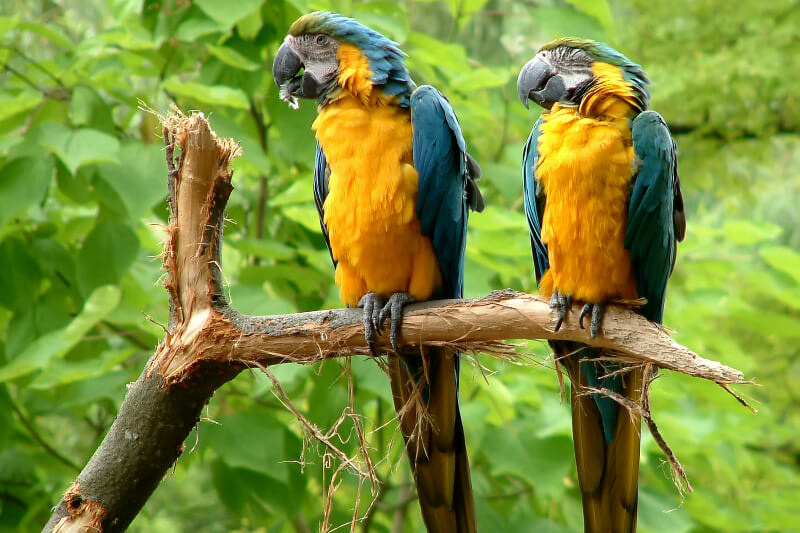
A couple for life
Macaws are social birds that live in groups of about twenty individuals. When they mate, it's for life. Couples are fusional and share everything, even their flights.
After mating, the female will lay 3 or 4 eggs and incubate them for 28 days. The young leave the nest at 3 months but are completely independent at 2 years of age.
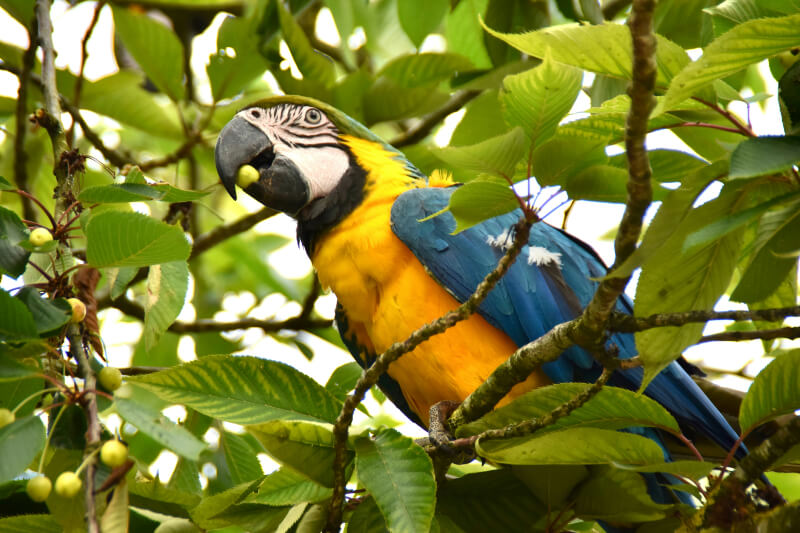
A special antidote
The macaw feeds on fruits and nuts, but also sometimes on toxic plants. To neutralize the poisons, he consumes clay. He finds it on the banks of the rivers and regularly integrates it into his diet.
.svg)
