.png)
.png)


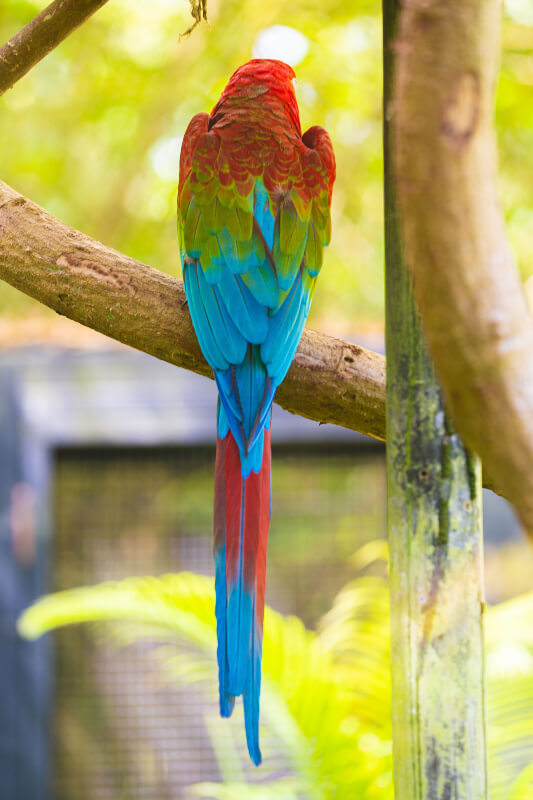
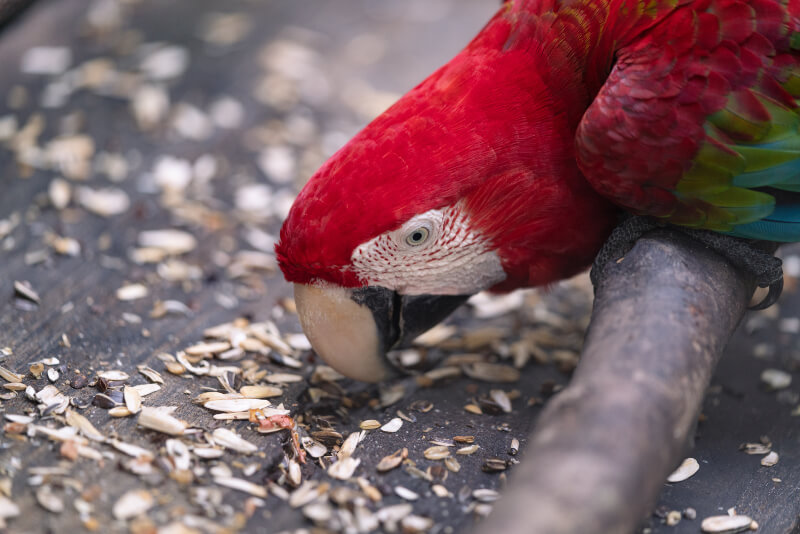
Red-and-green macaw
Ara chloropterus


The Red-and-green macaw at Zoo of Guadeloupe
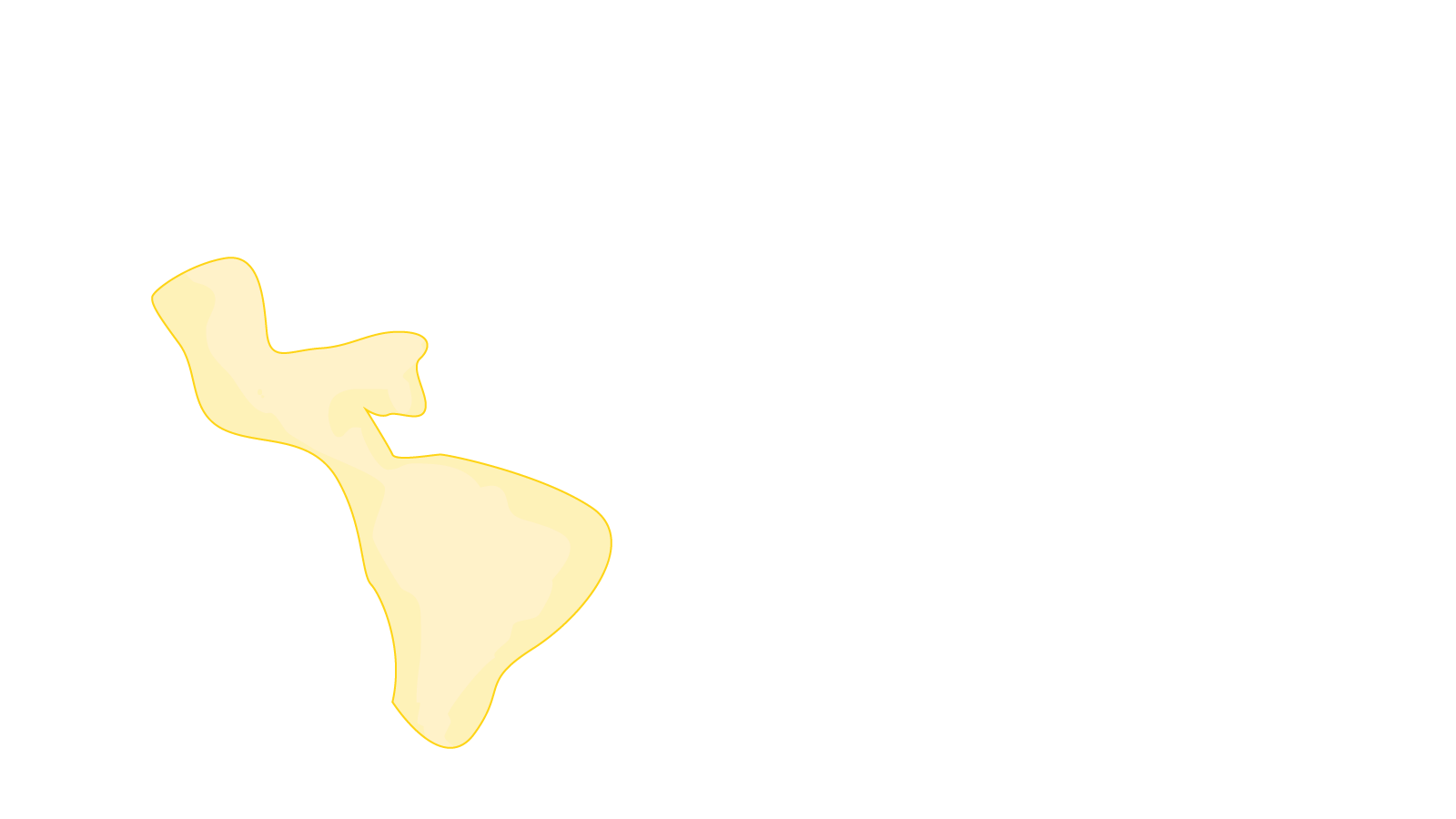
The Red-and-green macaw (Ara chloropterus) is one of the largest parrots in South America. It is found in the humid forests of the Amazon, the wooded galleries of Venezuela, and some open areas in Brazil and Paraguay. Its intense red plumage, its green and blue bands, and its large wingspan make it an immediately recognizable bird.
Classified as Least Concern (LC) by the IUCN, it is still fairly widespread. However, some populations are decreasing due to deforestation and illegal trade. The species plays an important role in nature: by transporting seeds, it contributes to the regeneration of the forest.
The red-and-green macaw can measure up to 95 cm. Its beak is very powerful: it allows it to open hard nuts and grasp thick branches.
It feeds mainly on fruits, seeds, nuts and young shoots. Like many large parrots, it lives a long time. Some individuals reach 50 years of age, sometimes longer.
At the Guadeloupe Zoo, the red-and-green macaw attracts attention with its colors and its movements. Its calm but curious behavior makes it a favorite of visitors in the bird space.



.svg)


Quelques anecdotes

A bird that flies very high
The red-and-green macaw can fly over 300 meters above the forest. This altitude allows him to easily identify food areas. It can travel several kilometers in the same day, following precise trajectories that it uses from year to year.

Feathers that evolve with age
The color of its feathers changes over time. Young macaws have duller hues. As they grow, their red becomes deeper and the green brighter. These variations help scientists identify groups without having to catch the birds.
.svg)
