.png)
.png)

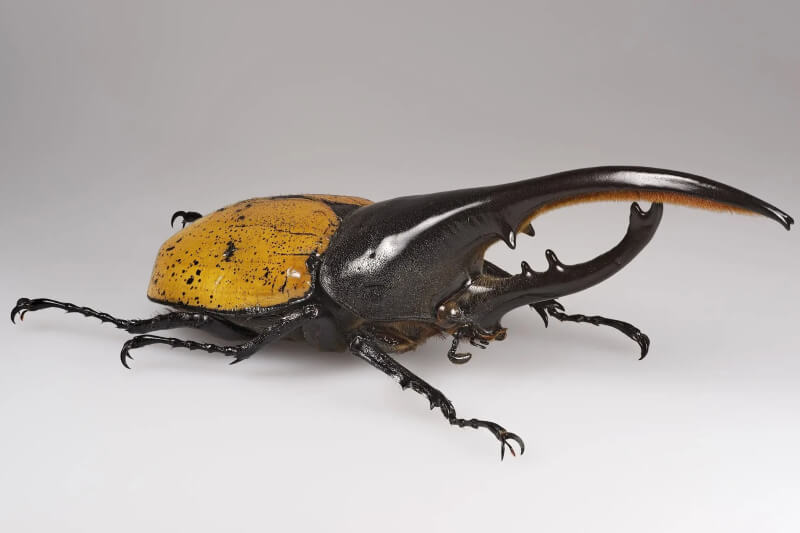
Dynastes Hercules
Dynastes hercules


Dynastes Hercules - the largest insect in the world
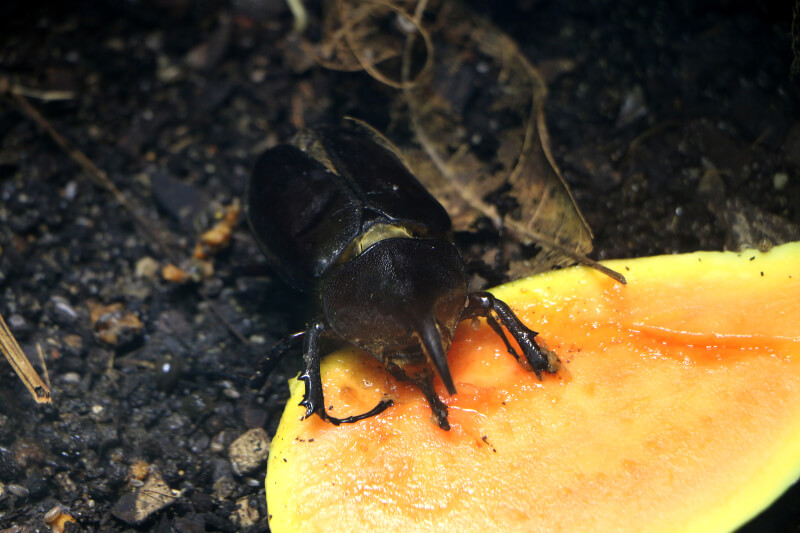
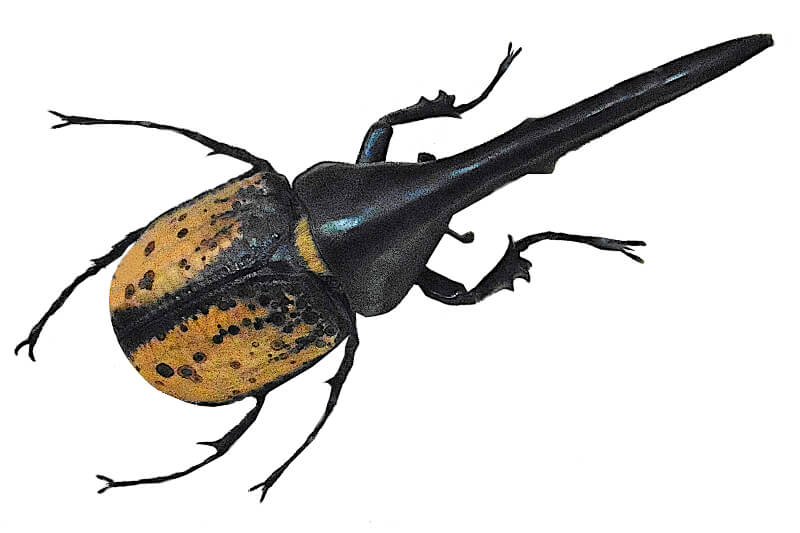
The Dynastes Hercules (Dynastes hercules) is considered to be the largest insect in the world. This impressive beetle can reach up to 18 cm in length including horns.
Native to the tropical forests of South America and the Lesser Antilles, it is one of the emblematic species observable at the Guadeloupe Zoo. In nature, it is found in humid forest areas, especially in the Basse-Terre massif.
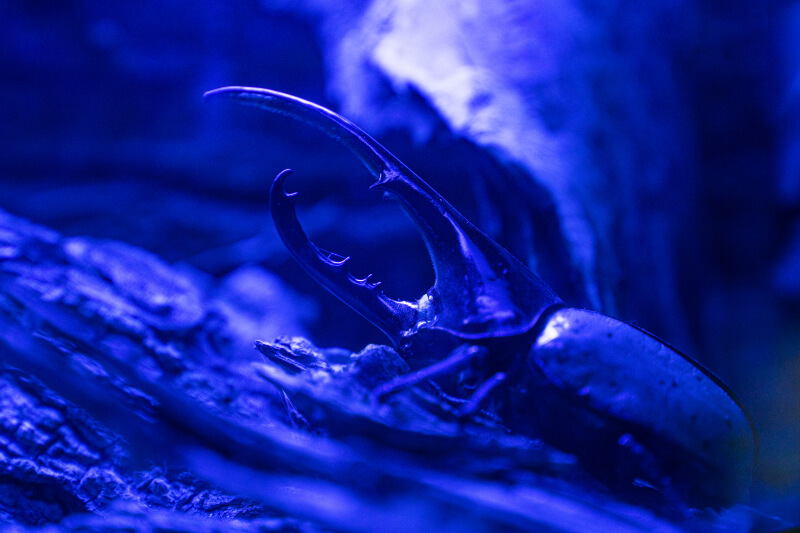
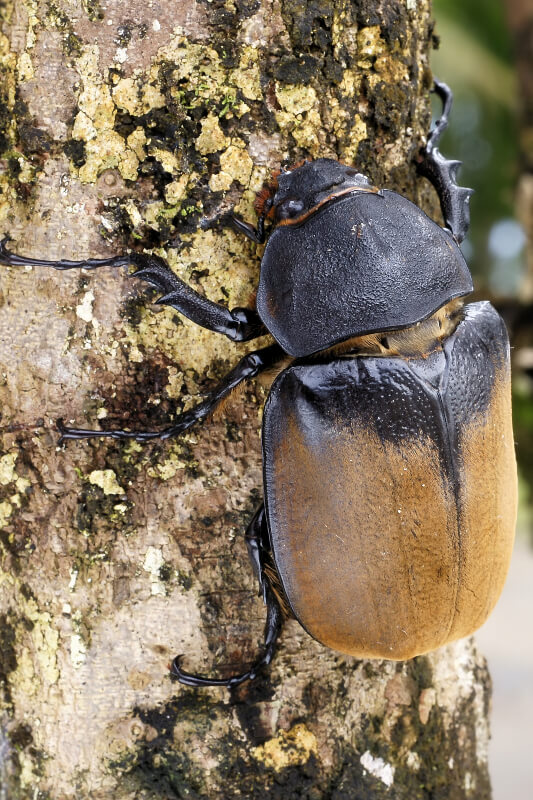
The male is easily distinguished thanks to his two long horns, located on the head and chest. The female, which is smaller, does not have any.
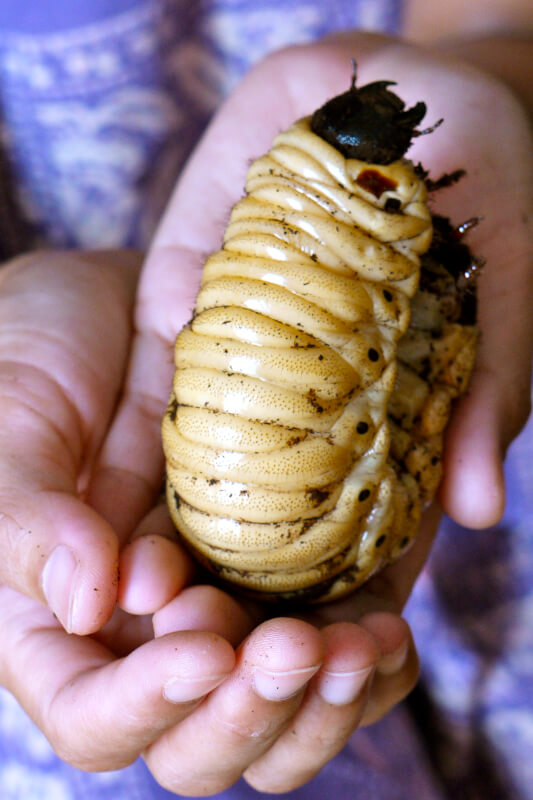
The larva of the Dynastes Hercules feeds on decomposing wood. It can reach 10 cm for nearly 200 g before transforming. As an adult, the Dynastes consume tree and fruit sap.
This species is classified as Near Threatened (NT) by the IUCN. In Guadeloupe, it is subject to light pollution, the reduction of forest areas and illegal collection by passionate collectors.
At the Guadeloupe Zoo, the Dynaste Hercules is presented at the Insectarium, a space dedicated to the discovery of the world of toddlers. There are also Cendtipedes, Antilles Pinktoe Tarantula or other scorpions, all ambassadors of Caribbean biodiversity.

.svg)


Quelques anecdotes
A larval life much longer than its adult life
The Dynasty Hercules spends most of its life in the form of larvae, for one to two years. He then makes a pupal chamber in dead wood, where he metamorphoses for four to five months. Becoming an adult, he only lives a few months before dying, after reproducing.
The “Longsaw”
In Guadeloupe, the Dynastes Hercules is nicknamed the Longsaw, because of the shape of its large horns recalling the tool of the same name. A popular belief claims that he would be able to saw tree branches, which, of course, is just a myth.
.svg)
