.png)
.png)

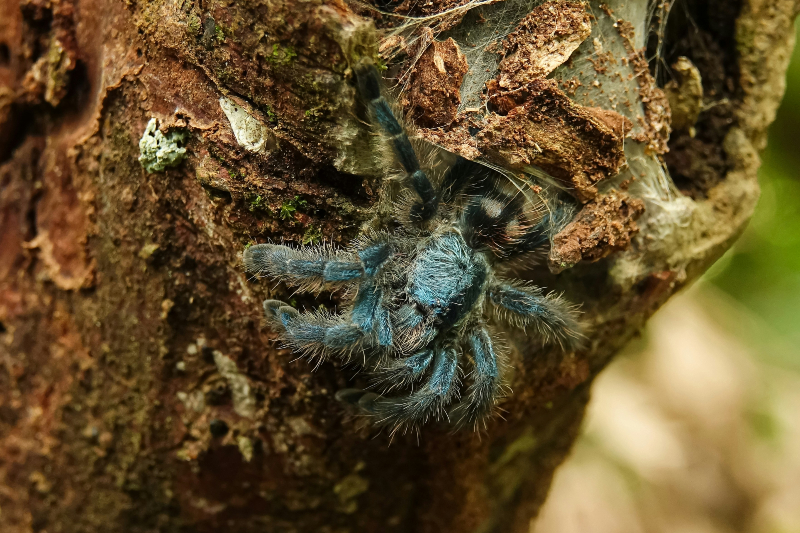
Antilles Pinktoe Tarantula
Caribena versicolor


Martinique Red Tree Spider
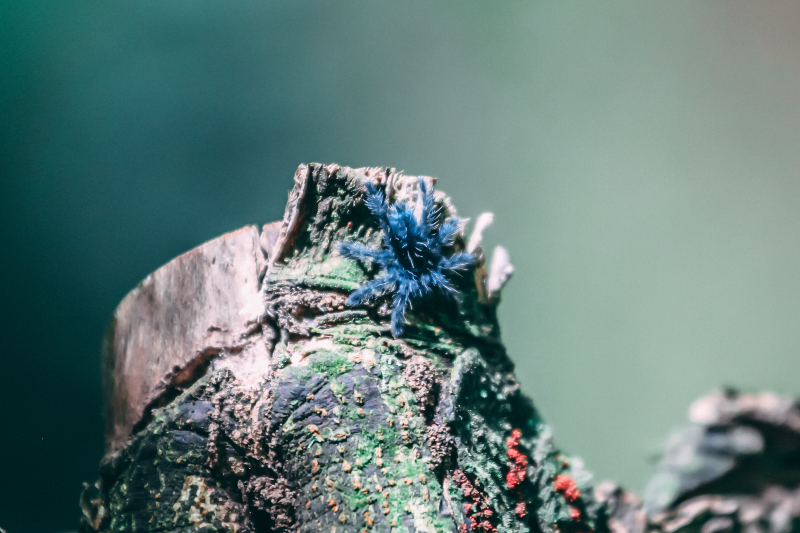
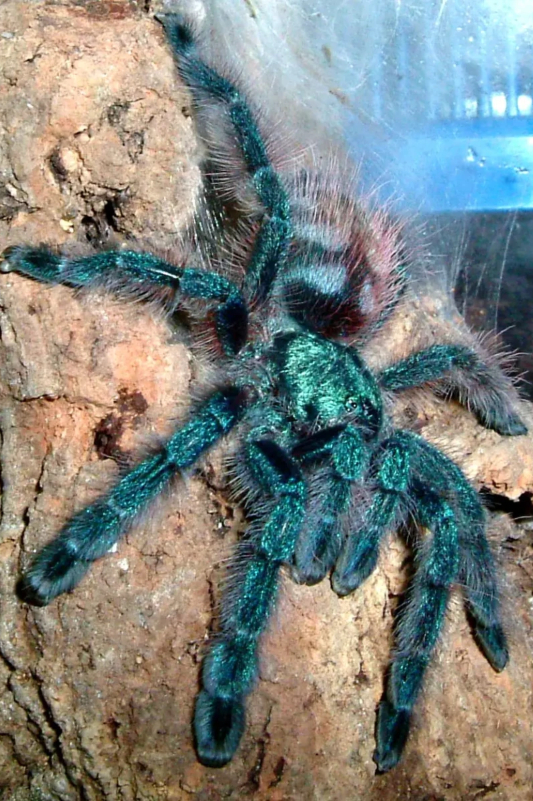
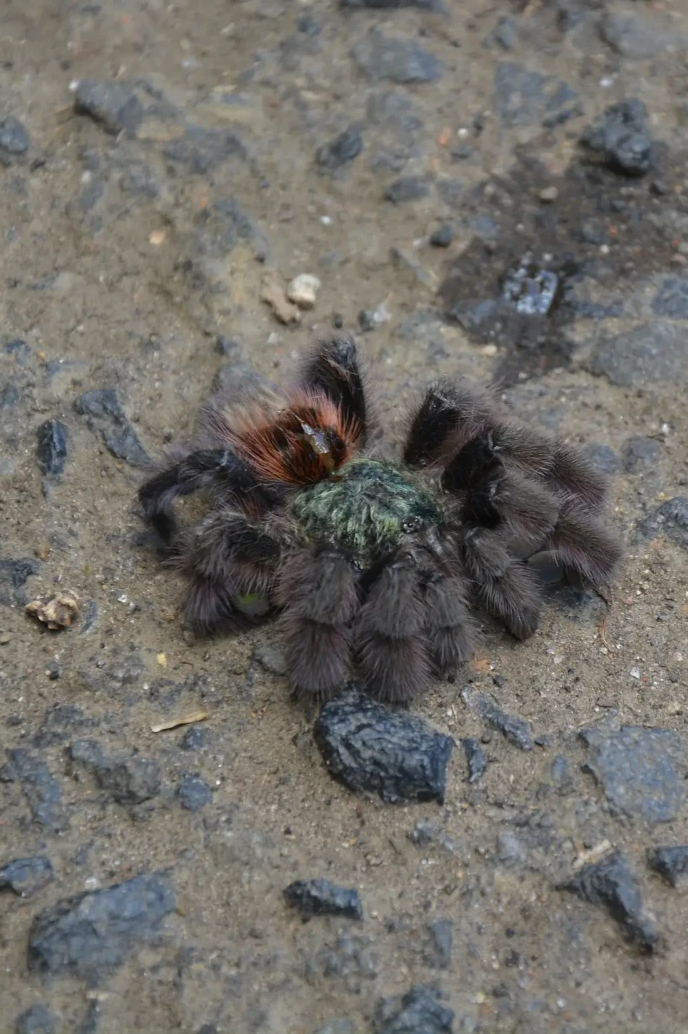
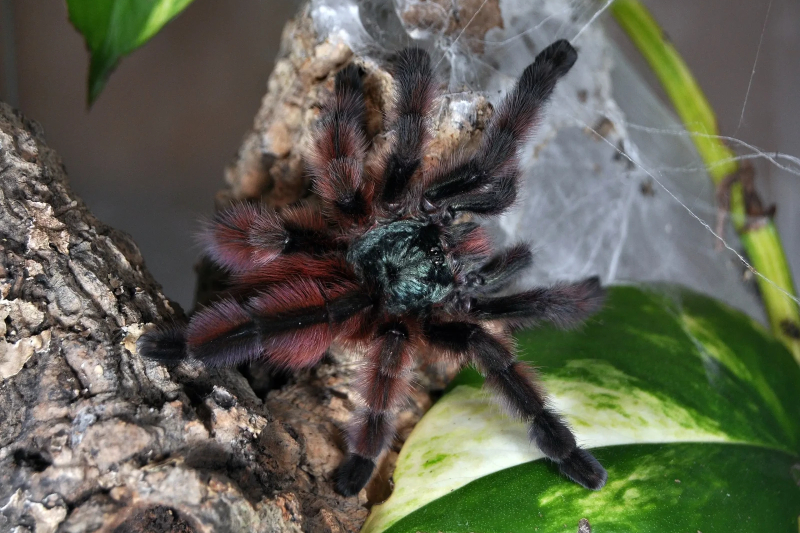
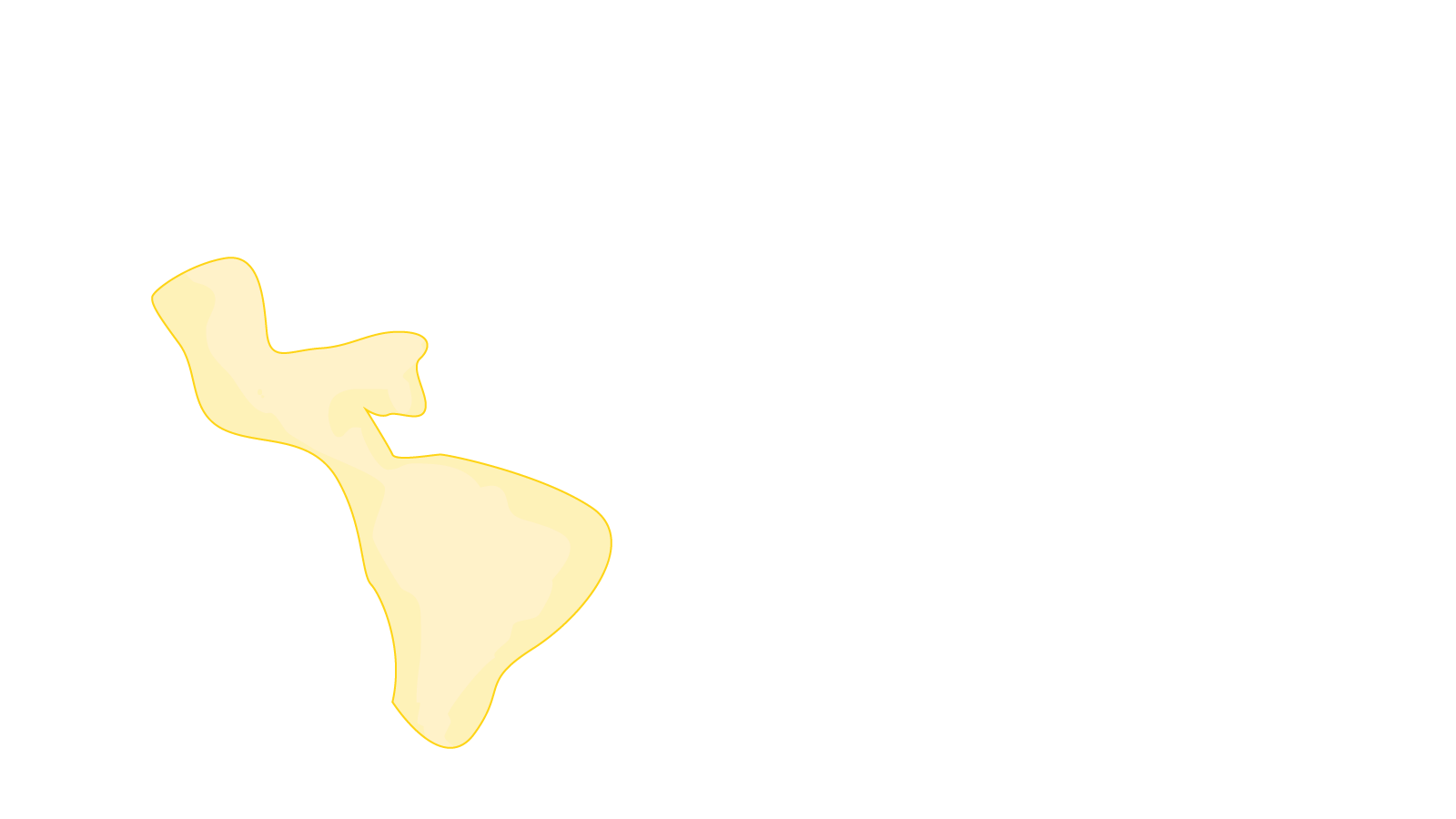
The Martinique Pinktoe (Caribena versicolor, formerly Avicularia versicolor), also called Antillean poultry, is an endemic species of Martinique. It is only found in the humid forests of the north of the island, clinging to the trunks and branches of trees.
This impressive spider can measure up to 18 cm in wingspan. The male, which is smaller, has dark and discreet colors. The female displays bright hues ranging from electric blue to iridescent green, through reddish and rosé.
The Tarantula builds a silk shelter in the hollows of the trees or under the bark. This cocoon is used to grow, molt and protect itself. It is also where it waits patiently for its prey.
Let arachnophobes be reassured: Martinique Pinktoe is harmless to humans. Its venom is not dangerous. It only bites if it feels threatened. This spider feeds mainly on insects and invertebrates, but can also catch small frogs, lizards, and sometimes young birds.
Cliff-billed the spider is classified as endangered (EN) on the IUCN list. Its very restricted range makes it vulnerable. She is also a victim of poaching to be illegally resold to individuals seeking to keep her in captivity.
This species is presented at the Guadeloupe Zoo in the insectarium alongside other fascinating tropical insects and arachnids.


.svg)


Quelques anecdotes
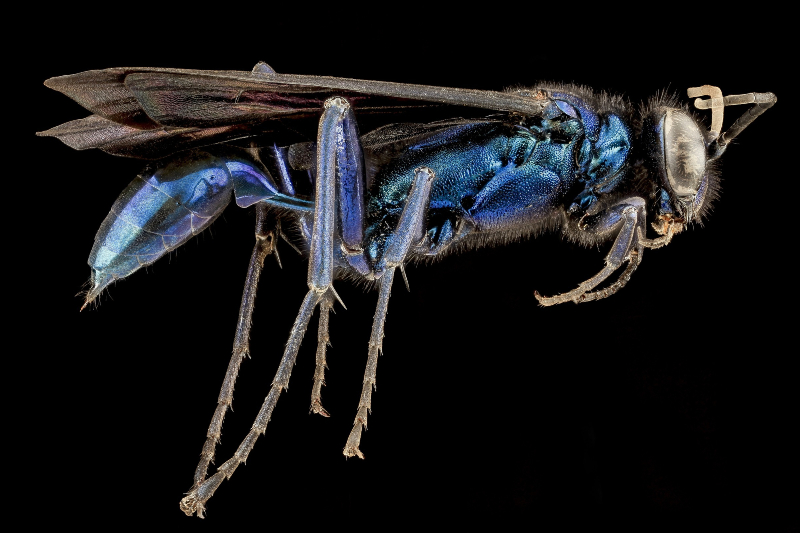
A terrible fear...
Of the lue wasp. The Martinique Red Tree Spider has a fearsome natural predator: the blue wasp, or pompile wasp. When this wasp stings the tarantulla, it injects it with a powerful anesthetic and lays an egg in its abdomen. The larva that comes out then slowly feeds on the spider's internal organs.

An emblem of Martinican culture
The Antilles Pinktoe Tarantula occupies a particular place in the culture of Martinique. It is considered to be a symbol of strength, mystery, and protection. Ancient people say that it watches over the forest and its inhabitants, the silent guardian of nature's secrets.
.svg)
