.png)
.png)

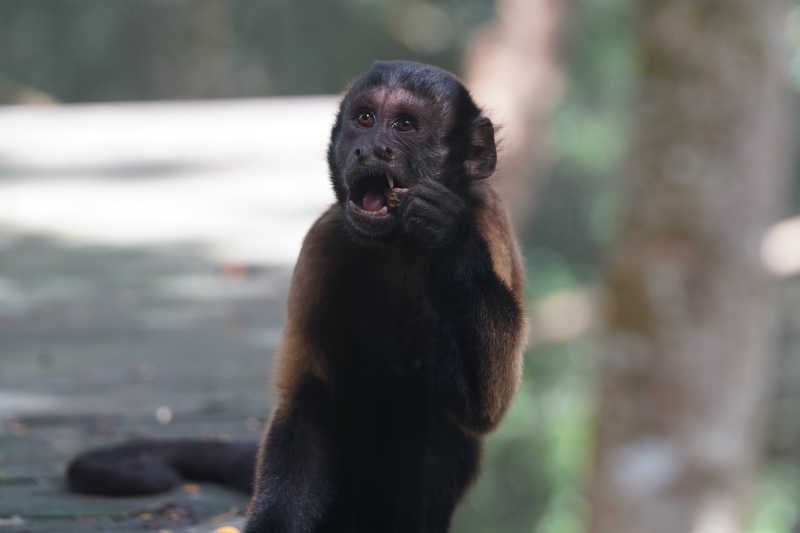
Tufted capuchin
Sapajus apella


The tufted capuchin, the clever monkey of the tropical forests
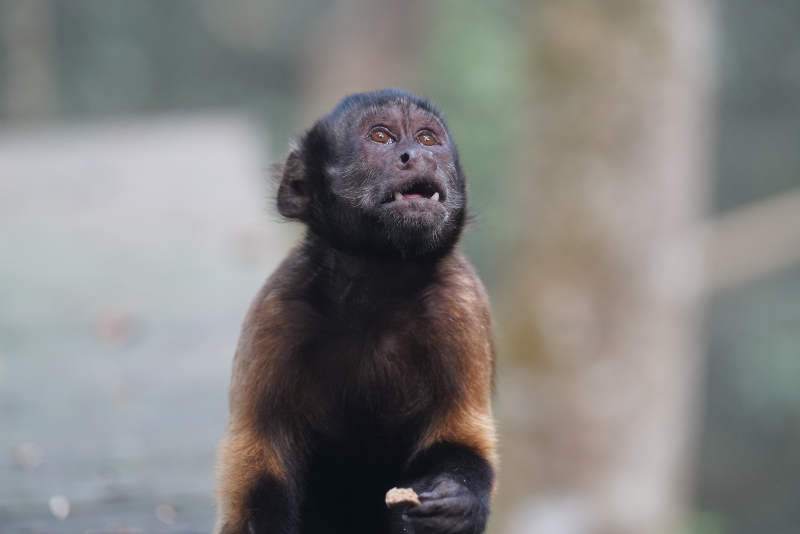
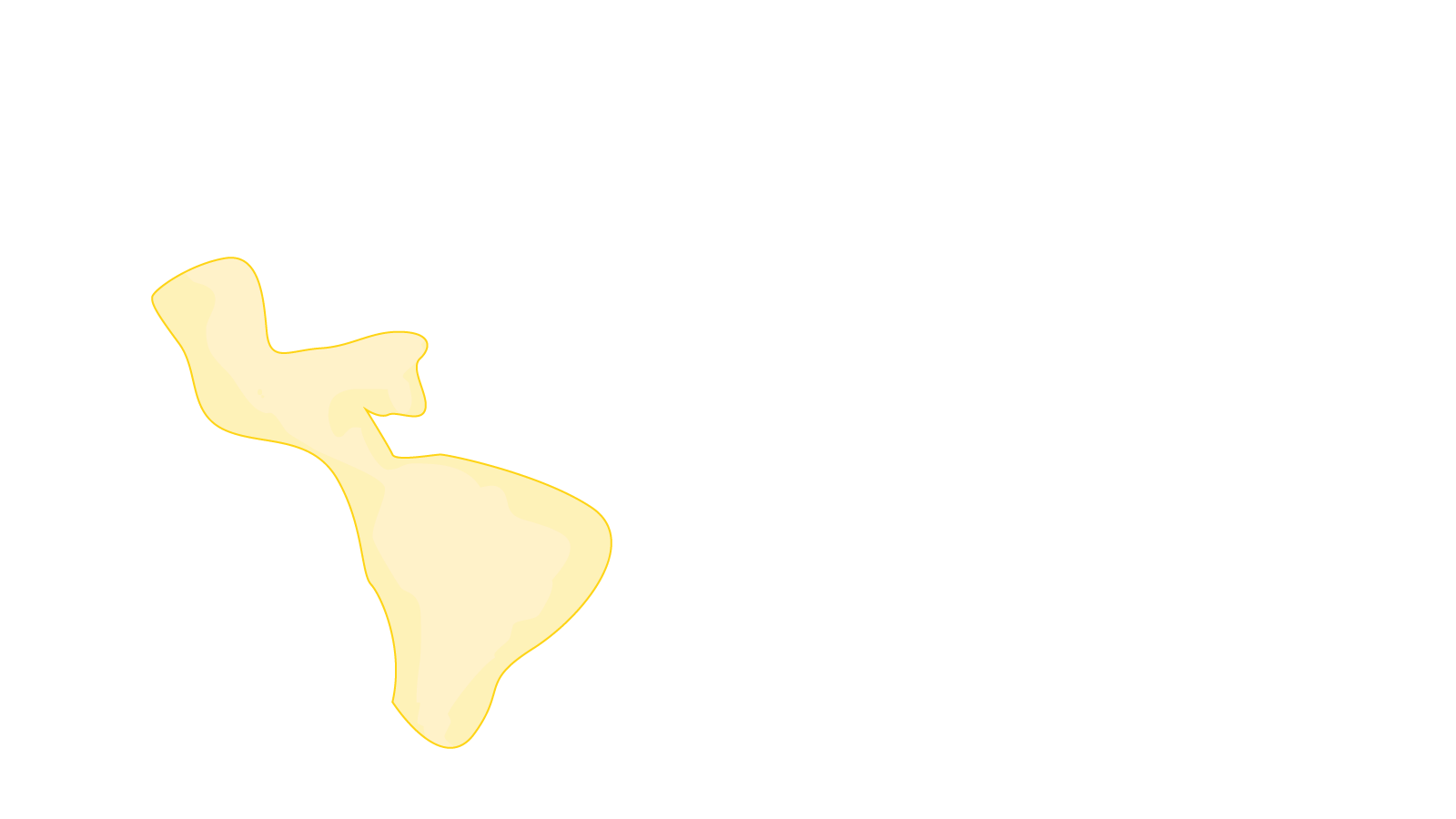
The tufted capuchin (Sapajus apella), also called nasturtium crested monkey, is a small primate native to the tropical forests of South America, present from Venezuela to northern Argentina. It lives in dense, humid forests, but also adapts to wooded savannah areas.
Classified as Least Concern (LC) by the IUCN, the tufted capuchin is still widely distributed, even though deforestation and illegal captivity represent local threats. A particularly intelligent species, it plays an important role in seed dispersal and in maintaining forest biodiversity.
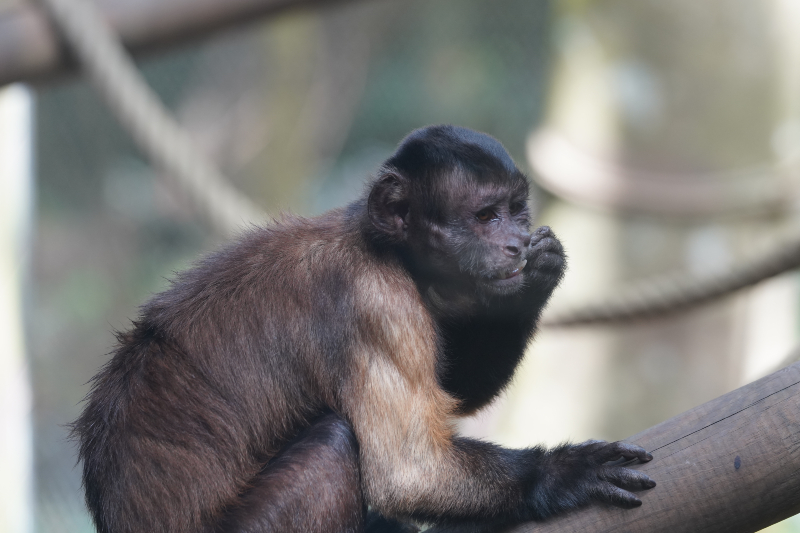
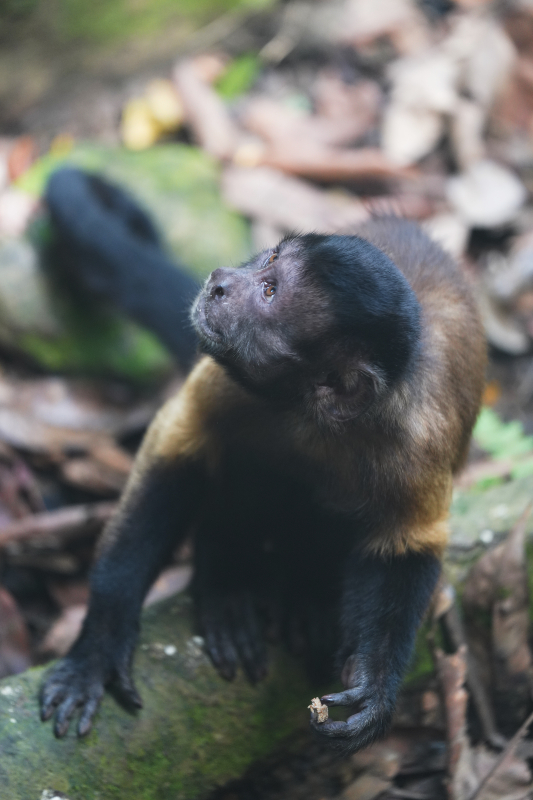
This monkey measures between 35 and 45 cm, with a prehensile tail that is almost as long as its body. Its coat varies from dark brown to gold, and its head bears a characteristic small hoopoe. An opportunistic omnivore, it feeds on fruits, seeds, seeds, insects, small vertebrates and bird eggs. Thanks to his agility and his skilful hands, he is able to manipulate objects, use simple tools, or crack nuts using stones.
At the Guadeloupe Zoo, tufted capuchins are among the most observed mammals. Their curious behavior and their great expressiveness entertain young and old alike, while illustrating the richness of the South American animal world.











.svg)


Quelques anecdotes

An ingenious monkey
The tufted capuchin is famous for its remarkable intelligence. In the wild, he sometimes uses stones or branches as tools to open nuts or hunt insects. This behavior, also observed in chimpanzees, testifies to its capacity for learning and social transmission.

A well-paced social life
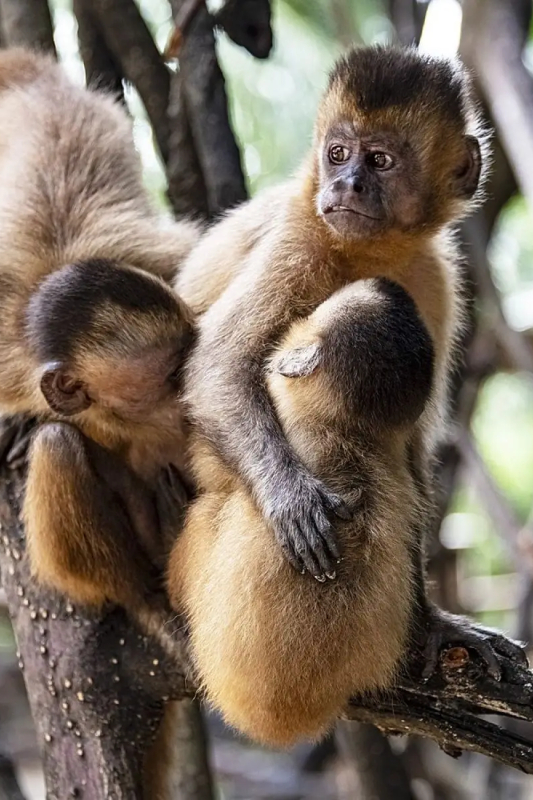
Capucins live in hierarchical groups of 10 to 30 individuals led by a dominant male. Very sociable, they spend a large part of the day interacting, grooming, and playing. These close ties reinforce the cohesion of the group and help survival in the wild, especially in the face of predators such as the jaguar.
.svg)
