.png)
.png)
Jaguar
Panthera onca


The jaguar, the star of the Zoo
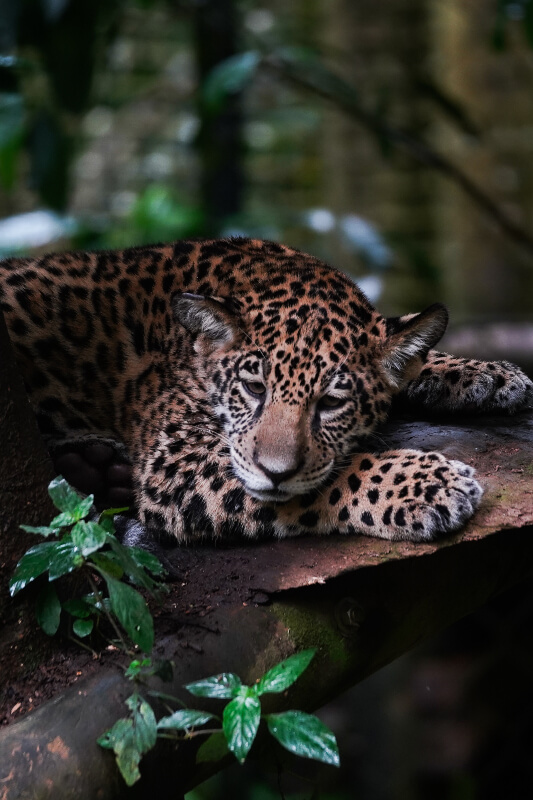
The jaguar (Panthera onca) is the largest feline in Latin America and the third largest in the world, after the tiger and the lion. Native to the tropical forests of Central and South America, it plays an essential role in the balance of ecosystems. A predator at the top of the food chain, it regulates the populations of numerous species and thus contributes to forest health.
The species is classified as Near Threatened (NT) by the IUCN. It is now a victim of deforestation, habitat fragmentation and poaching. In some regions, its workforce has fallen by more than 50% in fifty years. Conservation programs, supported by zoological parks, actively participate in the protection of this great emblematic predator.
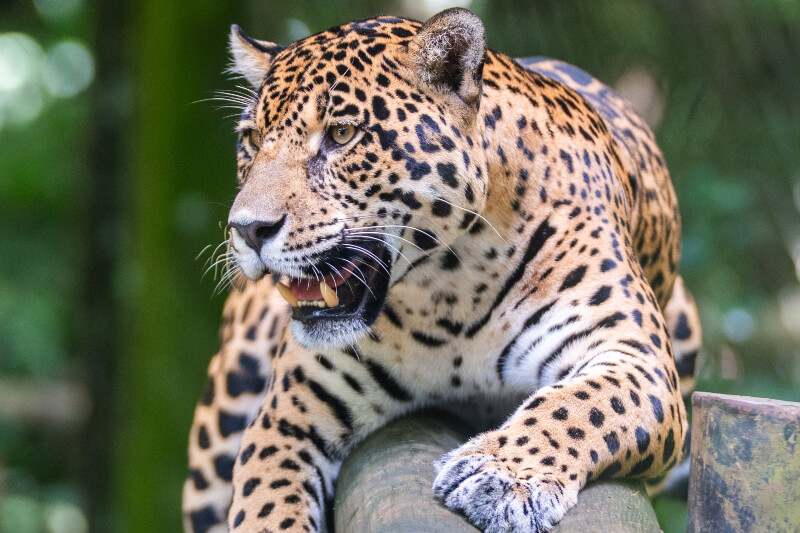
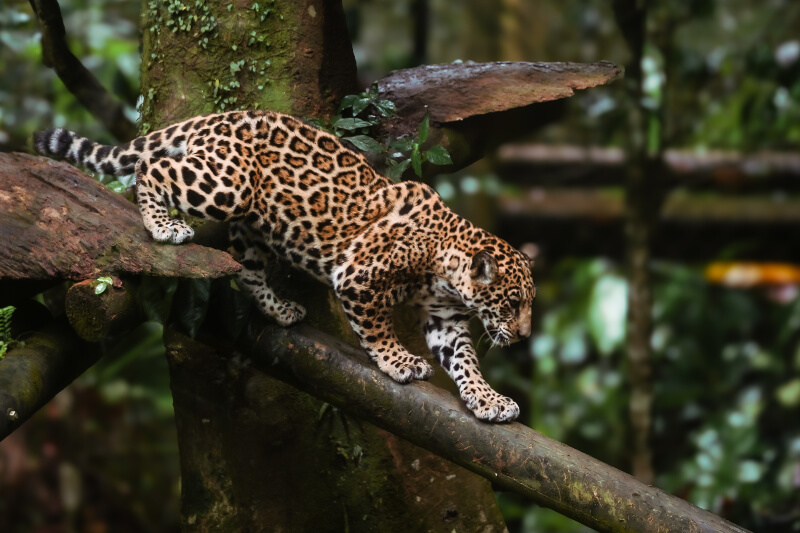
The jaguar is distinguished by its power and its compact morphology. It is up to 2.4 meters long including the tail and weighs an average of 80 to 120 kg. Its tawny coat spotted with black rosettes is unique to each individual, like a fingerprint. He is a fearsome hunter, capable of shooting down prey much heavier than himself thanks to an exceptionally strong jaw.
An excellent swimmer, the jaguar likes wetlands and forests crossed by rivers. It hunts on land as well as in water, where it catches fish, turtles or caimans. It is a solitary and territorial animal, active especially at dawn and dusk.
At the Guadeloupe Zoo, the jaguar is one of the mammals most admired by the public. Three individuals live there: Timal, Keeza and their young son Taïnos, born in 2025. They embody the beauty and power of this fascinating species.



.svg)


Quelques anecdotes

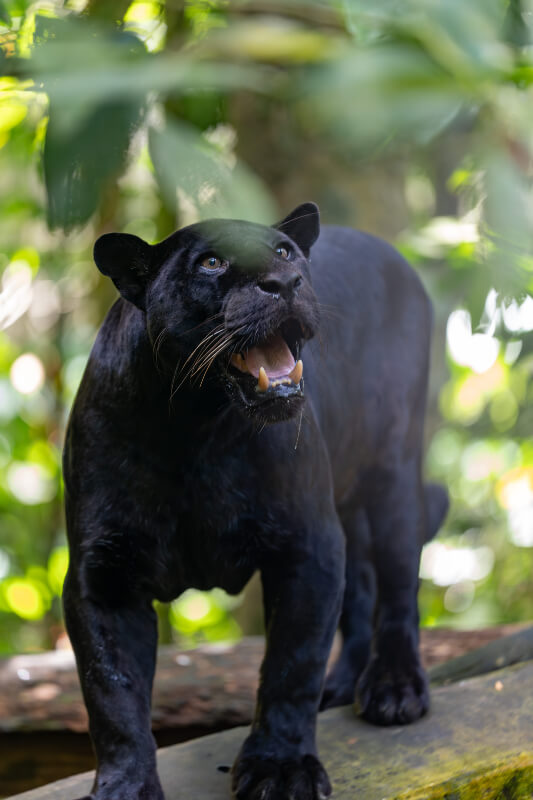
Timal, the black jaguar
Timal often puzzles visitors with his dark dress. Contrary to popular belief, he is not a panther, but a black jaguar. This color is due to a high concentration of melanin. If you look closely, you can still see the famous rosettes on its coat: a spectacular “ghost” effect under the sun.
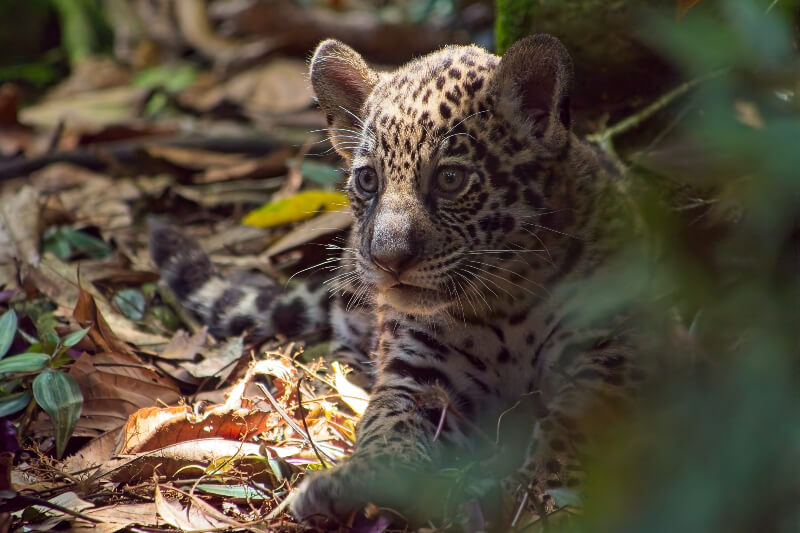
Taïnos, the pride of the Zoo
In February 2025, little Taïnos was born from the union of Timal and Keeza. His birth moved all of Guadeloupe and marked a major moment in the life of the park. A real victory for the preservation of the species, it became the flagship attraction of the year and the symbol of the success of the breeding programs carried out at the Zoo.
.svg)
