.png)
.png)

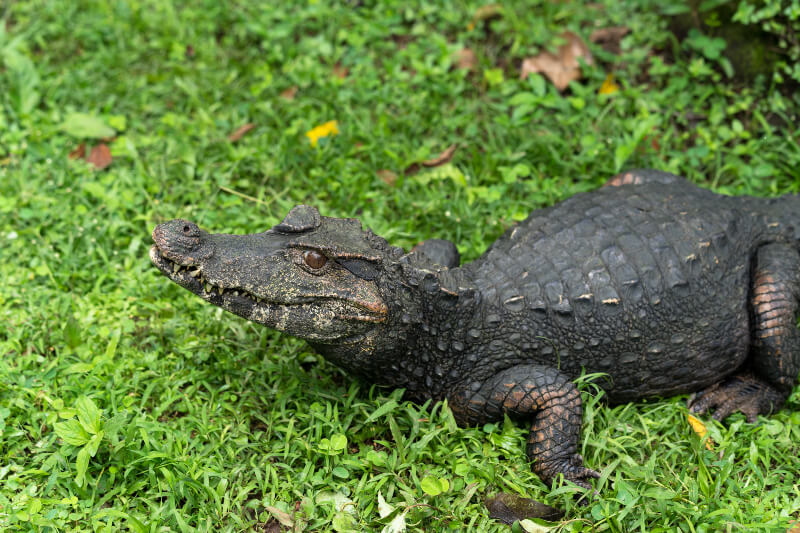
Smooth-fronted caiman
Paleosuchus trigonatus


Schneider's Caiman, the “gray caiman” of Guyana
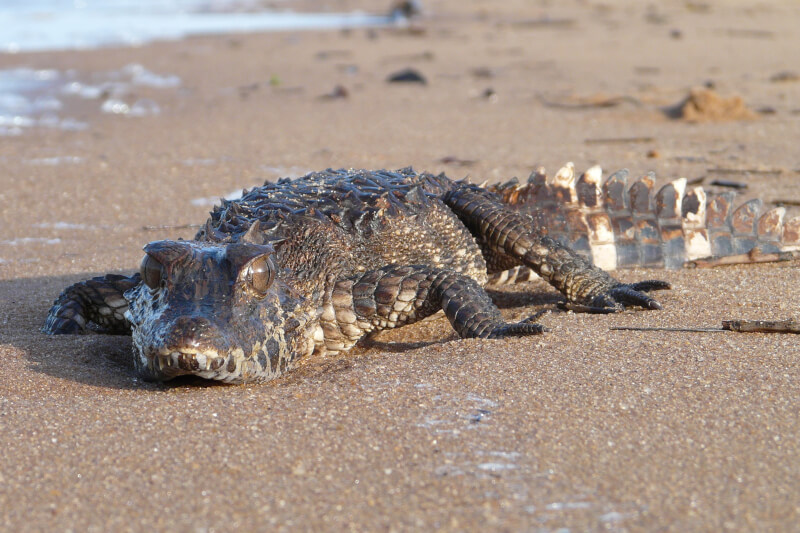
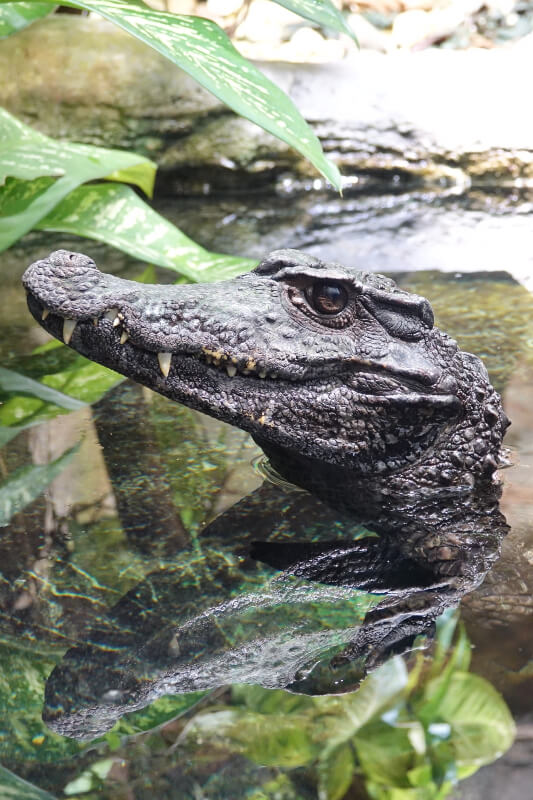
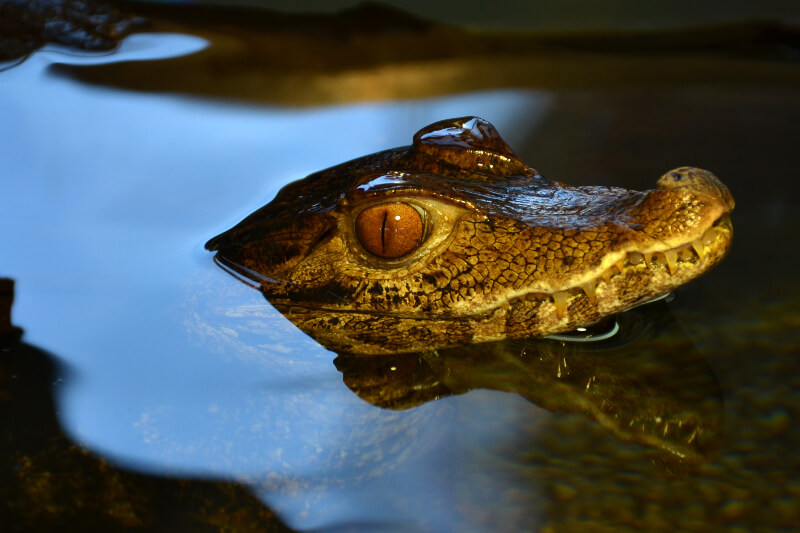
Schneider's dwarf caiman (Paleosuchus trigonatus), also called smooth-fronted caiman, is a crocodilian from South America. It lives mostly in tropical rainforests, near calm waterways, creeks, and swamps. It can also frequent small streams, sometimes shallow.
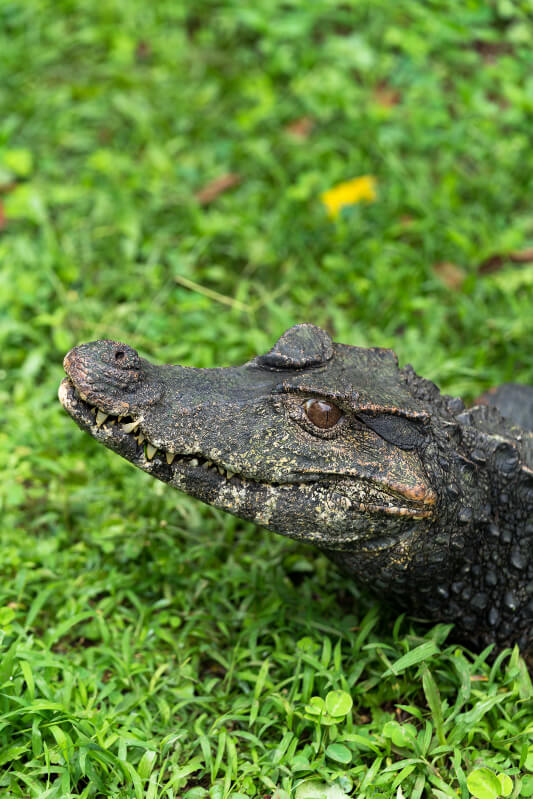
Its size is more compact than that of the Grand Caymans. Adults are often around 1.2 to 1.8 m tall. The largest males can exceed 2 m. His body seems “armored.” Its skin has numerous bone plates. Its head is triangular, with a fairly smooth forehead, with no “glasses” between the eyes.
The species is classified as Least Concern (LC) by the IUCN. That's not to say she doesn't have any challenges. Like many forest animals, it depends on natural environments in good condition. The degradation of wetlands and certain local pollution can impact its habitat.
Schneider's caiman is mostly active at dusk and at night. He hunts on the lookout. Its diet is carnivorous. In particular, it consumes fish, crustaceans, amphibians and other small aquatic prey, depending on what its environment offers.
At the Guadeloupe Zoo, you can observe Bamba, our female Schneider dwarf caiman in her pond among Florida tortoises. Its presence makes it possible to discover the diversity of reptiles and species related to wetlands.


.svg)


Quelques anecdotes
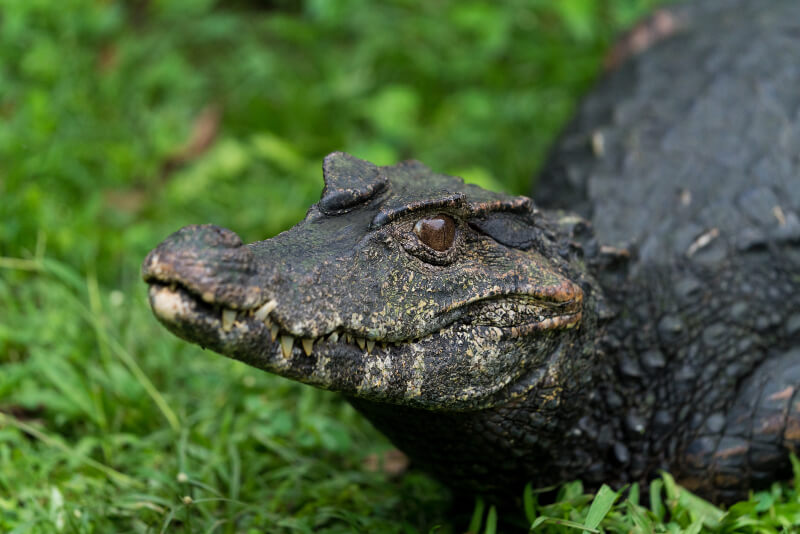
Natural “shielding”
Schneider's dwarf caiman skin contains numerous bone plates (osteoderms). Result: it is very well protected. This armour also makes it less sought after for leather, as the skin is difficult to work with. A detail that has long limited skin-related pressure in certain regions.
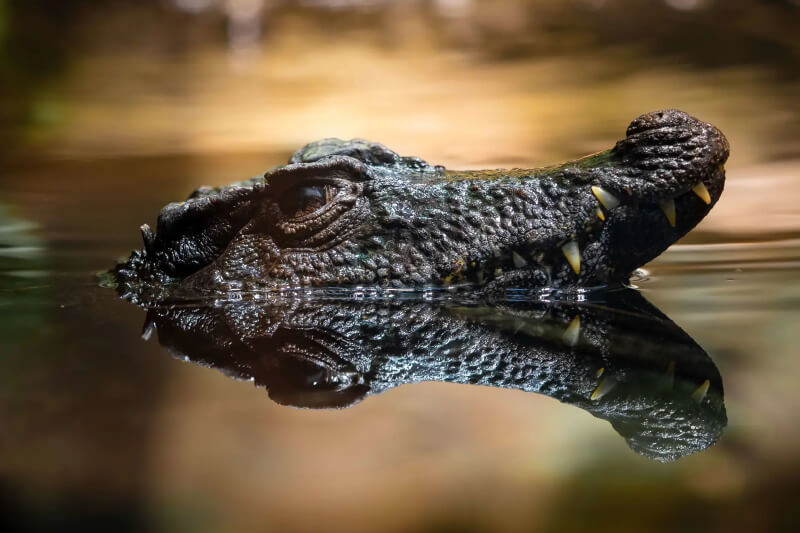
A nest sometimes... heated by termites
The female lays eggs in a mound nest, composed of plants and soil. These nests are sometimes built near termite mounds. Termite activity and plant decomposition contribute to maintaining a more stable temperature. Incubation is long, often over 100 days. It is one of the longest durations in crocodilians.
.svg)
