.png)
.png)

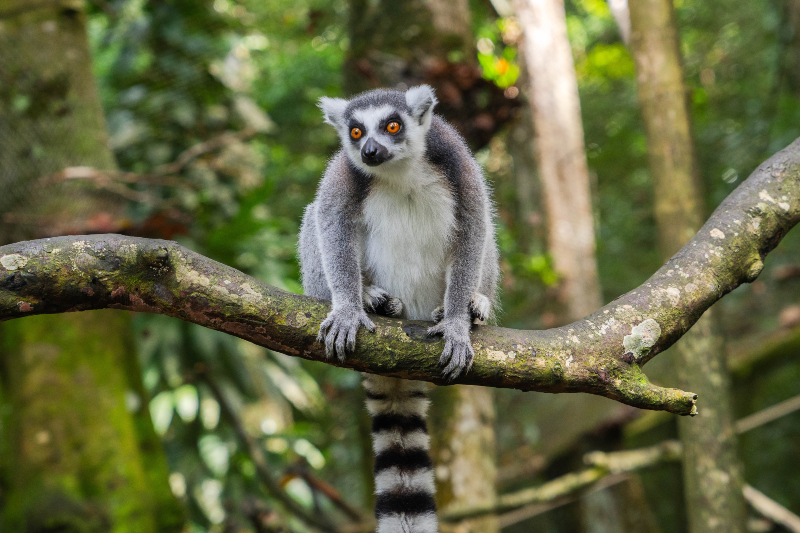
Ring-tailed lemur
Lemur catta


The Ring-tailed lemur, the emblematic lemur of Madagascar
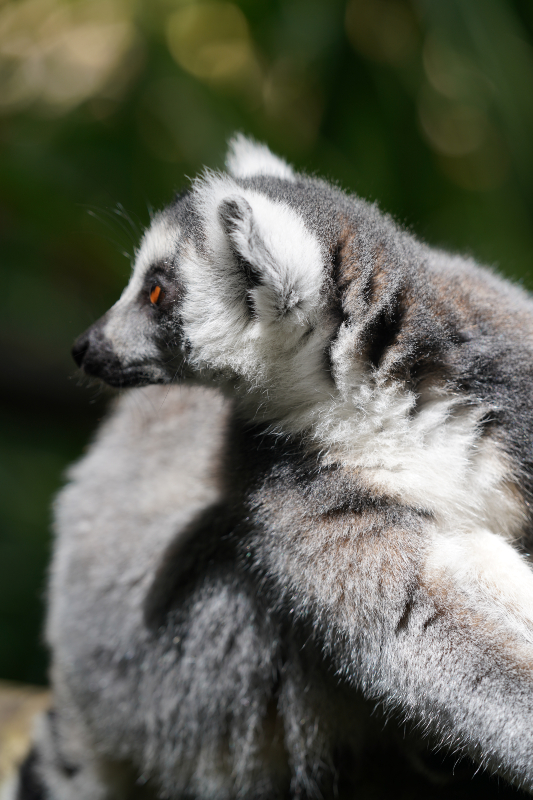
The Ring-tailed lemur (Lemur catta) is one of the most recognizable lemurs in Madagascar. It is easy to spot thanks to its black and white ringed tail, its pointed snout and its orange eyes. This primate lives in dry forests, shrubby savannas, and rocky areas in the south of the island.
Classified as Endangered (EN) by the IUCN, the Ring-tailed lemur has seen its populations decline due to habitat loss, bushfires, and hunting. Despite this situation, it is still one of the most observed lemurs in protected areas.
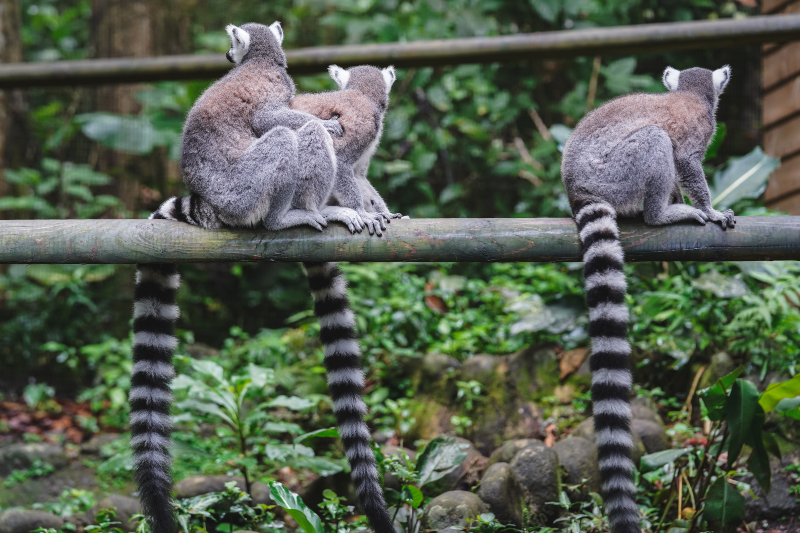
The ring-tailed lemur rattlesnake is nocturnal. They spend a lot of time on the ground, but they also climb trees to find fruit and leaves. His tail is not used to hang on, but to communicate. When moving in groups, each individual keeps its tail erect to remain visible in the vegetation.
This species is matriarchal. Women lead the group. They choose resting places, foraging areas, and manage social relationships. Males, on the other hand, change groups several times during their lives.
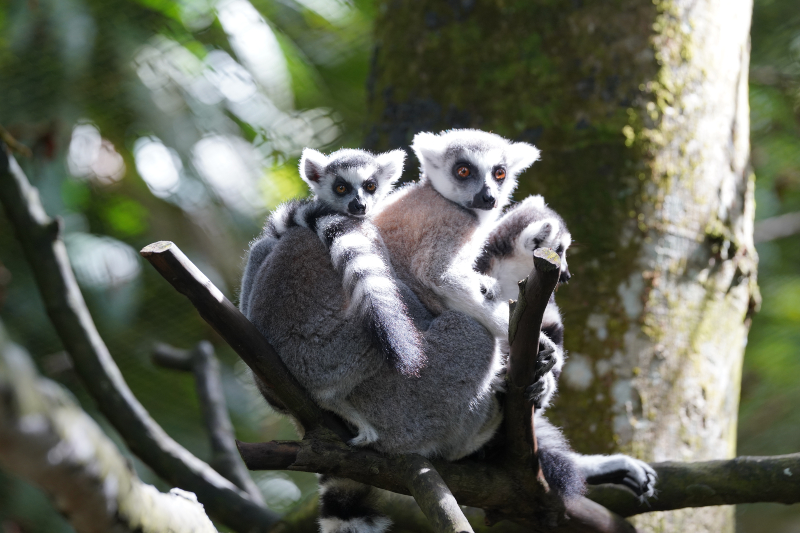
At the Guadeloupe Zoo, the makis cattas live in an immersive area located after the enclosure of the Unau sloth and near macaw aviaries. Visitors evolve in their living space. The animals remain completely free, but it is essential to never touch them. Their natural curiosity sometimes pushes them to approach themselves.


.svg)


Quelques anecdotes

An immersive and educational experience
Every day, at the Parc des Mamelles, it is possible to watch the lemurs being fed. This moment helps visitors understand their diet, hierarchy, and social interactions. The healers take the opportunity to recall the right behaviors to adopt in the immersive area.

Fights... scented
Males use “olfactory fights” to resolve conflicts. They rub their wrists on their tail to create a strong odor, then wave that tail at a rival. These demonstrations are often enough to establish hierarchy, without physical confrontation.
.svg)
