.png)
.png)

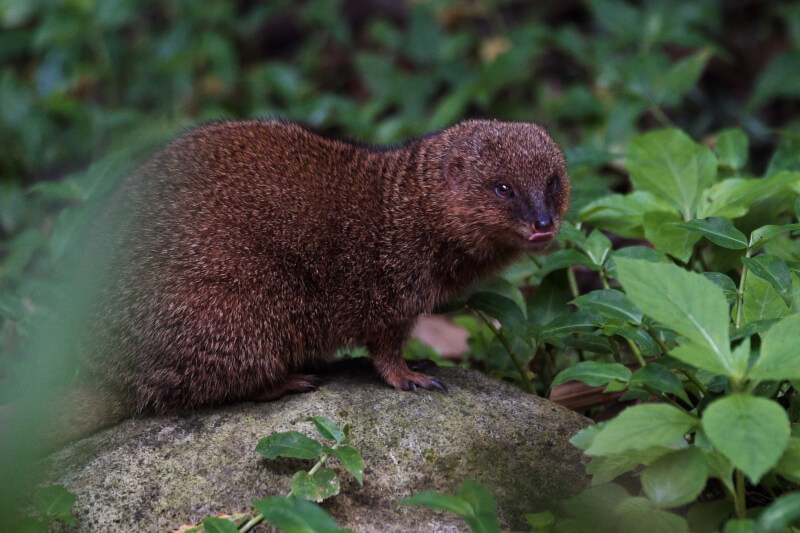
Small India Mongoose
Herpestes Auropunctatus


The small Indian Mongoose, the little hunter with keen senses
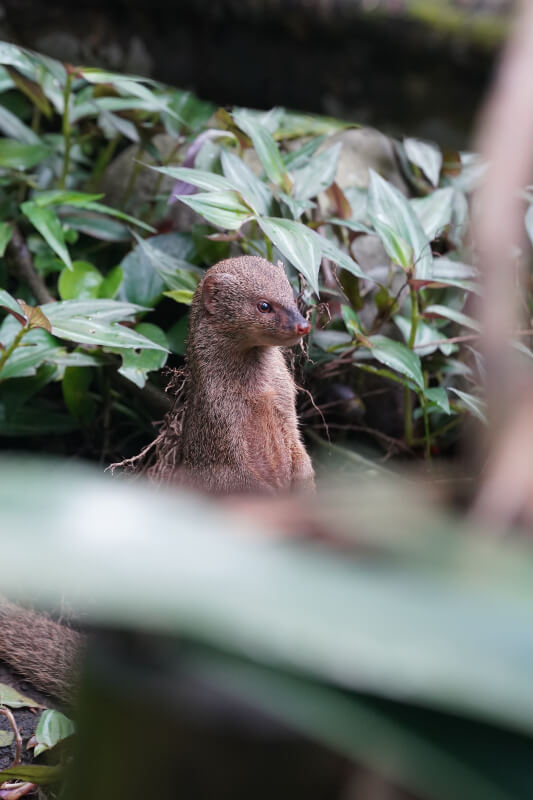
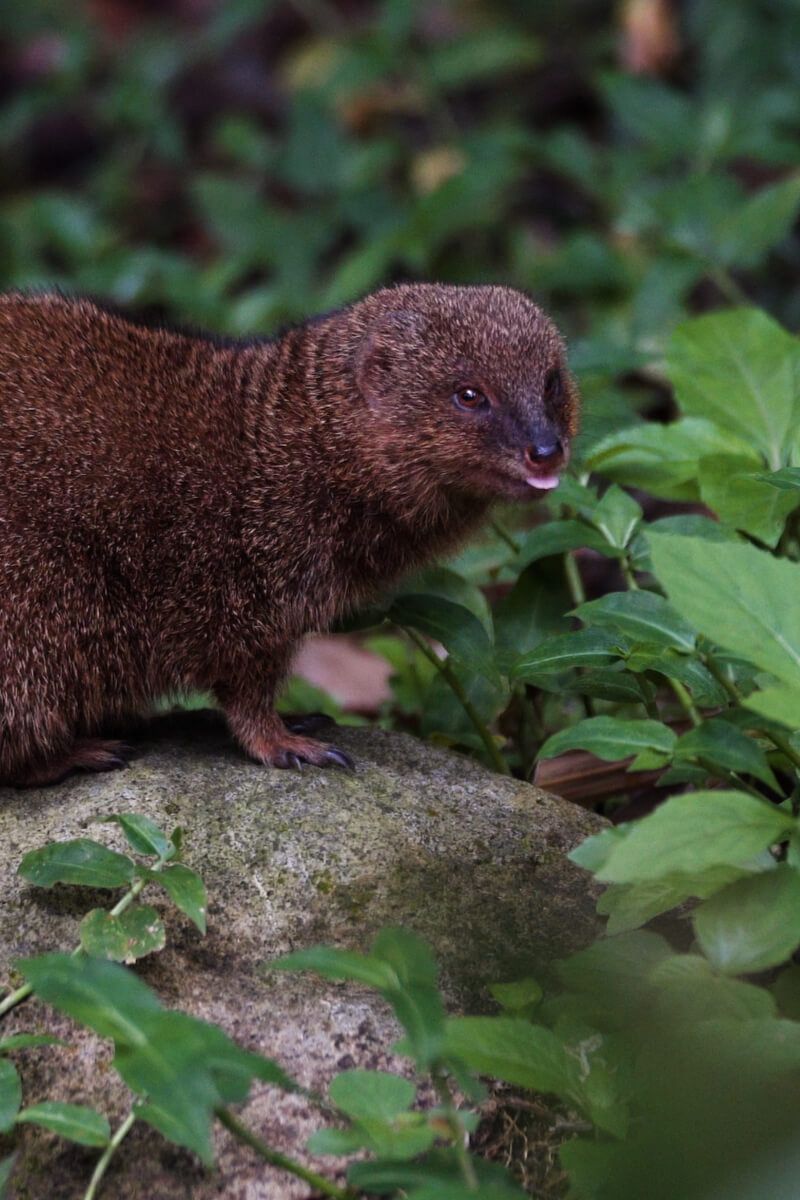
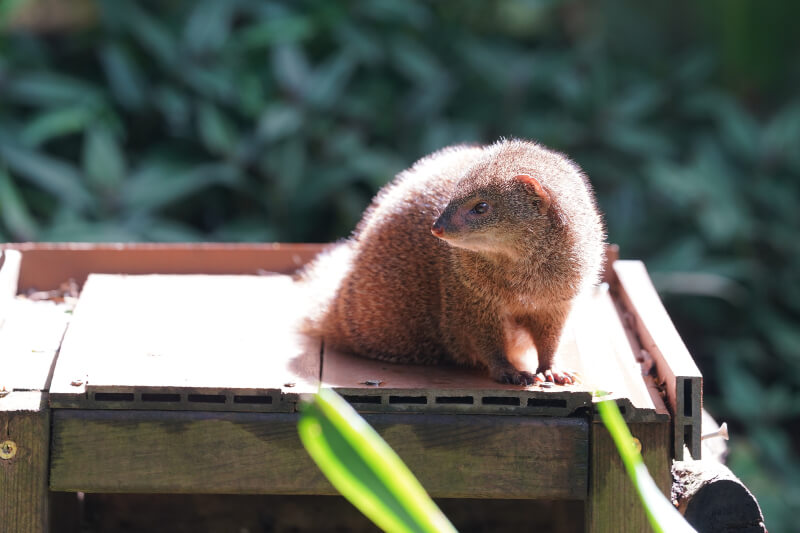
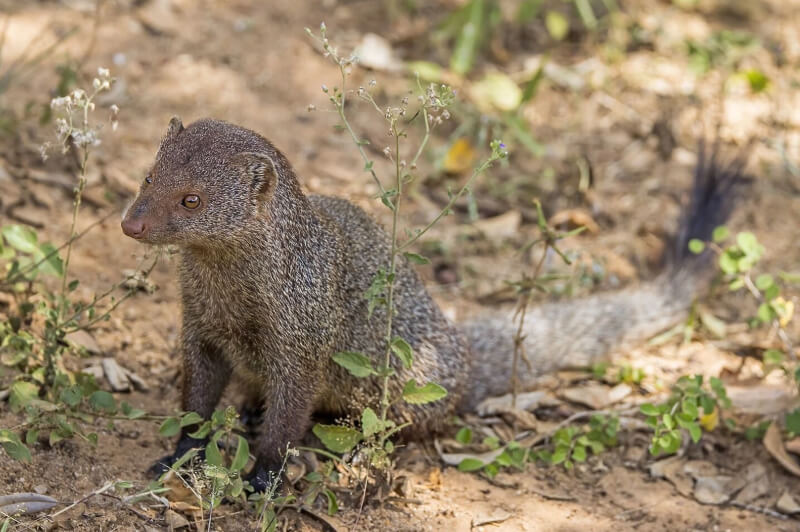
The Indian mongoose (Herpestes auropunctatus) is a small, agile and curious mammal. It lives in open areas, forest edges and sometimes near homes. Its elongated shape, fine snout, and bushy tail make it easy to recognize.
Classified as Least Concern (LC) by the IUCN, it has stable populations in most of the regions where it is located. Adaptable and lively, the mongoose plays an important role in the regulation of small animals, such as rodents and some reptiles.
It measures between 30 and 40 cm, with a tail that is almost as long as its body. Its brown-gray coat, slightly speckled, allows it to blend in with the vegetation. Its movements are fast and precise. She constantly explores the ground, trunks and thickets in search of food.
The mongoose is omnivorous. It feeds mainly on insects, small vertebrates, eggs, fruits and sometimes amphibians. It mainly hunts on the ground and takes advantage of its keen sight to detect the slightest turmoil.
At the Guadeloupe Zoo, the mongoose often attracts the attention of visitors, who see it sneaking between the rocks and the trunks arranged in its enclosure.



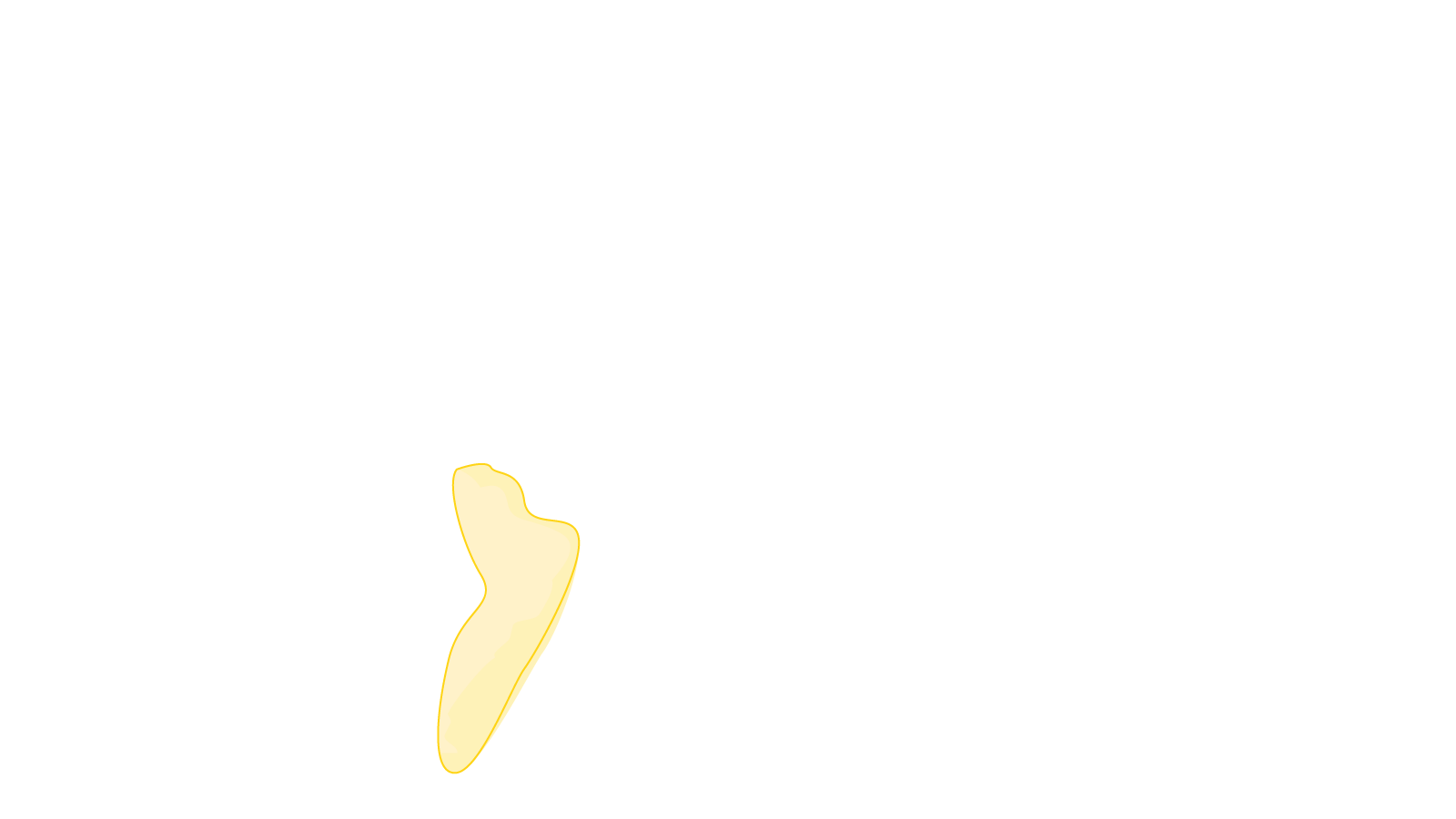
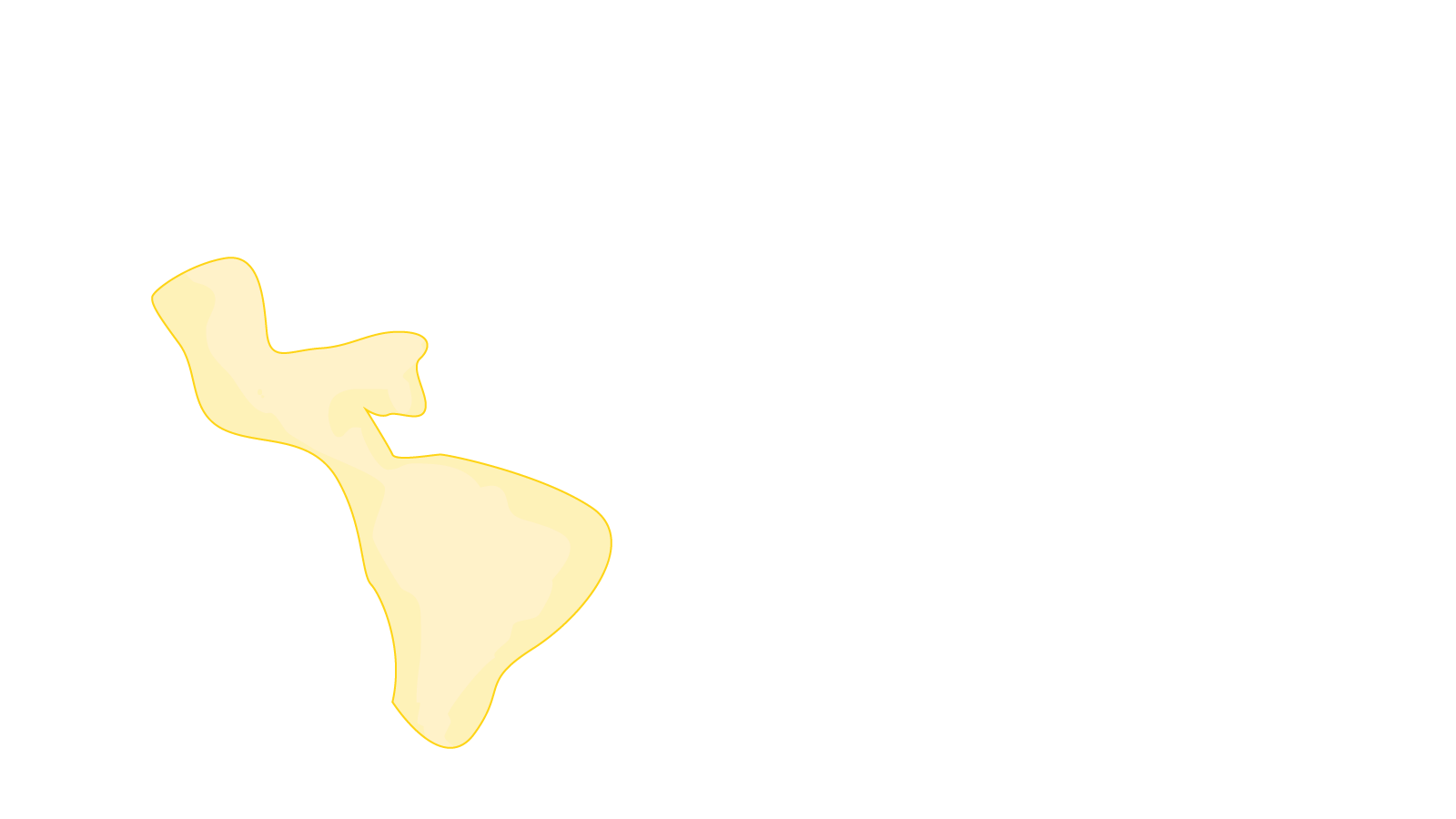

.svg)


Quelques anecdotes
A lightning defense
The samll indian mongoose is known for its very fast reflexes. This speed allows it to avoid attacks, surprise its prey and move easily in dense environments. Its agility is one of its best assets.

A well-organized family
Mongooses sometimes live in small groups. They communicate through short sounds and precise body postures. This social lifestyle helps females protect their young and identify predators more quickly, such as birds of prey or Boa constrictor.
.svg)
