.png)
.png)

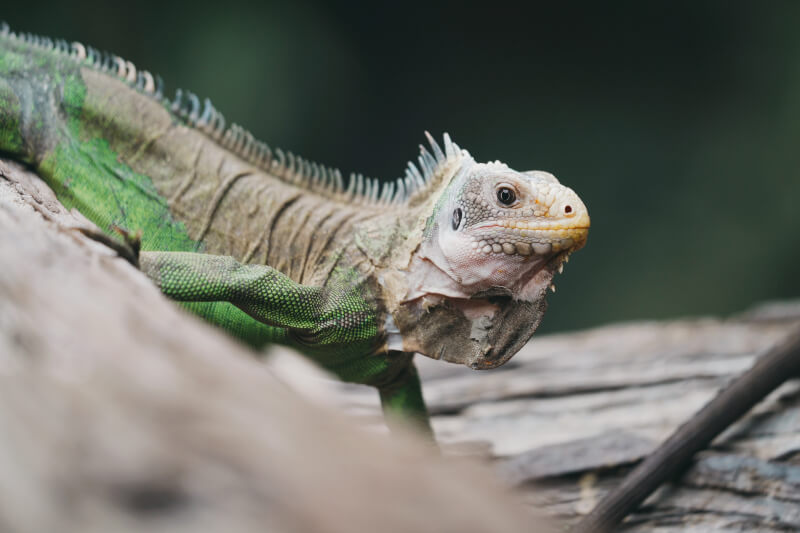
Lesser Antillean iguana
Iguana Delicatissima


The Lesser Antillean iguana, an endangered Caribbean treasure
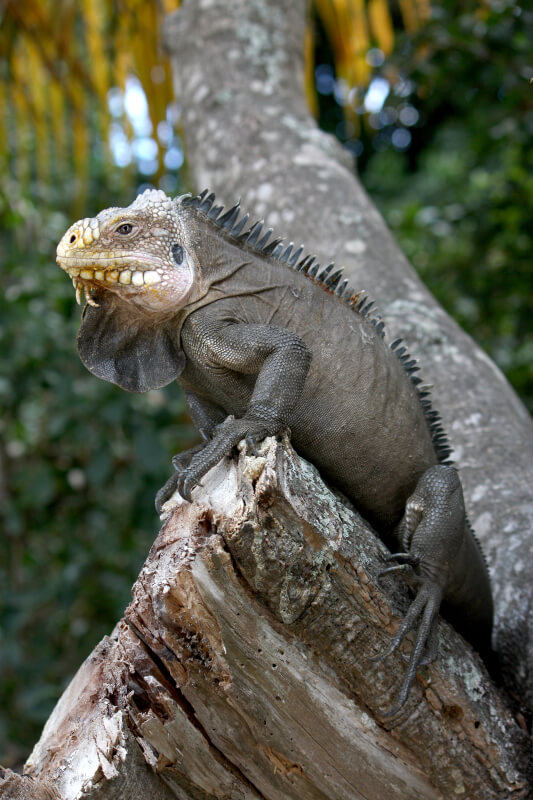
The Lesser Antillean iguana (Iguana delicatissima) is a reptile endemic to the Lesser Antilles. It is found in Guadeloupe, Dominica and on a few small islands that are still preserved. It is distinguished by its thin head, its gray to olive green skin and the absence of black spots, unlike the introduced green iguana.
The species is classified as Critically Endangered (CR) by the IUCN. Its populations have fallen due to the destruction of habitats, cyclones, and especially hybridization with the green iguana, an invasive species. Today, only a few population groups remain. Protection programs are ongoing, including those conducted in Guadeloupe.
The Lesser Antillean iguana lives in dry forests, rocky areas, mangroves, and sunny forest edges. It is a herbivorous reptile: it feeds on leaves, flowers, young shoots and sometimes fruits. This food contributes to the dispersal of seeds and the maintenance of local ecosystems.
As an adult, it can measure 1.2 meters including the tail. He spends long hours in the sun to regulate his temperature. When he feels threatened, he prefers to flee. Fighting is not his first instinct.
Its presence at the Guadeloupe Zoo makes it possible to raise public awareness about local biodiversity and conservation efforts. This species is one of the symbols of Guadeloupe's fauna.





.svg)


Quelques anecdotes

Bright colors during the mating season
During the breeding season, some males turn pink or orange on the head and neck. This temporary coloring allows them to attract the attention of females and intimidate other males, without ever becoming aggressive.

An excellent climber
Thanks to its long claws, iguanas easily climb rocks and branches. It can remain immobile for long minutes, perfectly camouflaged. This posture helps him avoid predators.
.svg)
