.png)
.png)


Hummingbird
Eulampis jugularis/Orthorhyncus cristatus/Eulampis holosericeus


The Hummingbird, the flying jewel of tropical gardens
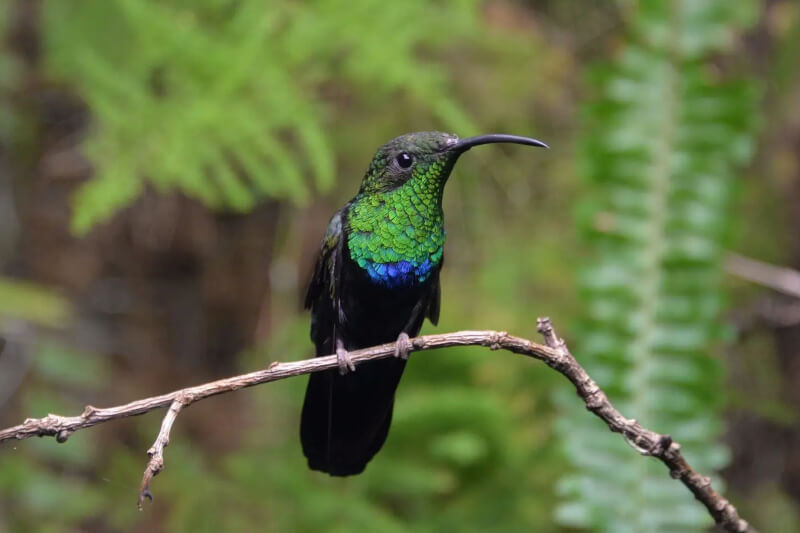
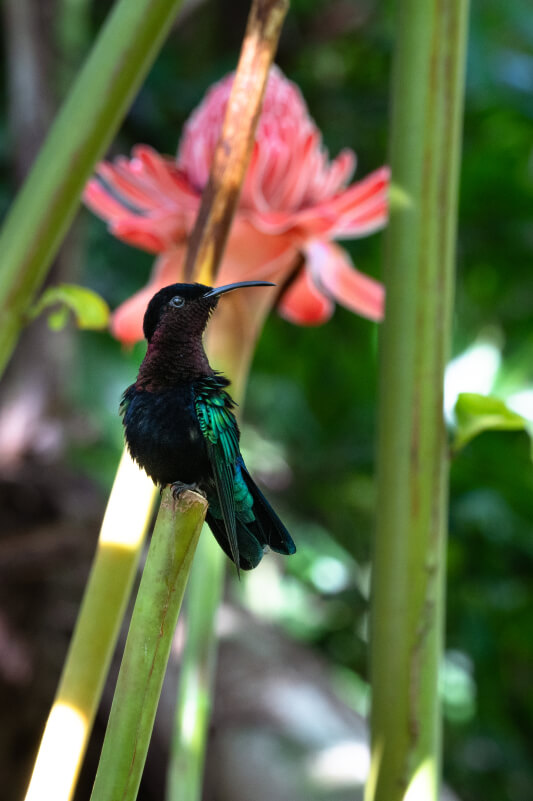
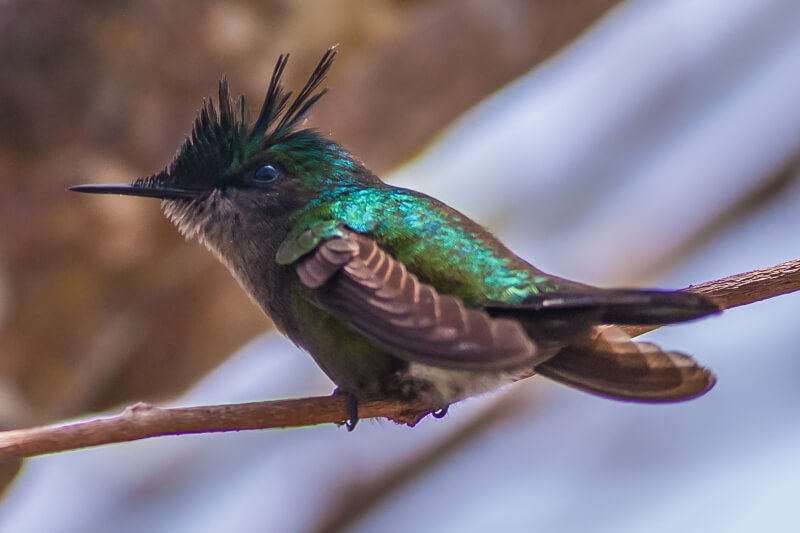
At the Guadeloupe Zoo, visitors can observe three species of hummingbirds, all free in the park:
- The Antillean crested hummingbird(Orthorhyncus cristatus)
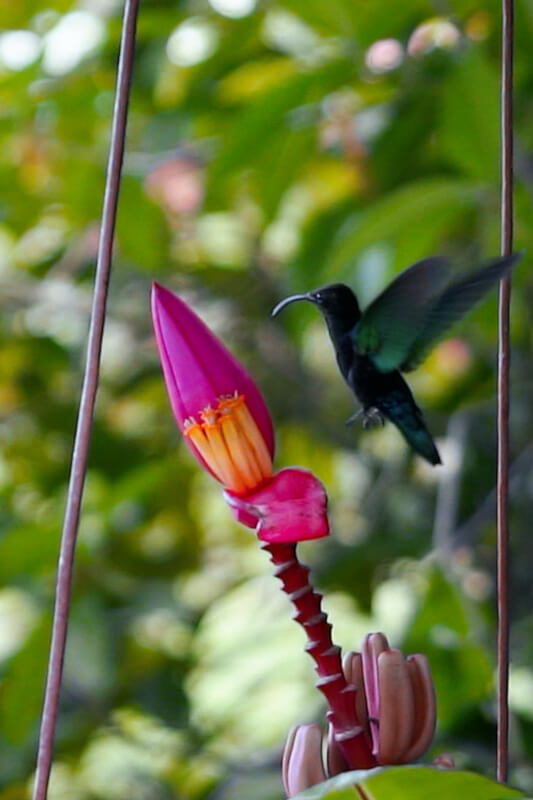
- The purple-throated carib (Eulampis jugularis)
- The green-throated carib (Eulampis holosericeus)
These birds live in the tropical forest that surrounds the trails. At the zoo, they are often seen in Heliconia and the flowers of Malaysian queens.
The hummingbird is one of the most recognizable birds in the Antilles. Its hover, its ultra-fast wing beats and its metallic colors give it an almost unreal look. Males generally wear brighter hues, while females sport more subdued colors.
Depending on the species, the IUCN status varies between Least Concern (LC) and Near Threatened (NT). Their balance depends on the conservation of flowering areas and the availability of nectar.
The hummingbird feeds on nectar, which it collects thanks to its long beak and its stretchy tongue. It sometimes supplements its diet with small insects, especially to feed the young. It is an excellent pollinator: it carries pollen from flower to flower and contributes to the maintenance of many tropical plants.
Their flight is impressive. Some flap their wings more than 60 times per second and can fly backwards. Their heart beats very fast, which explains their constant need for energy.

.svg)


Quelques anecdotes
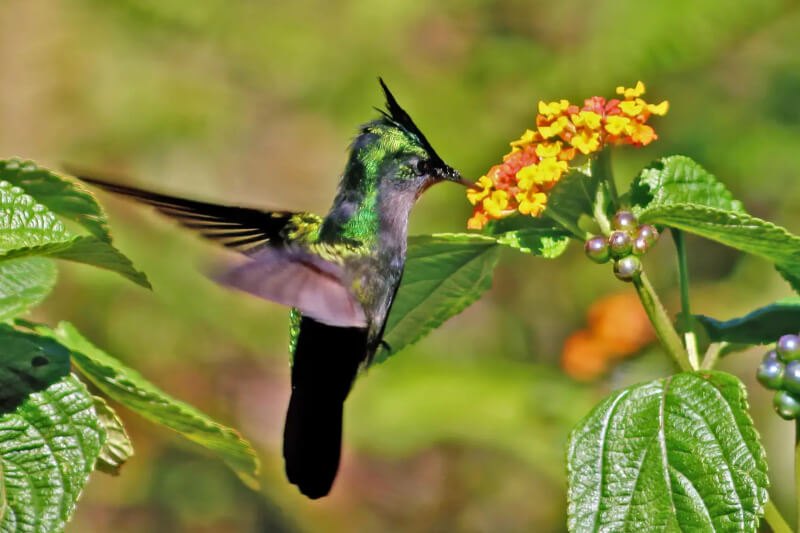
A unique flight in the world
The hummingbird is the only bird that can fly backwards. Its very particular wing muscles also allow it to remain immobile in the air to reach nectar with precision.
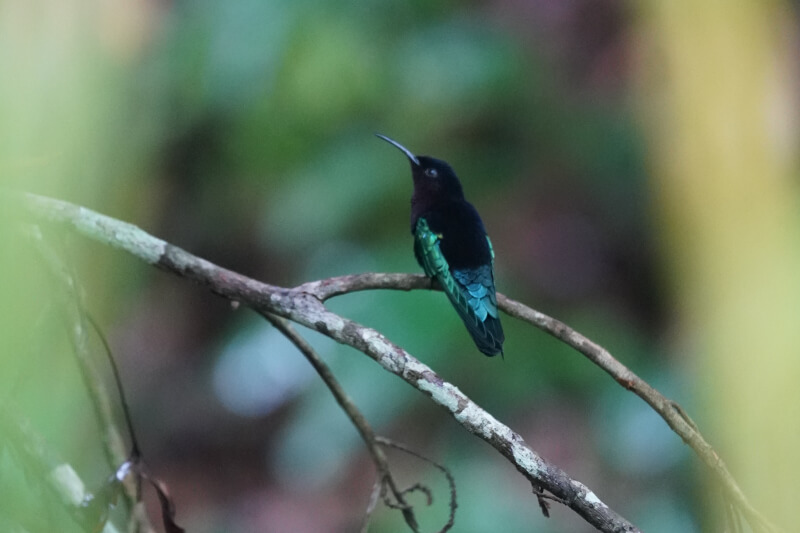
Tiny territories
Despite their very small size, hummingbirds defend micro-territories around nectar-rich flowers. They do not hesitate to hunt other birds, sometimes much larger than themselves, to protect their loot area.
.svg)
