.png)
.png)

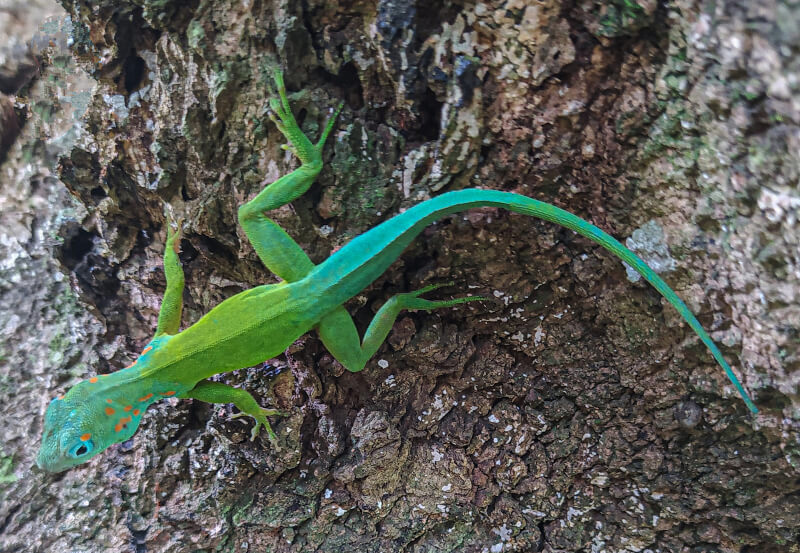
Guadeloupe Anole
Anolis marmoratus


The Guadeloupe Anole
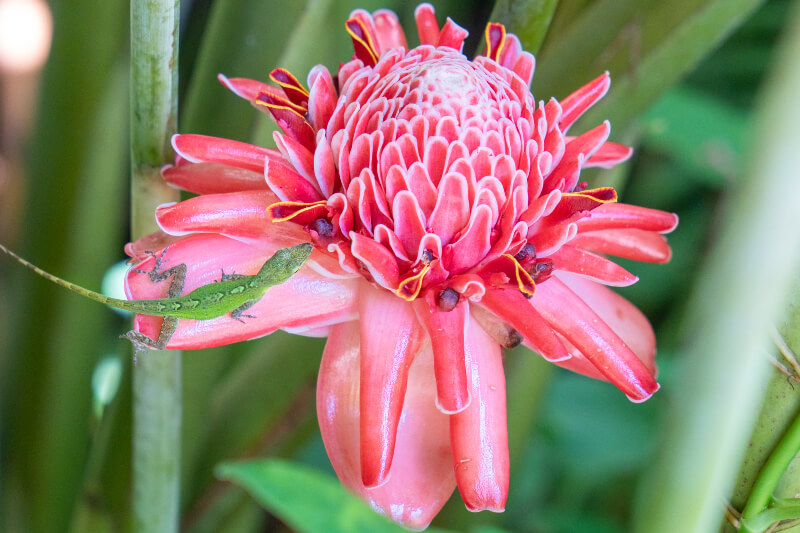
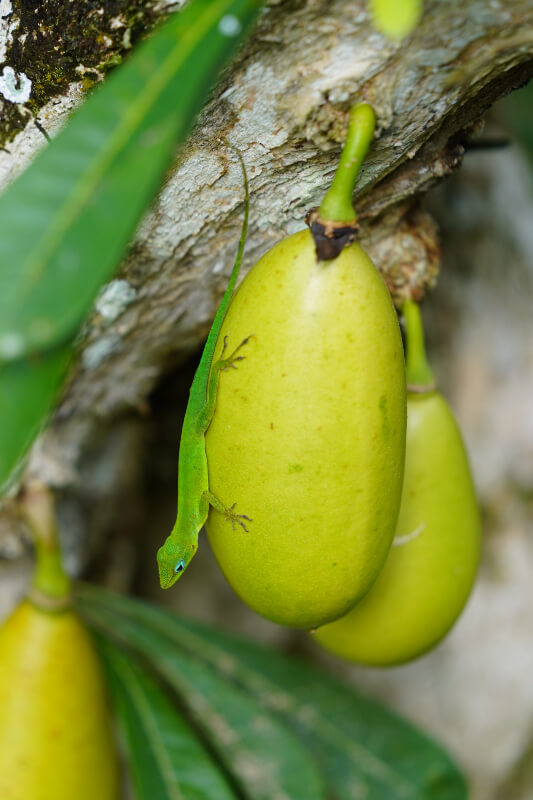
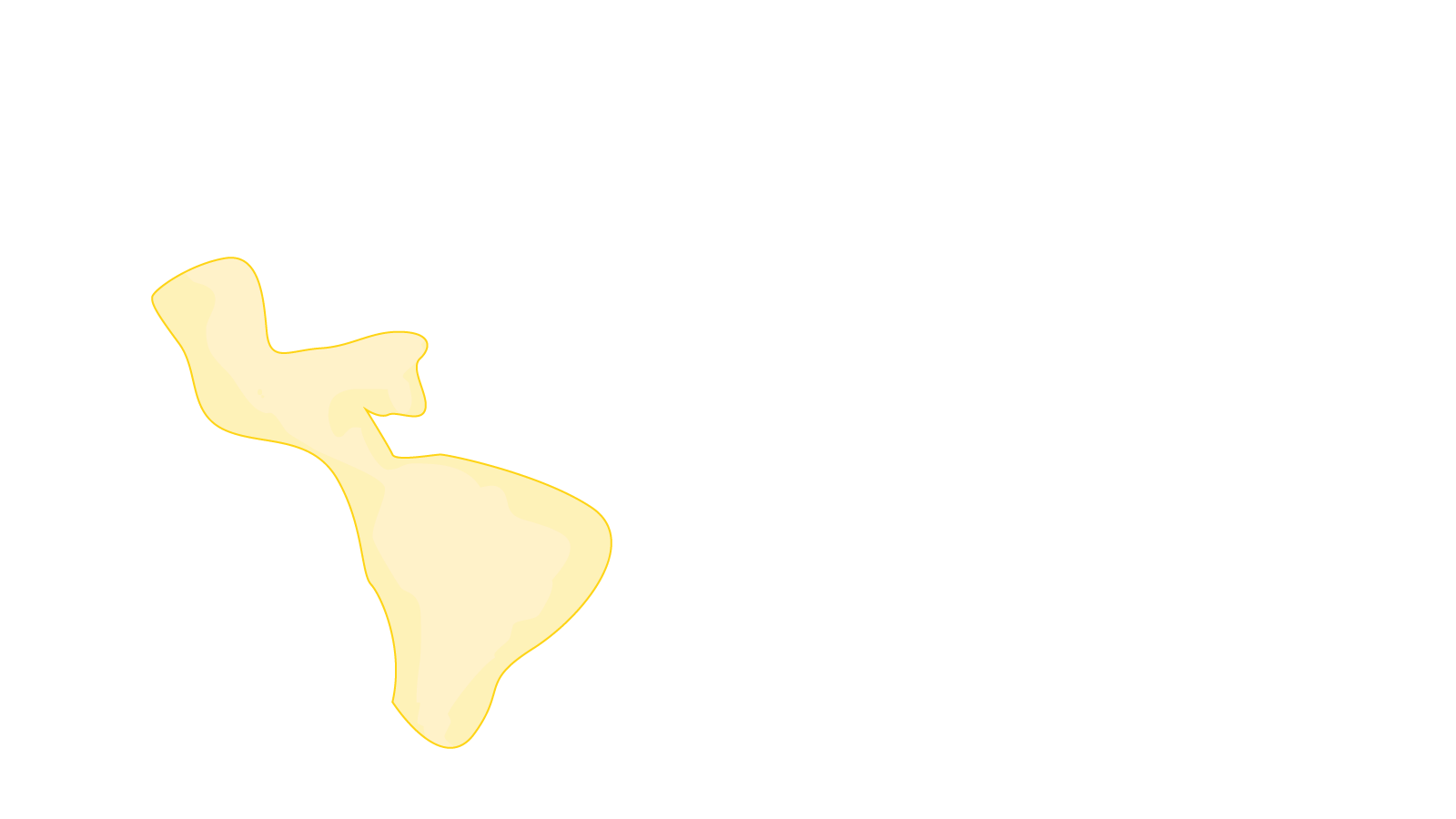
The Guadeloupean Anole (Anolis marmoratus) is a small lizard endemic of Guadeloupe. Present throughout the archipelago, it has adapted to a wide variety of environments: tropical rainforests, mangroves, gardens, agricultural areas and urban environments.
The Guadeloupe Anole is classified as Least Concern (LC) by the IUCN. Although it is abundant, this endemic species plays an important role in Guadeloupe's forest ecosystems. Its presence is a positive indicator of the good health of natural environments.
It measures an average of 15 to 20 cm including the tail. The male is taller than the female and has brighter colors. Its colors vary according to populations and geographical areas, ranging from bright green to marbled brown, sometimes with bluish undertones on the head or back. This diversity of colors makes it a particularly photogenic and recognizable species.
This lizard is diurnal. He spends much of the day heating himself in the sun, which regulates his body temperature, and then actively hunting small insects.
Its highly developed eyesight allows it to easily locate its prey. It is capable of fast and precise movements to capture mosquitoes, flies, caterpillars, and other invertebrates. This insectivorous diet contributes to the natural regulation of insect populations in its environment.
The Leopard Anole is also known for its colorful throat, called dewlap, which the male deploys during territorial or courtship parades. This visual signal allows him to intimidate his rivals and attract females. Breeding takes place all year round in tropical climates, but is more intense during the humid season. Females lay their eggs in loose soil or forest litter, often near sheltered areas.
At the Guadeloupe Zoo, it is presented in the insectarium alongside insects and invertebrates (Phasms, dendrobate scolopendras etc.).






.svg)


Quelques anecdotes
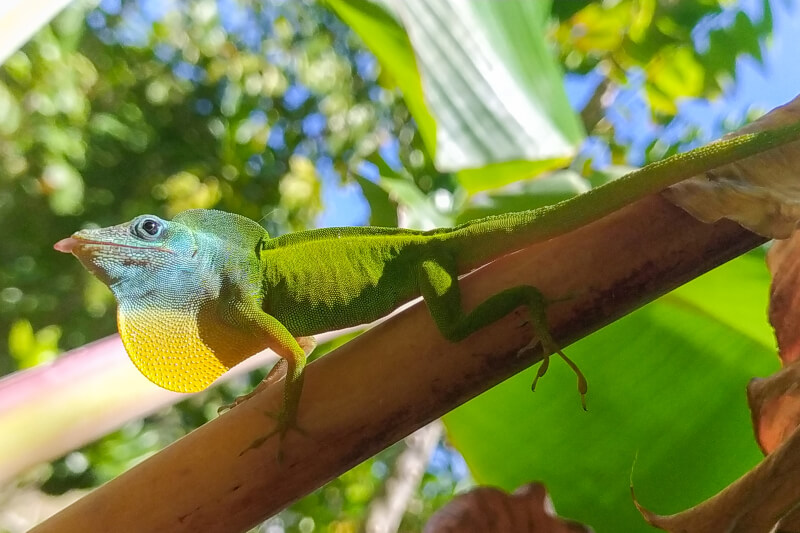
A pro at escaping
When an anole is attacked by a predator, it detaches itself from its tail, which continues to move for a few seconds. The predator is therefore distracted and the anoli can flee. It's a natural mechanism called autotomy. The tail then grows back, but shorter and different from the original.
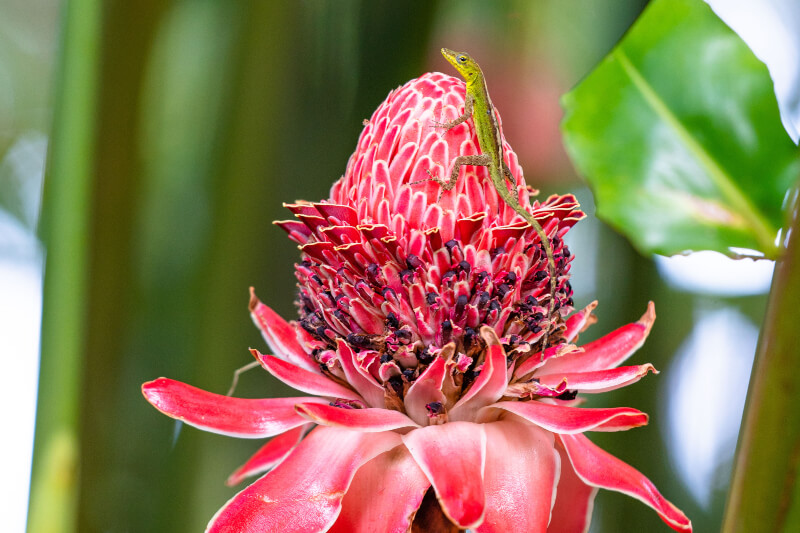
An acrobat lizard
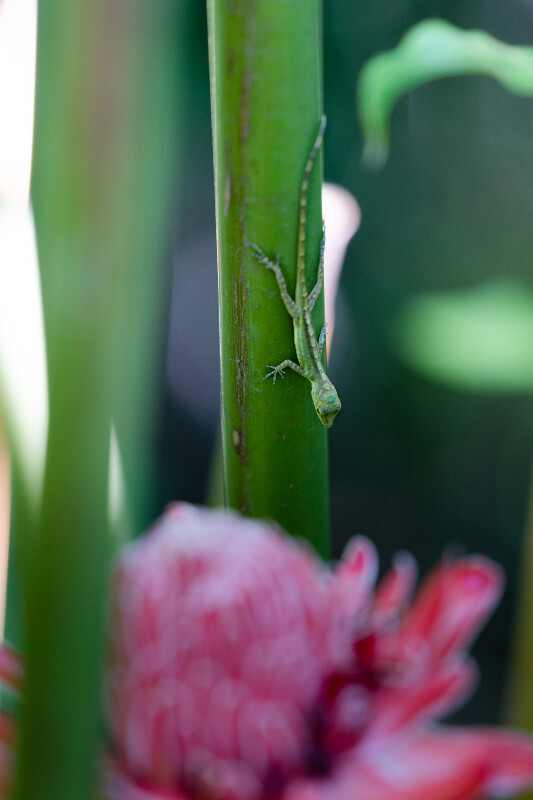
Very agile, the Guadeloupe Anole moves with ease on trunks, branches or walls. His fingers are equipped with adhesive strips that allow him to adhere to smooth surfaces, much like geckos. This adaptation makes him an excellent climber, able to flee very quickly in case of danger.
.svg)
