.png)
.png)

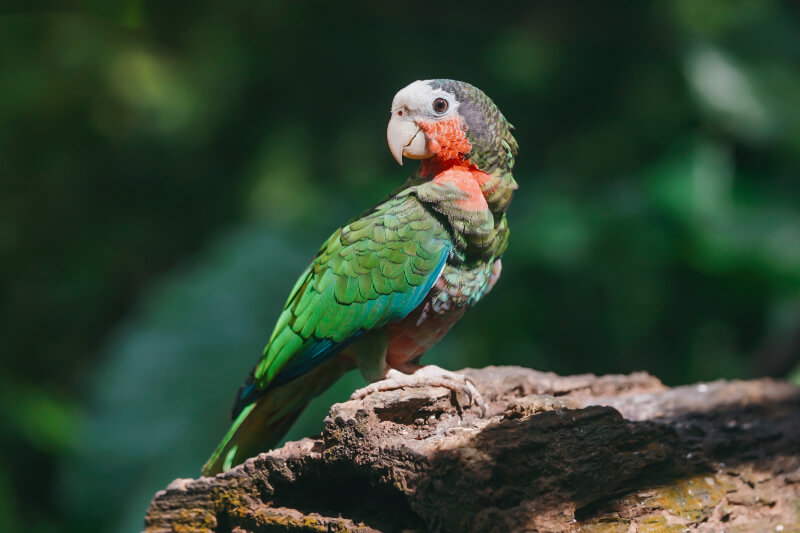
Cuban Amazon
Amazona leucocephala


The Cuban Amazon at the Guadeloupe Zoo
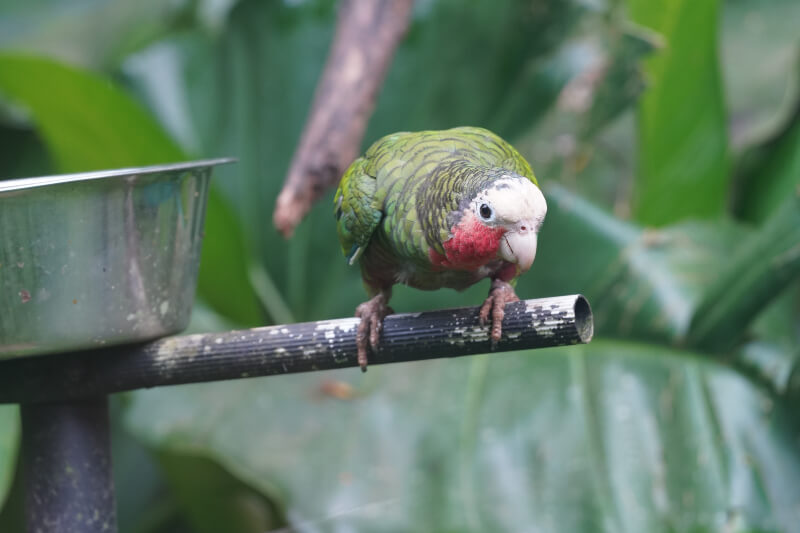
The Cuban Amazon (Amazona leucocephala) is an endemic parrot of the Caribbean, present mainly in Cuba, but also on the Bahamas and the Cayman Islands. It plays an important role in the balance of island ecosystems, in particular thanks to its role in seed dispersal.
It frequents tropical dry and humid forests, mangroves, and coastal woodlands. It favors large trees, which are essential for nesting and for its protection against predators. It can also be found in certain agricultural areas, where it finds an abundance of tropical fruits.
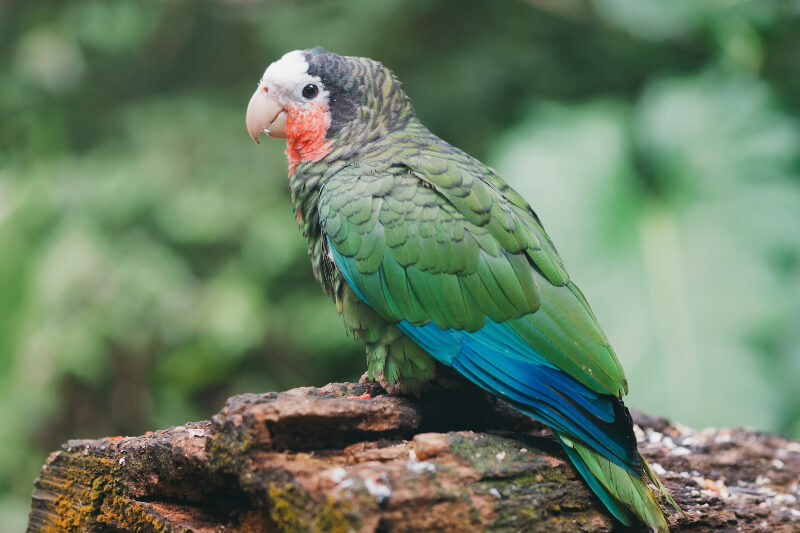
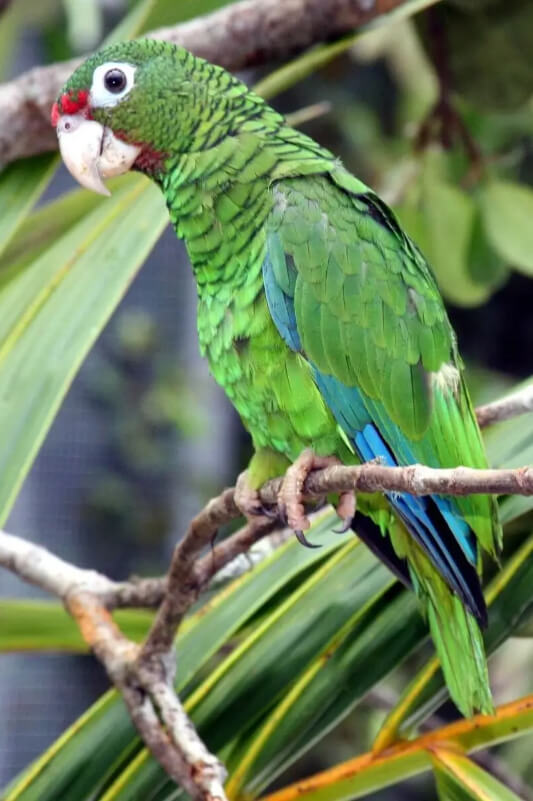
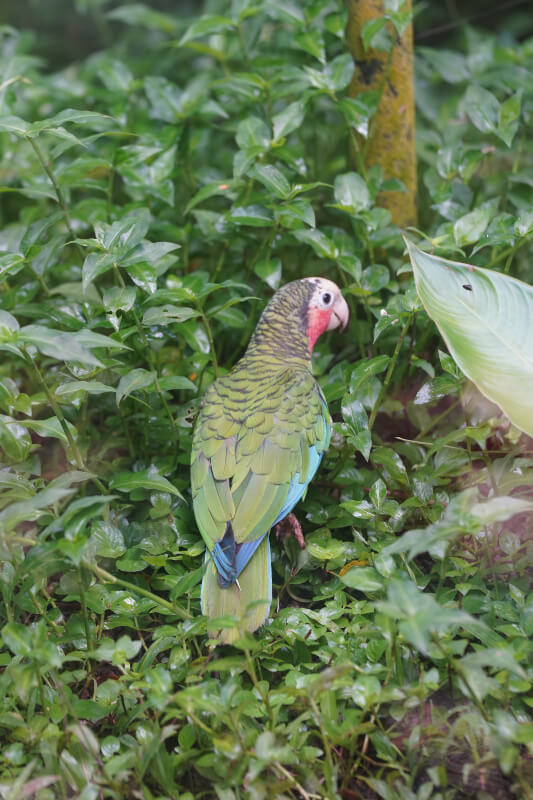
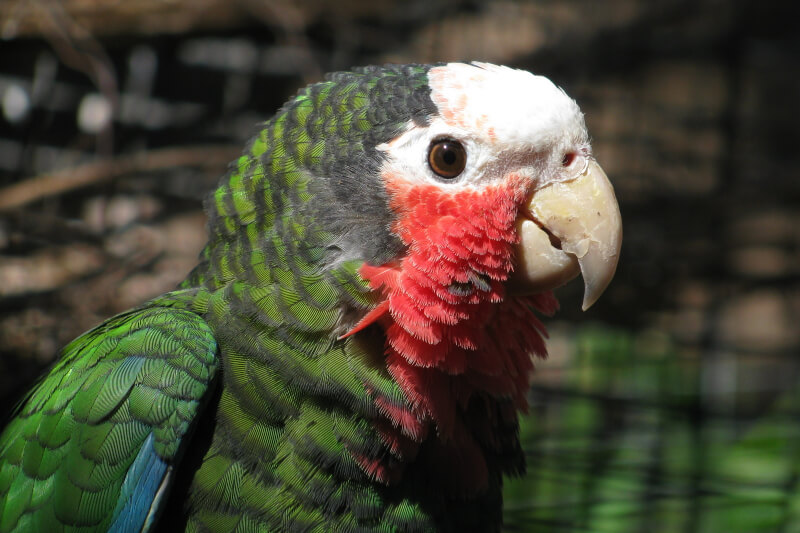
This parrot measures between 28 and 33 cm. Its intense green plumage, decorated with a white forehead sometimes tinged with pink, makes it immediately recognizable. Very sociable, she lives in small groups and communicates through a wide variety of cries, often audible at sunrise and sunset.
It is frugivorous and granivorous, feeding on fruits, seeds, flowers and berries. Through this behavior, it actively contributes to the regeneration of tropical forests and to the spread of local plant species.
The species is classified as Near Threatened (NT) by the IUCN. It is affected by the destruction of natural habitats and illegal trade. At the Guadeloupe Zoo, she meets other iconic tropical birds such as theBlue and yellow macaw or the chloropteran macaw.


.svg)


Quelques anecdotes
An outstanding imitator
Like many parrots, the Cuban Amazon can imitate a wide variety of sounds: the cries of other birds, ambient noises, and even the human voice. This ability to imitate serves him above all to strengthen the cohesion of the group. In the wild, it uses its cries to signal danger, call its peers or coordinate collective movements.
Spectacular group flights
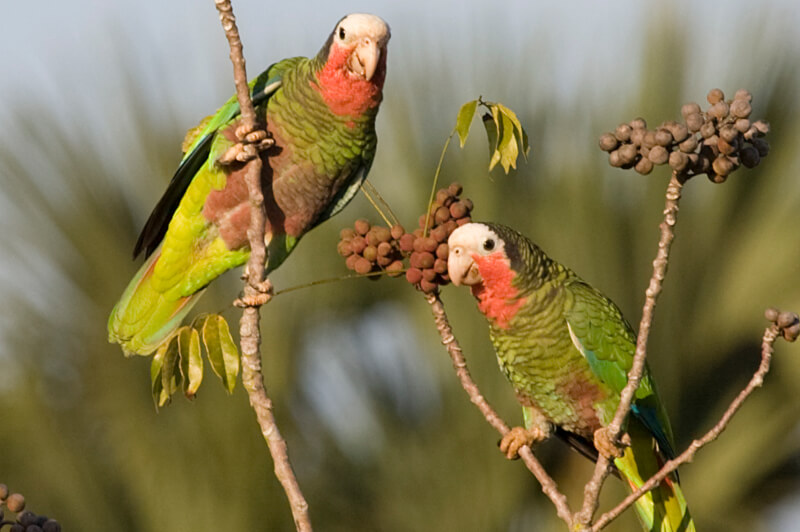
In the wild, Cuban Amazons often make highly structured group flights. These synchronized movements are impressive to observe: the birds fly in a compact formation, while shouting loudly. This organization allows them to better protect themselves against predators and to maintain permanent visual and sound contact within the group. This behavior, observable in Cuban forests, testifies to their profoundly social nature.
.svg)
