.png)
.png)

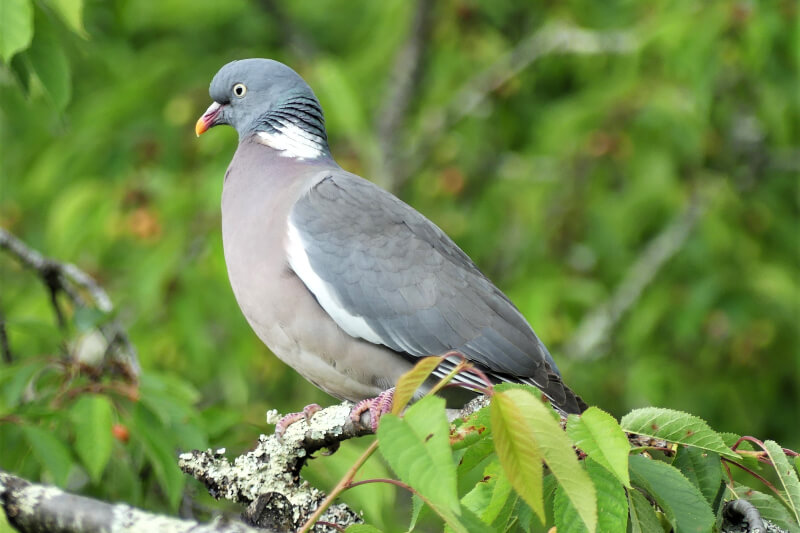
Common wood pigeon
Columba palumbus


The Common wood pigeon, the great traveller of the forests
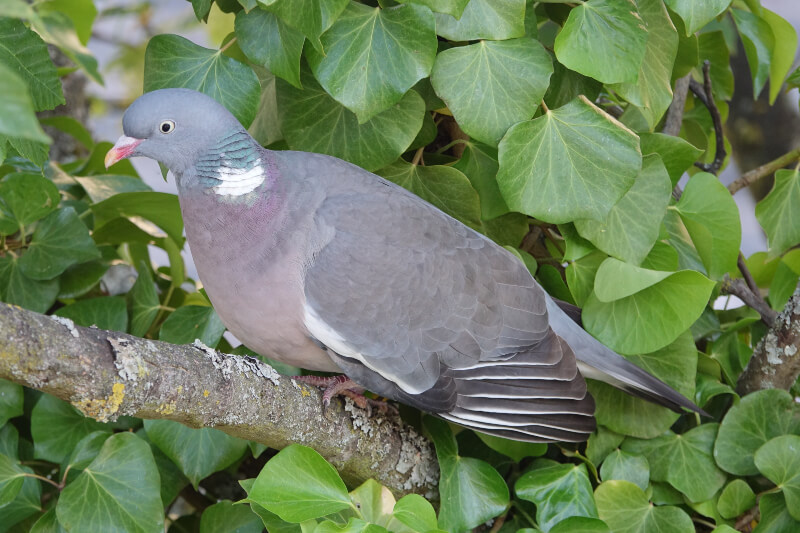
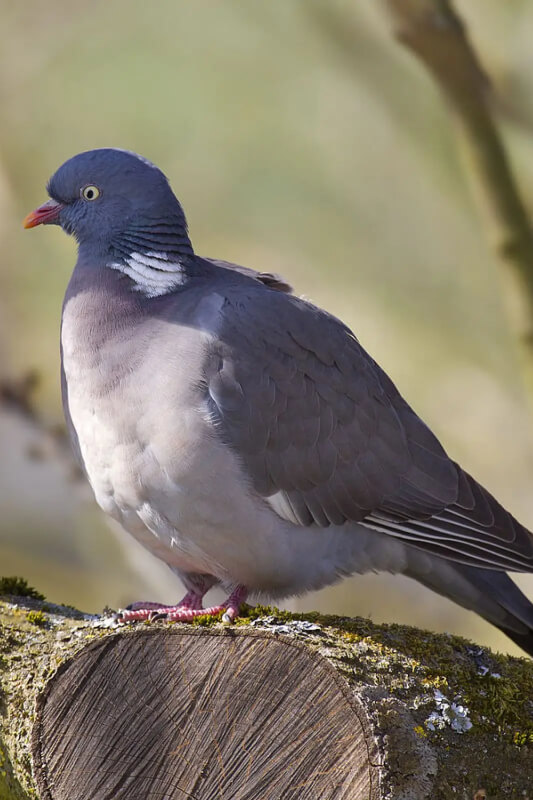
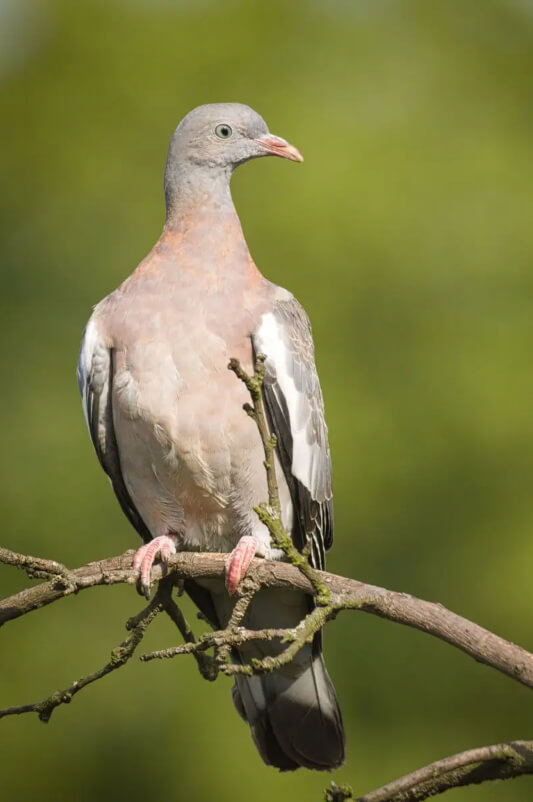
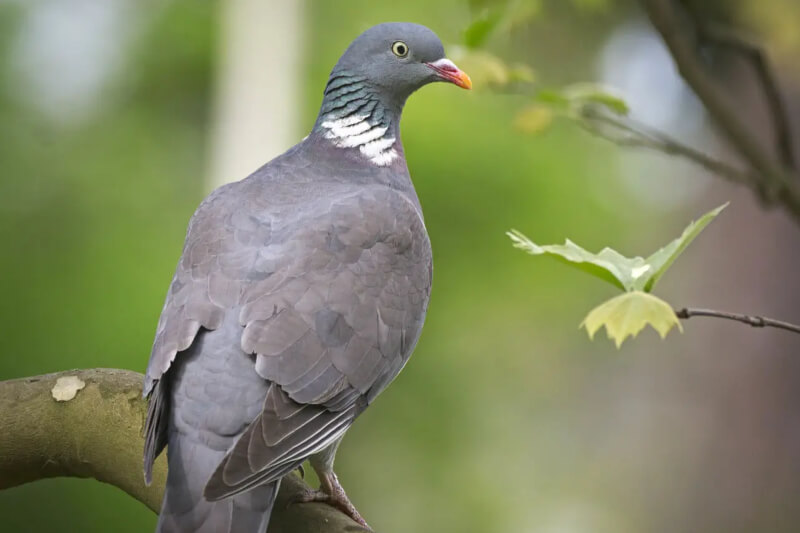
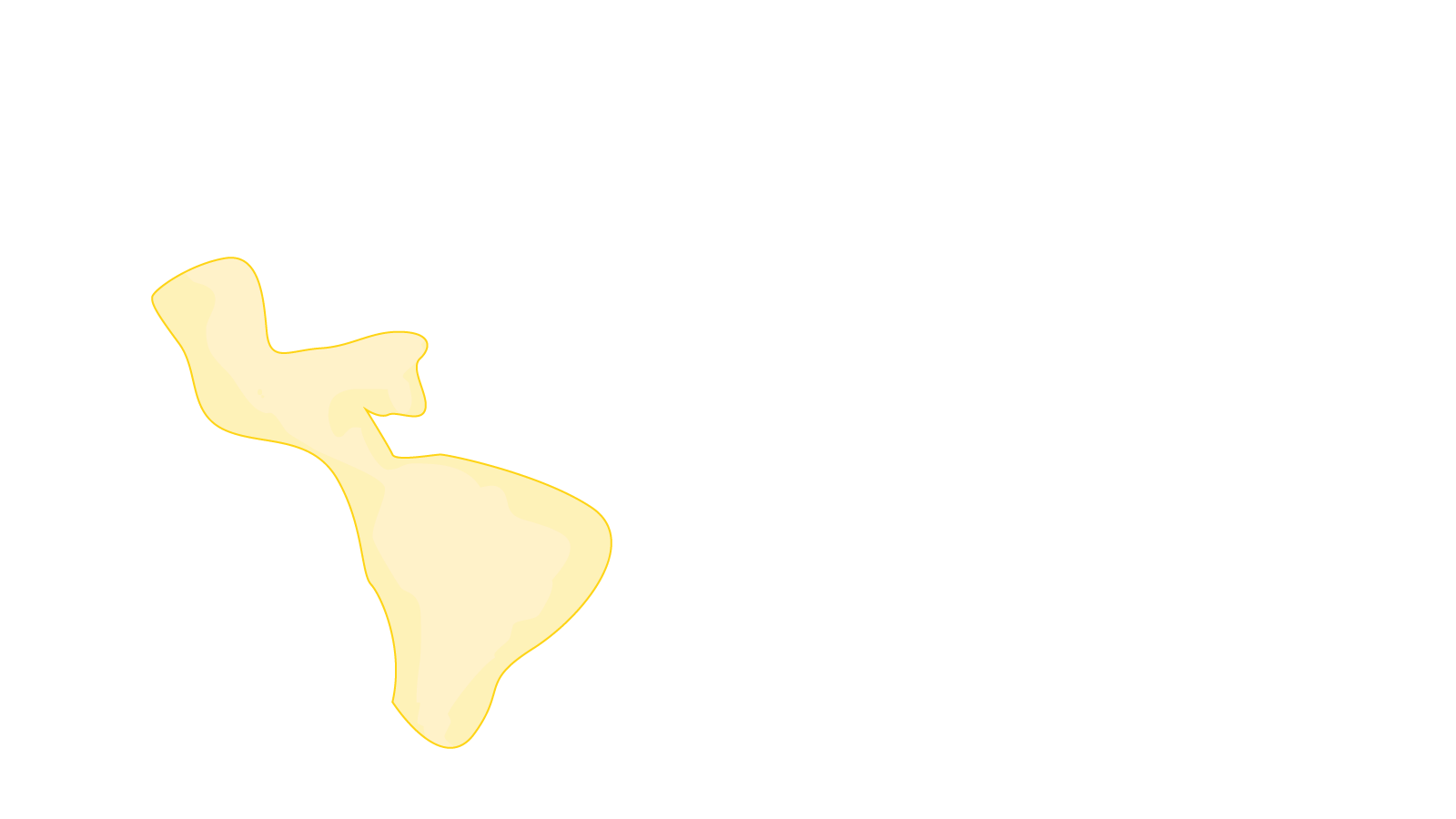
The common wood pigeon (Columba palumbus) is the largest wild pigeon present in Europe and in some regions of the Caribbean. It can be recognized by its massive body, its purplish chest, its neck marked by two small white spots and its broad wings. Its flight is powerful and can transport the bird over long distances.
The species is classified as Least Concern (LC) by the IUCN. Populations remain generally stable, even if some sectors experience strong variations depending on food availability and migratory movements. The common wood pigeon frequents forests, wooded edges, agricultural areas, and large parks.
The bird feeds mainly on seeds, young shoots, leaves, small fruits and acorns. In some areas, it supplements its diet with wild berries or cultivated plants. The wood pigeon spends a large part of the day on the ground to feed, then returns to the trees to rest or perch safely.
At the Guadeloupe Zoo, you can observe the common wood pigeon at the very end of the course, below the space of Ateles monkeys.

.svg)


Quelques anecdotes

A loud flight... very useful
The common wood pigeon flies off with a very sonorous flap of wings. This noise is not due to chance: it helps to warn other pigeons of a potential danger. This warning signal is used both against terrestrial predators and against certain birds of prey.

A simple but effective nest
Unlike other birds, common wood pigeons build a very minimalist nest: a small platform of twigs that is sometimes barely opaque. Despite its fragile appearance, this nest holds up surprisingly well and can accommodate two eggs. The parents take turns brooding and feeding the young.
.svg)
