.png)
.png)

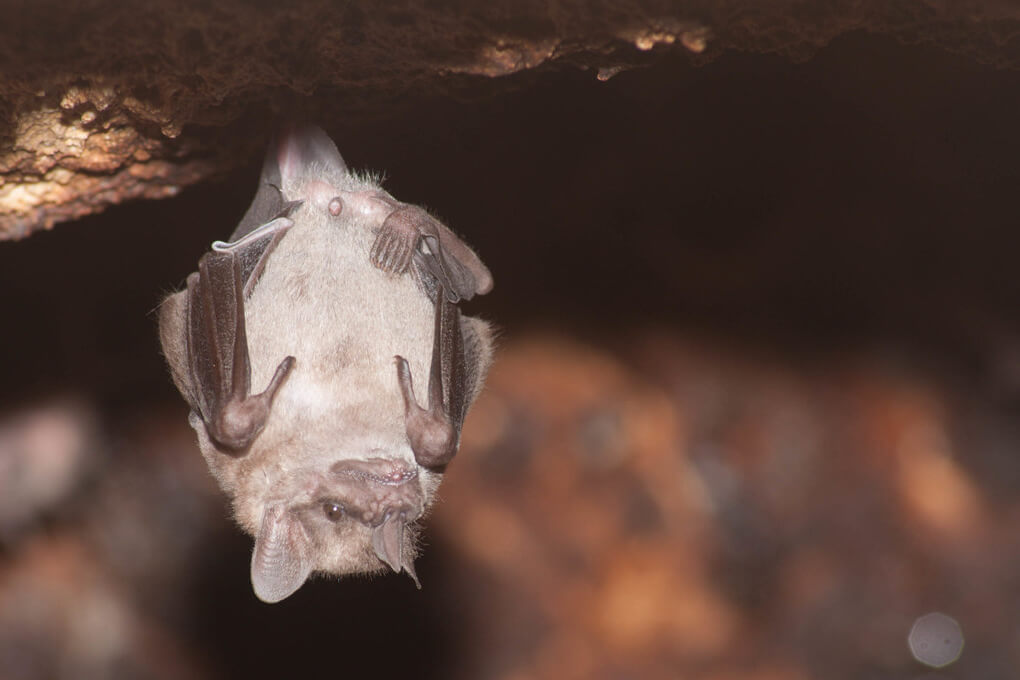
The Bat
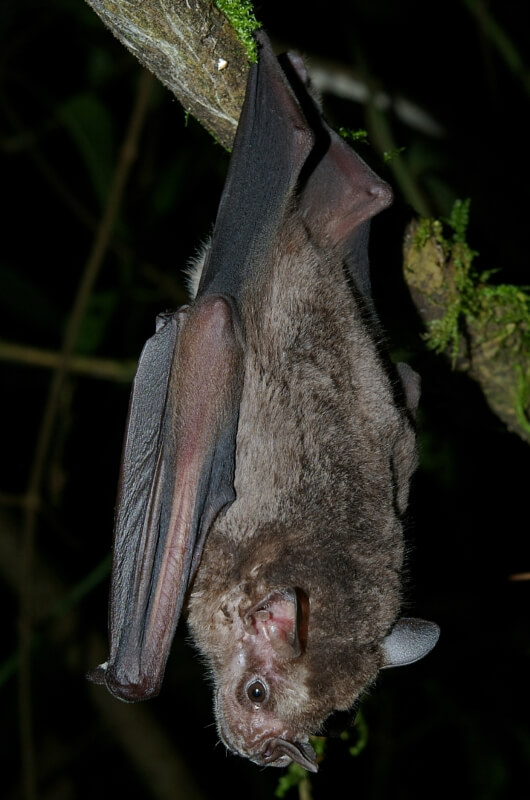
Artibeus jamaicensis


The "Guimbo" Bat
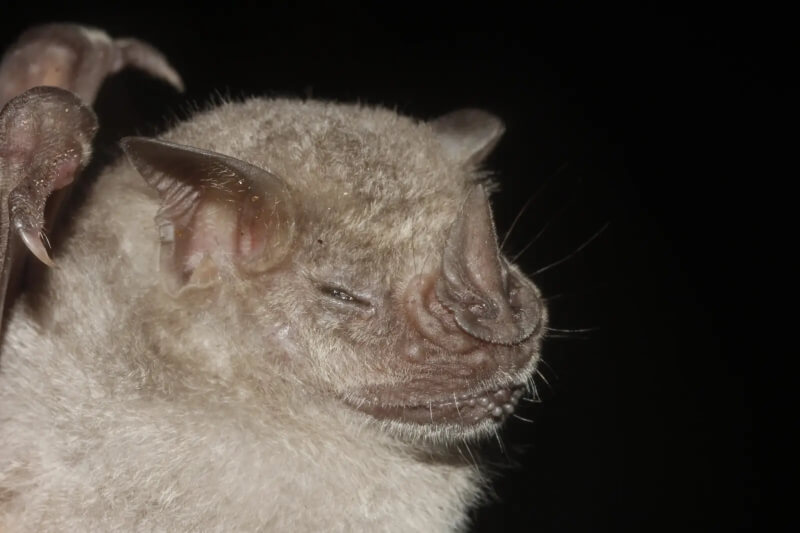
This bat, called Guimbô in Creole, often has a bad reputation because of its “strange” appearance. However, his big ears and pointed nose are real assets. They allow him to find his way around in total darkness thanks to a natural radar system called echolocation.
It emits sounds (ultrasound) imperceptible by the human ear that affect the walls and objects of its environment. In return, it receives a precise echo that tells it the position of each obstacle or prey in its vicinity. Technological performance... without any machines!
The bat species Artibeus jamaicensis belongs to the Phyllostomidae family. It is found in tropical forests in the Caribbean and South America.
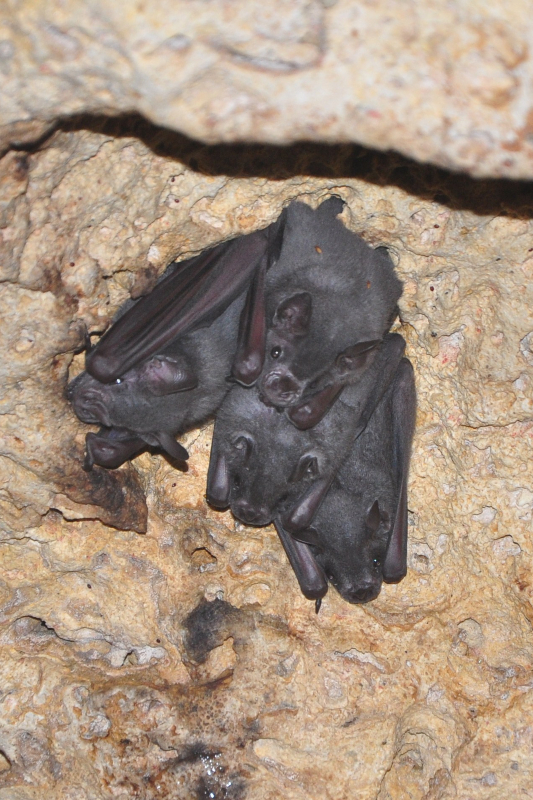
In Guadeloupe, it lives mainly in the hollow trees of forests and wooded areas. They play an essential role in seed dispersal and vegetation regeneration.
This fruit bat measures 7 to 9 cm and weighs about 40 to 60 grams. It mainly eats ripe fruits such as figs, guavas or mangoes, which it digests very quickly.
Its status is classified as Least Concern (LC) by the IUCN. The species is not endangered. However, it remains sensitive to the destruction of its habitat and to light pollution that disrupts its nocturnal landmarks.
At the Zoo, the Guimbô is one of the mammals of tropical regions that illustrate the diversity and ecological importance of local fauna.












.svg)


Quelques anecdotes
A flying mammal
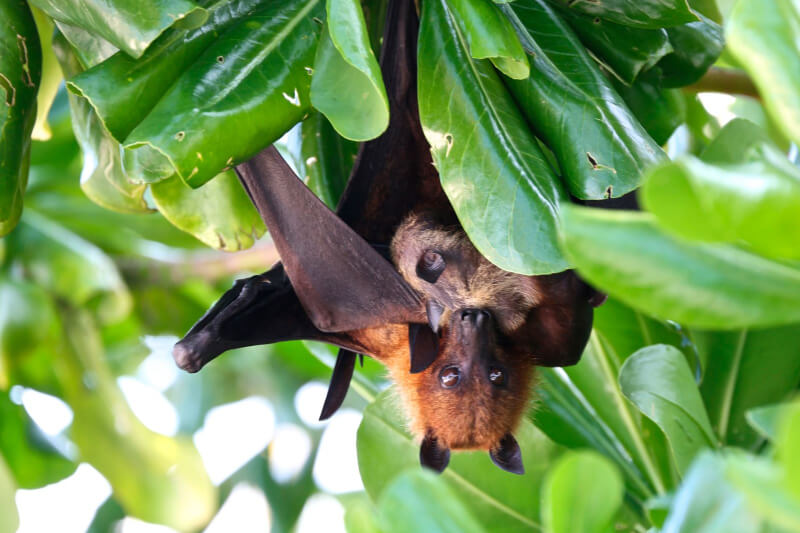
Unlike birds, the bat is a mammal. Its wings are formed by a thin skin membrane stretched between the fingers, which gives it great maneuverability during flight. It is one of the few mammals that can fly actively, and not simply glide thanks to its winged hands.
An ingenious architect
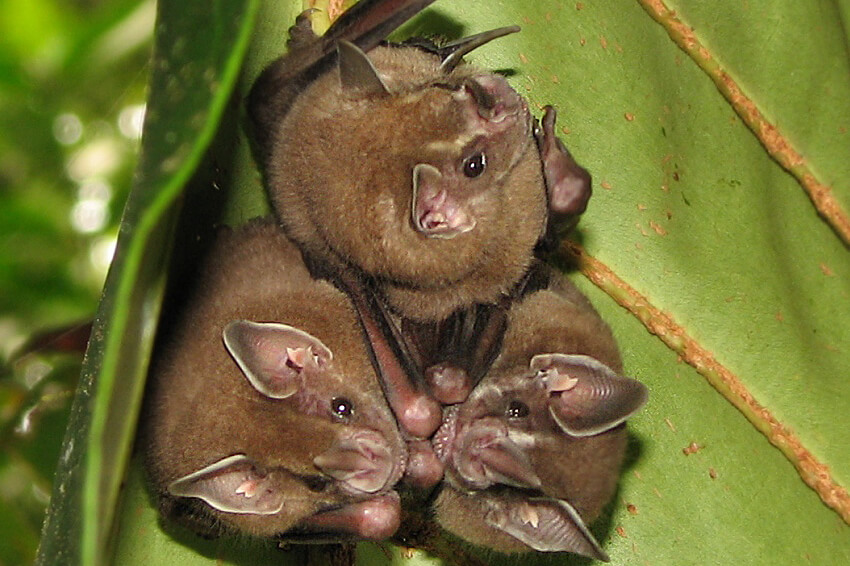
To protect itself during the day, Artibeus jamaicensis builds small “tents” under palm or banana leaves. It bends the central rib to create a natural, fresh and discreet shelter. This ingenious behavior allows it to rest away from predators and tropical rain.
.svg)
