.png)
.png)
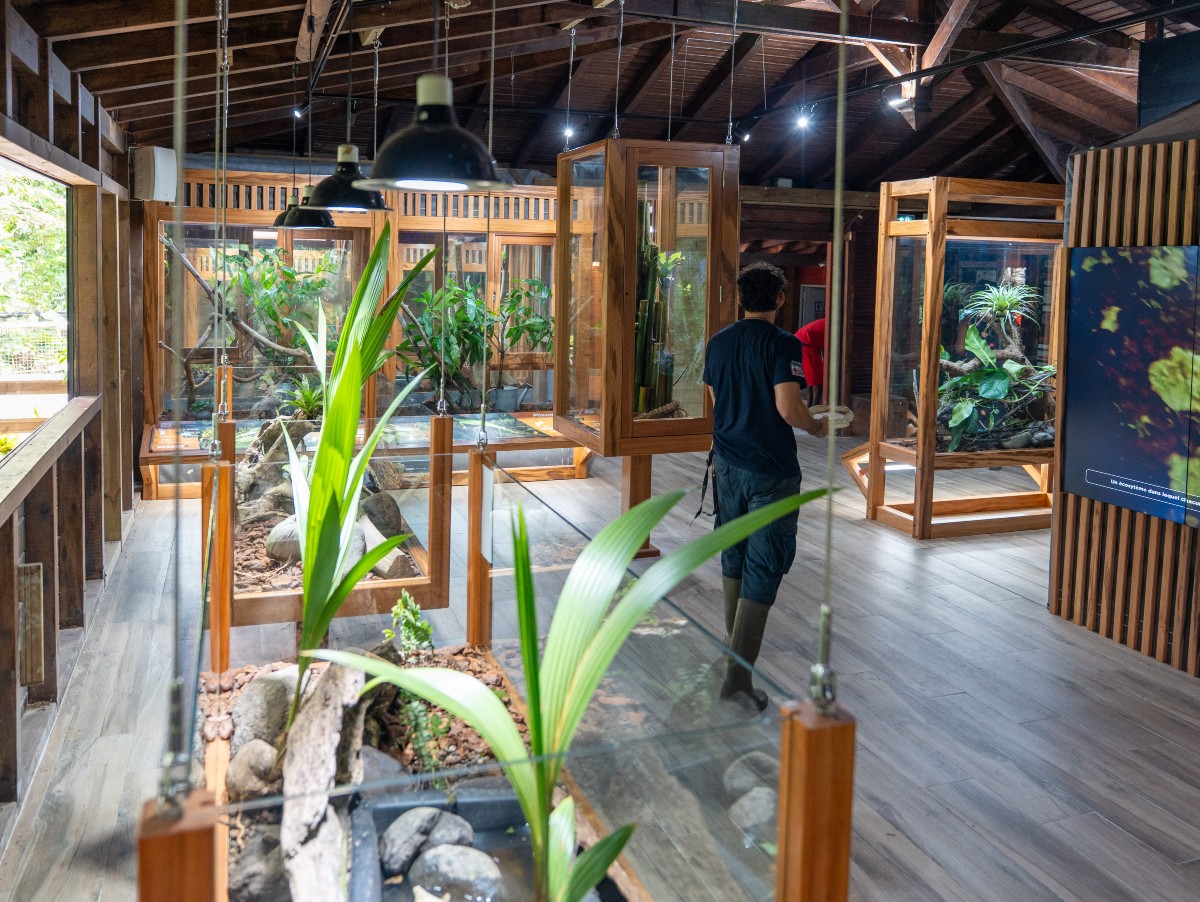
Since July 2026, a new space has been awaiting visitors at the Guadeloupe Zoo: the insectarium has been completely redesigned to offer an immersive discovery of the fascinating world of insects and other small animals from tropical environments.
Nestled in the heart of the Basse-Terre tropical rainforest, this new insectarium allows you to observe around thirty species up close in their vivariums, including species endemic to Guadeloupe, those found in the Caribbean region, and others from the wider Neotropical regions.
Stick insects, Hercules beetles, centipedes, crabs… and even reptiles and amphibians: this new space invites visitors of all ages to change their perspective on animals that are sometimes misunderstood, yet essential to the richness of our biodiversity.
Why an insectarium at the Guadeloupe Zoo?
Guadeloupe boasts a particularly rich biodiversity, fostered by the diversity of its natural habitats, especially the tropical rainforest. However, much of this fauna remains elusive and can be difficult to spot in its natural environment.
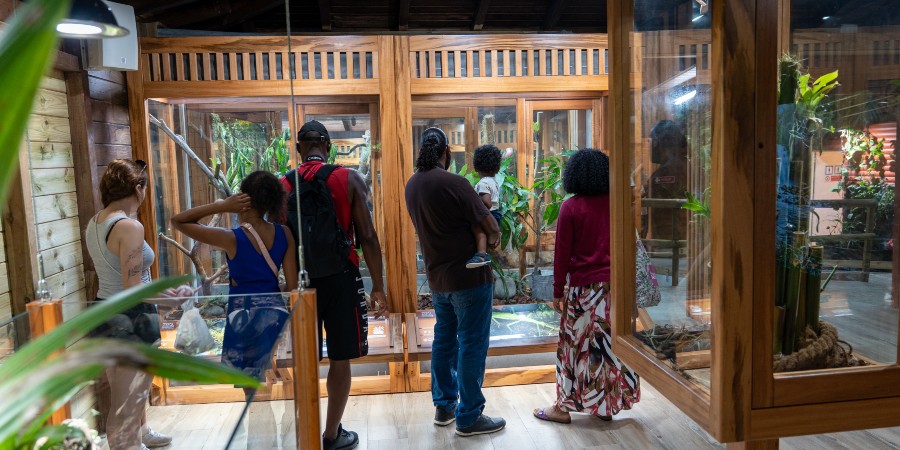
The insectarium makes this world more accessible. Behind the glass of the various vivariums, visitors can take the time to observe animals with vastly different shapes, behaviors, and lifestyles up close. Insects and other arthropods share the space with amphibians and reptiles, providing a broader glimpse into the diversity of tropical wildlife.
It is also a fantastic educational tool for better understanding the adaptations developed by these species: camouflage, modes of movement, defense mechanisms, predation, and the ability to thrive in highly specific environments. These unique traits provide a concrete way to explore biodiversity and the interactions between the different species that make up an ecosystem.
Quentin Lecuyer, an animal keeper at the Guadeloupe Zoo, helped create this new space by contributing his expertise. Passionate about these animals, he helps visitors discover their unique traits and behaviors. If you run into him during your visit, don't hesitate to ask him your questions!
Which animals can you see in the new insectarium?
Around thirty species are showcased in the various vivariums of the new insectarium.
Among the most iconic is the Hercules beetle (Dynastes hercules), also known locally as the "scieur de long." Found in the tropical rainforest of Guadeloupe, this spectacular beetle can reach up to 17 cm in length. It is one of three insect species currently under specific legal protection in Guadeloupe.
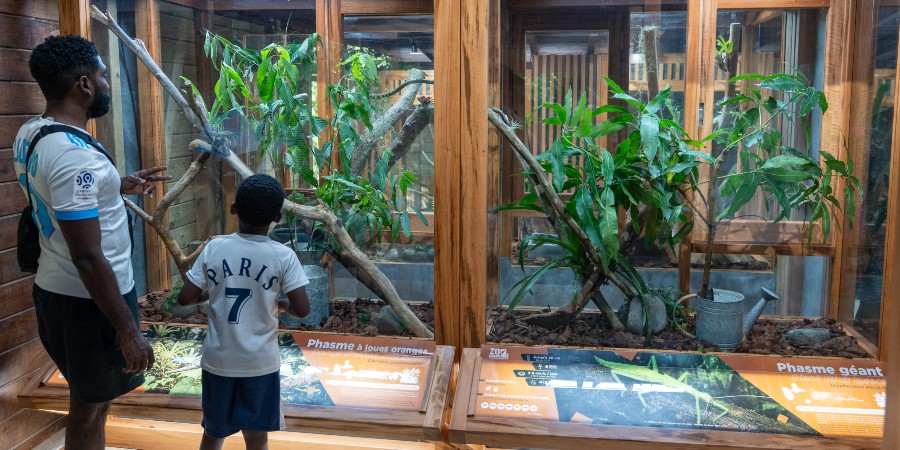
Visitors can also go on the hunt for stick insects. Guadeloupe is home to several species of these amazing insects, some of which are endemic. Their ability to blend in with branches and vegetation makes them true masters of camouflage.
Other representatives of small tropical fauna round out the experience, including centipedes and crabs.
And despite its name, the insectarium doesn't just feature insects. The trail also allows you to observe other animals, such as the rainbow boa or the cane toad. This diversity helps broaden the discovery to include the various inhabitants of tropical ecosystems.
A new immersive insectarium for all ages
To design the Guadeloupe Zoo's new insectarium, Gérald Maître, the former zoo director and project lead, wanted to create a space that was far more immersive and visually open to the animals.
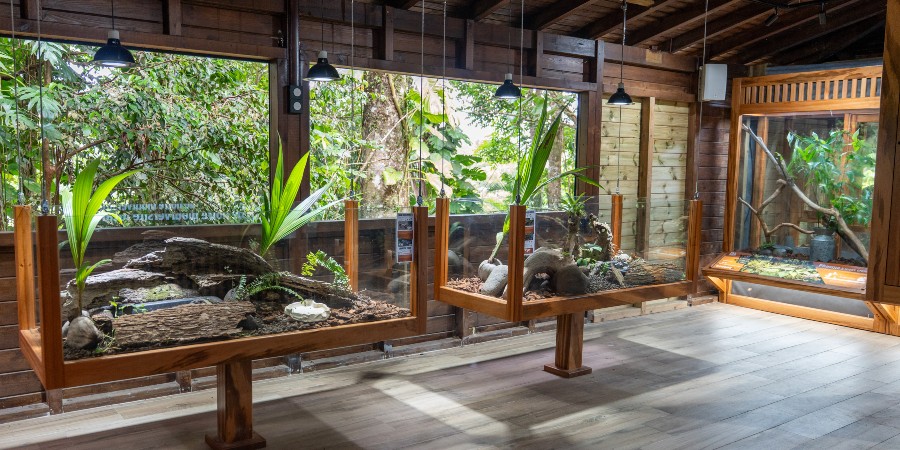
The new vivariums feature larger glass surfaces to make observation easier. The goal is simple: to allow visitors to truly see these animals, their movements, their physical characteristics, and their behaviors.
The scenography extends this immersion. Giant screens accompany the path, while a nature-inspired soundscape gradually draws visitors into the world of the tropical rainforest. A voice invites them to listen to and identify the sounds around them.
The new insectarium is a space where you can take the time to look at things differently. Some animals reveal themselves immediately, while others require a few seconds of focus before they are spotted in their environment.
For children and adults alike, searching for the animals is a key part of the experience.
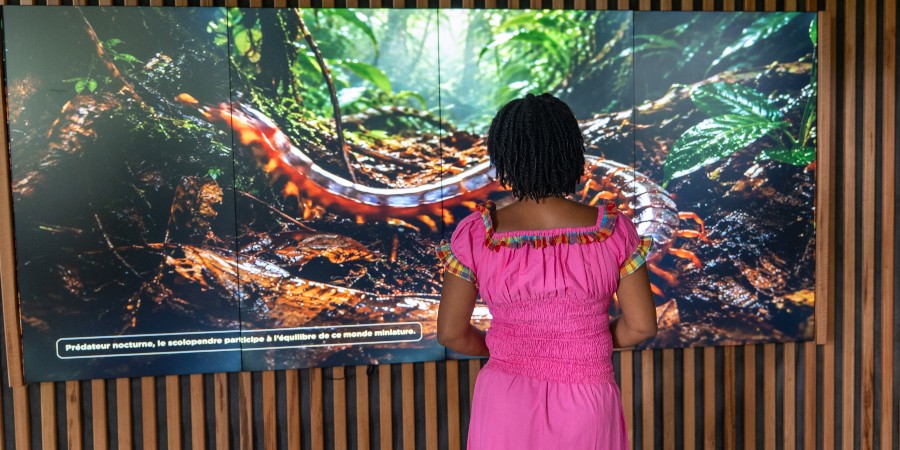
Why are insects essential to biodiversity?
Though small in size, insects play a major role in how ecosystems function.
Depending on the species, they play a key role in plant pollination, the decomposition of organic matter, and the recycling of nutrients. They also serve as a food source for countless animals, thereby supporting the food chain.
In island territories, studying them is particularly important. Geographic isolation encourages the emergence of species unique to a specific island or region. The Lesser Antilles, for instance, have a high rate of insect endemism.
Protecting insects also means preserving the natural habitats they depend on.
Learning more about Guadeloupe's insects to better protect them
The world of insects remains largely unknown. By allowing visitors to observe species up close that are rarely noticed in the wild, the Guadeloupe Zoo's new insectarium helps raise awareness. Above all, it serves as a reminder that an ecosystem does not rely solely on its most visible animals.
Every species has a place in its environment, even the smallest ones.
Discover the new insectarium during your visit to the Guadeloupe Zoo
Open since July 2026, the new insectarium is now a highlight of the Guadeloupe Zoo visitor experience.
In this completely redesigned space, take the time to observe, search, and discover around thirty species from a new perspective. Dive into the world of these tiny creatures to better understand the richness of tropical biodiversity—and perhaps you will never look at an insect the same way again.