.png)
.png)

Kinkajou
Potos flavus


The Kinkajou, the nocturnal canopy acrobat
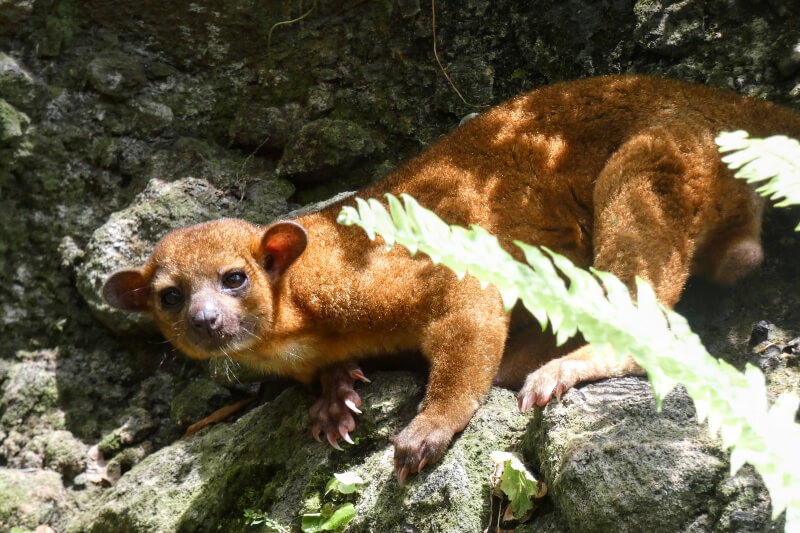
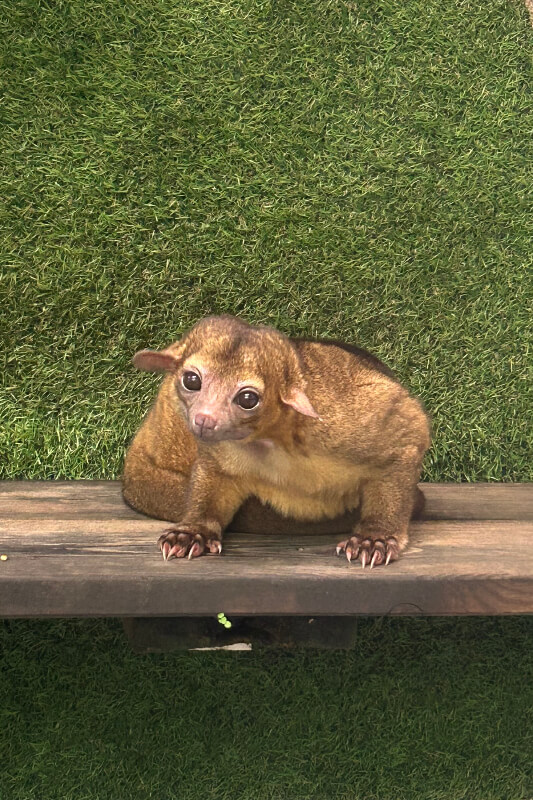
The kinkajou (Potos flavus) is a small arboreal mammal native to Central and South America. It is found in tropical rainforests, where it spends most of its life in the canopy. Its appearance like a miniature teddy bear, its golden coat and its big bright eyes make it an immediately endearing animal.
The species is classified as Least Concern (LC) by the IUCN. Its populations remain stable throughout most of its range. However, the kinkajou is sensitive to deforestation, which reduces the area of the forests where it feeds and breeds.
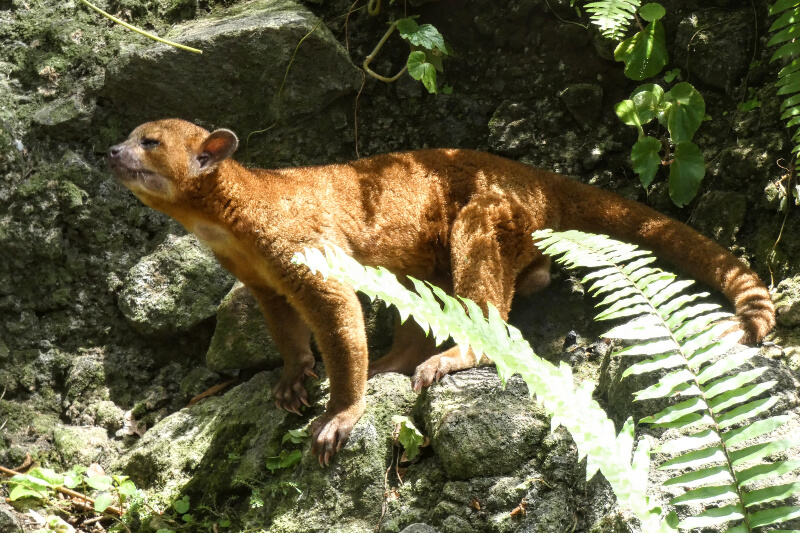
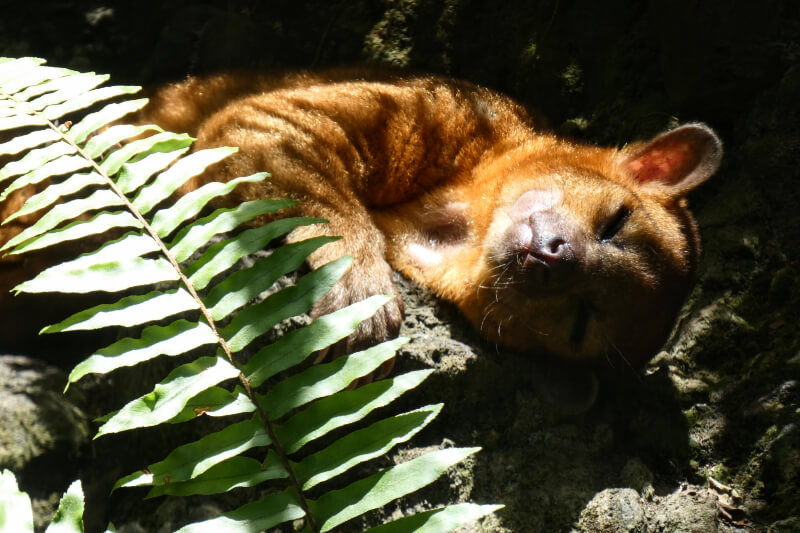
It measures between 40 and 60 cm without the tail, and its prehensile tail can be almost as long as its body. This tail is used for balance and as a “fifth hand” when climbing. Kinkajou is nocturnal. It moves through branches with great agility, thanks to its soft legs and curved claws.
His diet is mostly frugivorous. It feeds on fruits, nectar, flowers, and sometimes insects. Its tongue, about 12 cm long, allows it to reach the nectar at the bottom of the flowers, much like a hummingbird. By consuming fruits and pollen, it participates in pollination and seed dispersal.
At the Guadeloupe Zoo, the kinkajou is presented in the mammal zone, near other forest species such as the red coati or the brown nasturtium.














.svg)


Quelques anecdotes

A surprising “honey-ivory”
The kinkajou is sometimes called “honey bear.” He loves nectar, but also the honey he finds in wild hives. Its fine tongue allows it to reach the alveoli without exposing itself too much to bees. This unique behavior sets it apart from most other arboreal mammals.

A 180° rotation of the foot
Its rear legs can be rotated 180°. This particularity allows it to descend the trunks upside down, to hang in the branches and to maneuver in the canopy with great precision. Few mammals have this ability.
.svg)
