.png)
.png)

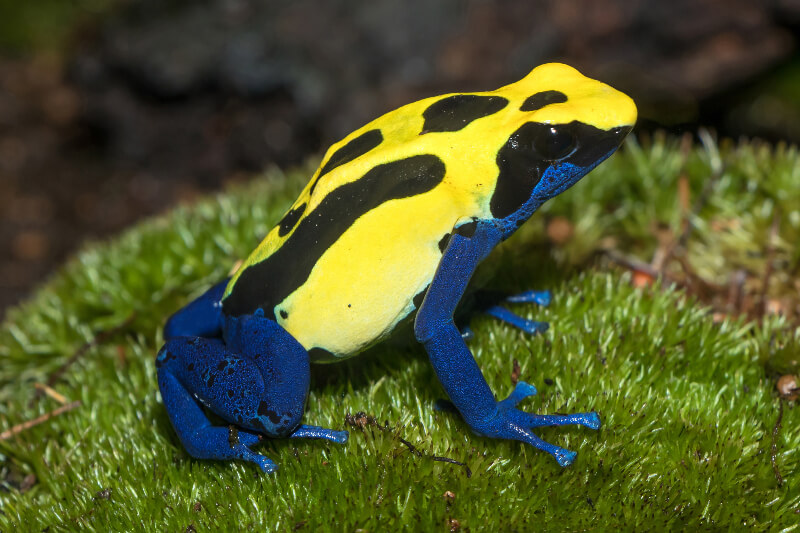
Dyeing poison dart frog
Dendrobates tinctorius


The dyeing poison dart frog, a small tropical gem
The dendrobate frog (Dendrobates tinctorius) is one of the most famous tropical frogs in the world. Native to the humid forests of South America, especially Guyana, Suriname and Brazil, it immediately catches the eye with its bright colors: blue, yellow, black or turquoise depending on the individual. These bright colors are not only aesthetic: in nature, they are used to warn predators of their toxicity.
Classified as Least Concern (LC) by the IUCN, the dendrobat remains stable in several regions, but some local populations are suffering the effects of deforestation and the illegal trade in exotic animals. Thanks to awareness and conservation programs, the species is now well preserved.
This little frog is only 4-5 cm long, but it never goes unnoticed. Its smooth and shiny body, its intense colors and its active behavior make it a real sight to observe. In nature, it lives in leaf litter and wetlands near streams, where it feeds on small insects: ants, gnats, and mites.
At the Guadeloupe Zoo, dendrobates are discovered in the insectarium, a space devoted to the fascinating little inhabitants of the tropical forest. Their observation makes it possible to understand how even the smallest animals play a key role in the balance of nature.

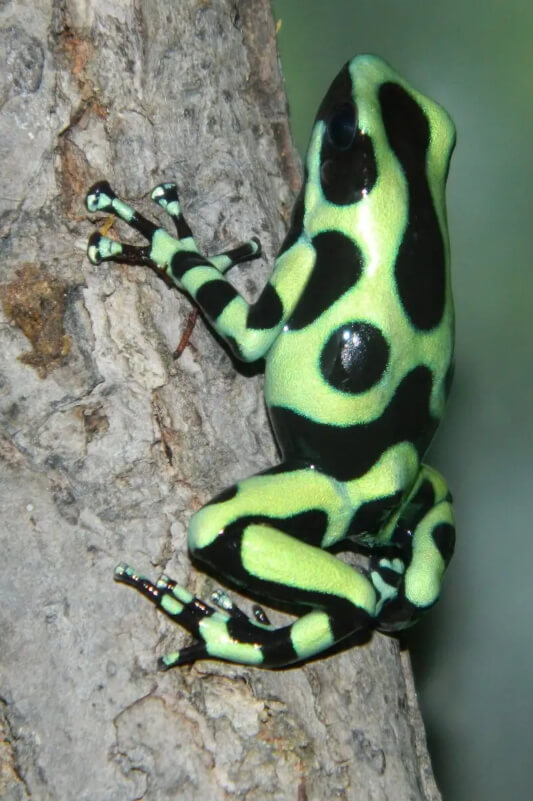
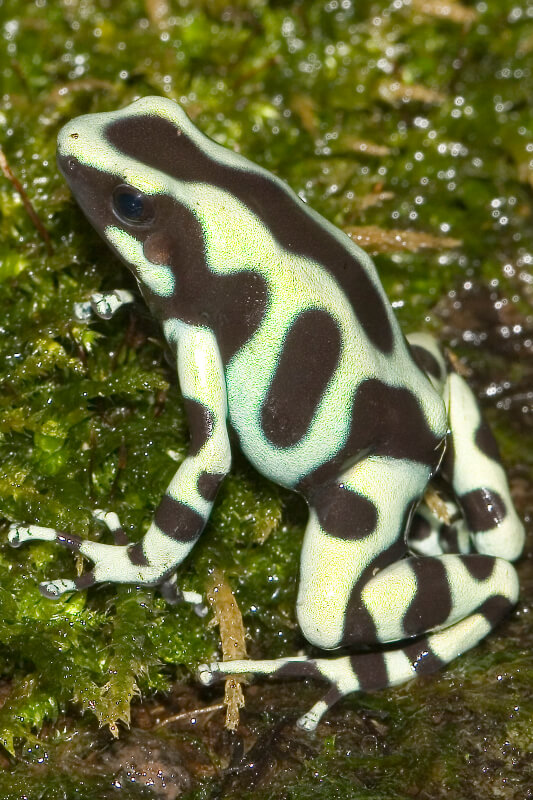
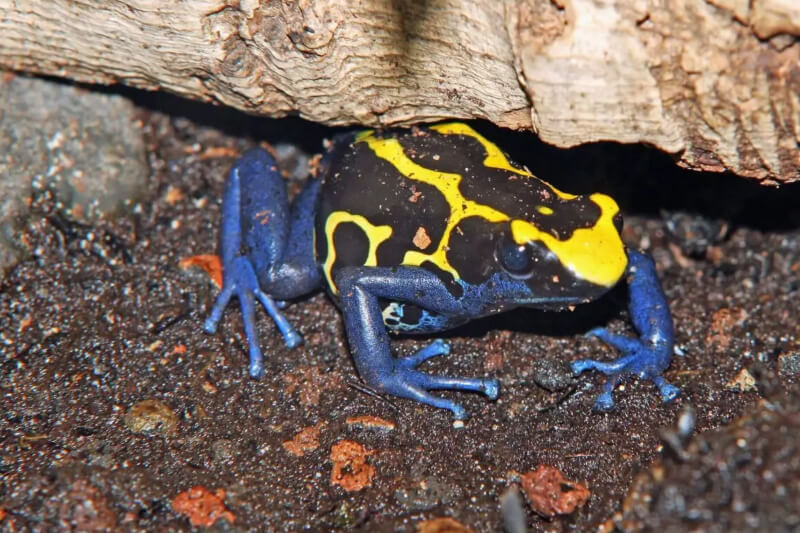




.svg)


Quelques anecdotes

Toxic... thanks to its menu!
In nature, the dyeing poison dart frog owes its toxicity to what it eats: some ants and insects are full of toxins that it accumulates in its skin. This particular diet makes it a small amphibian that is formidable for its predators. But at the Guadeloupe Zoo, the dyeing poison dart frog eat harmless insects. The result: they keep their flamboyant colors, but without danger to anyone.

Colors that protect
Their spectacular appearance is not just about aesthetics: in nature, these bright colors serve as a warning. This visual code, called aposematism, tells predators that it's best to keep your distance. A brilliant — and colourful — way to avoid danger without having to flee.
.svg)
